
Mascobetto, MA ’26, Supports Deaf and Hard-of-Hearing Ukrainian Refugees
When Matt Mascobetto, MA ’26, traveled to Poland in January to support deaf and hard-of-hearing Ukrainian refugees, the experience felt deeply personal, shaped by his own upbringing in a multilingual immigrant household.
Mascobetto, whose parents are both immigrants, grew up speaking Spanish and English at home. As a child, he was slow to begin speaking, prompting his parents to seek guidance from a speech pathologist.
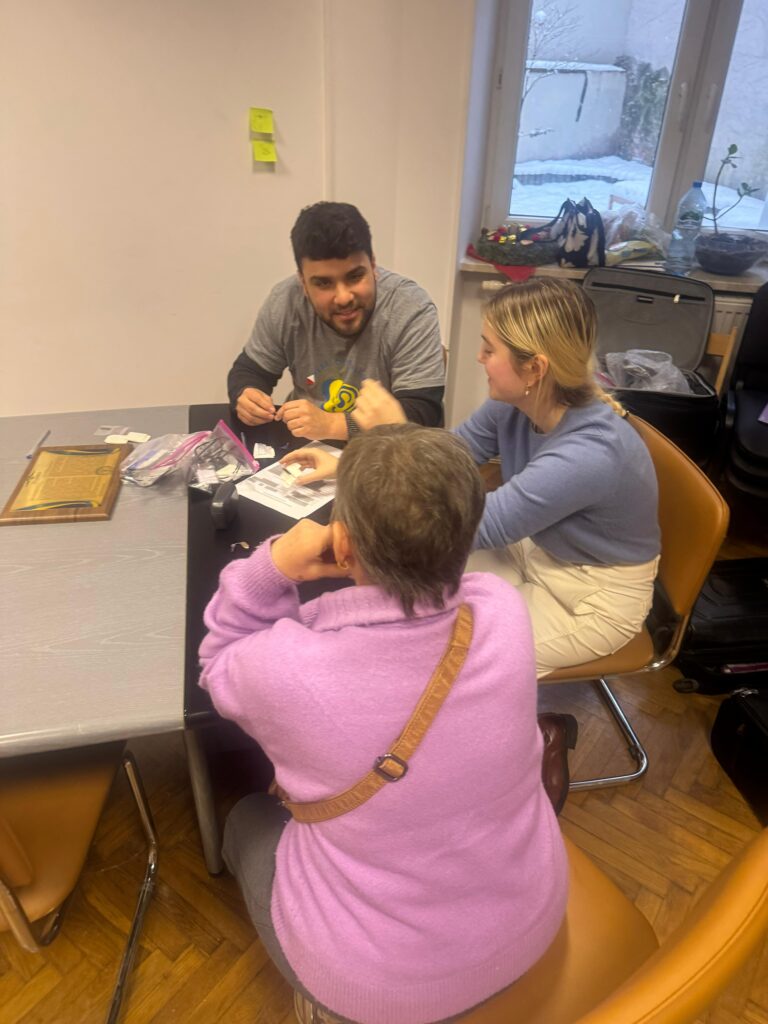
“My mom was advised to only speak to me in English and not try to teach me Spanish because it was ‘ruining’ my English,” he said. “The research nowadays shows that’s false, but there’s still a lot of people who believe that. So that motivated me to study [speech-language pathology] and to provide education to those populations.”
In January, Mascobetto was part of a team of audiologists and speech language pathologists that traveled to Poland to provide hearing and language support to deaf and hard of hearing Ukrainian refugees. He first learned about this opportunity with the “Heart of Hearing” audiology outreach program from Maryam Salehomoum, Communication Sciences and Disorders Senior Scholar-in-Residence. Salehomoum introduced Mascobetto to King Chung of MGH Institute of Health Professions, who organized the trip.
“There’s only a very small percentage of speech pathologists who end up making an effort to work with a proportion of individuals with hearing differences,” said Salehomoum, whose expertise focuses on deafness and literacy development. “So I’m always excited when a student shows an interest in getting their externship experience with deaf and hard-of-hearing kids or adults.”
With a background working with children and adolescents across a range of communication differences, Salehomoum emphasizes the importance of broadening perspectives in both research and practice.
She is passionate about the need for researchers and clinicians to “widen our lenses in terms of what we consider to be typical for language development and other kinds of things that we usually pack into one sense of identity.”
Mascobetto, who earned his undergraduate degree in linguistics from Rutgers University, was drawn to Emerson’s graduate program in part because of opportunities that combine hands-on clinical work with cultural immersion. In addition to their outreach work, participants had time to explore Poland and visit two World War II concentration camps.
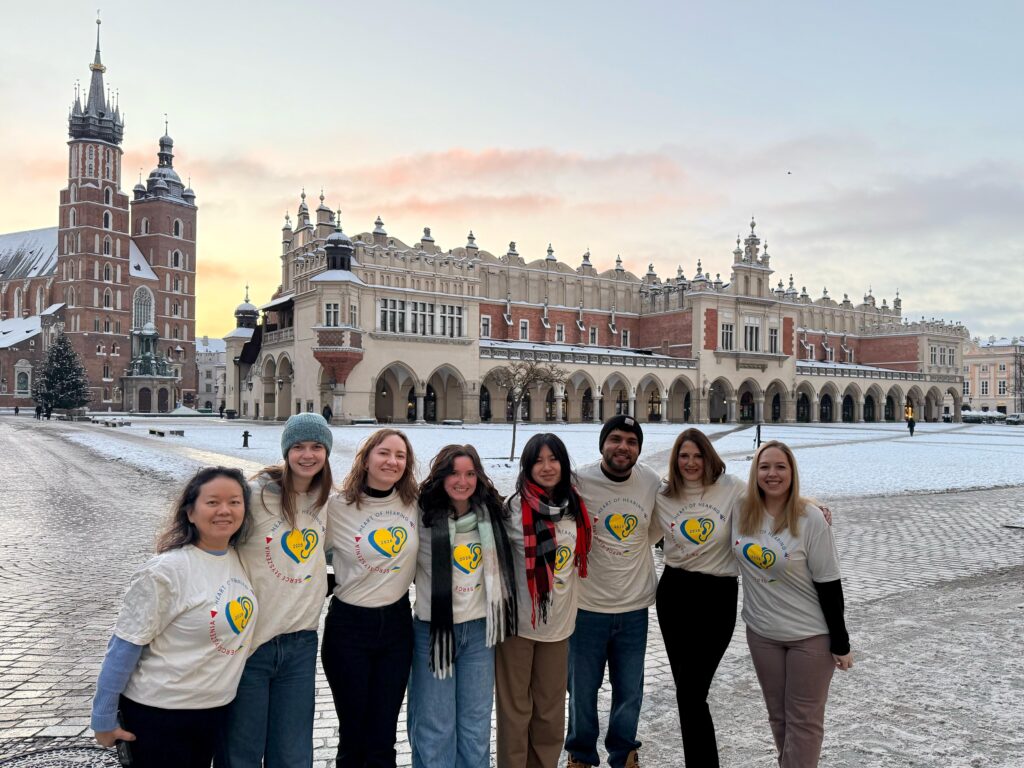
In preparation for the trip, the team participated in virtual training sessions covering Poland’s refugee landscape, the country’s history, and the hearing devices they would use during the trip.
Once on the ground, the scale of need quickly became clear.
“I think what first hit me when we arrived was how many people showed up—the sheer amount of people who needed help,” Mascobetto says. “What really challenged but also humbled me was how we had to cooperate as a team in order to serve all these people and do justice in our service to them.”
In addition to clinical work, the team heard firsthand accounts from refugees about their experiences—something Mascobetto found especially meaningful.
“I really believe in international opportunities where you’re in touch with people on the ground,” says Salehomoum. “Anytime you can leave and be in an interdisciplinary group and work outside of a very comfortable and known environment with people with unique needs—that’s just an extraordinary opportunity to learn about deafness in a very different context.”
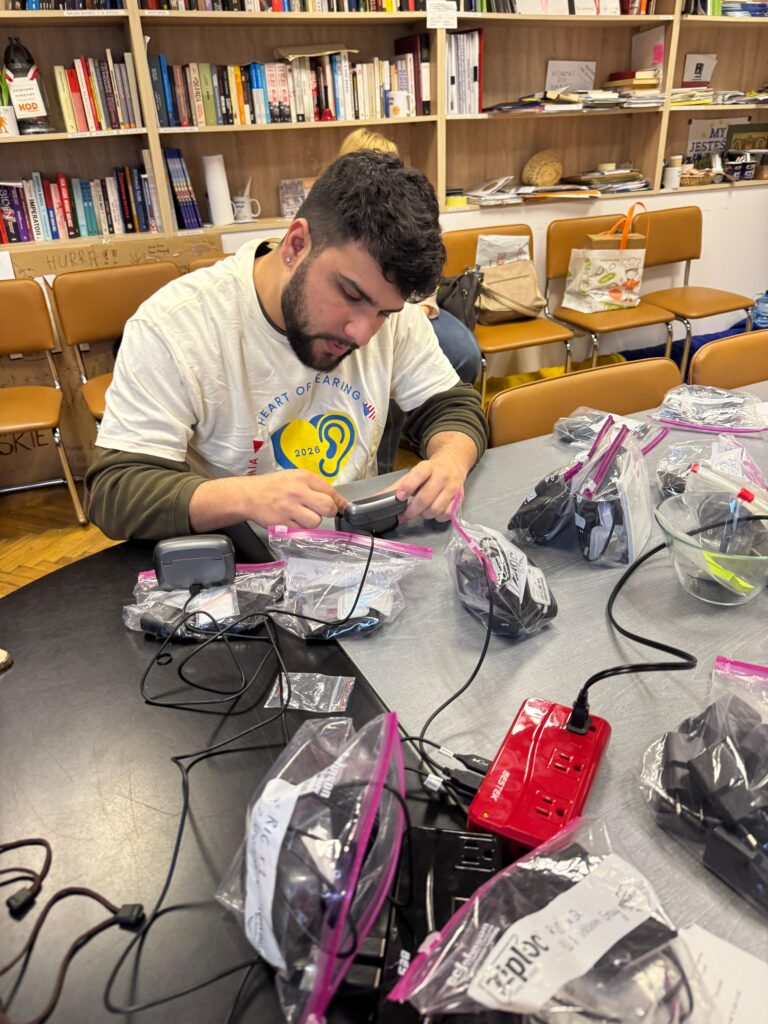
Communication sometimes posed challenges. Many refugees used Ukrainian Sign Language, which interpreters were not fluent in, requiring the team to adapt in real time using multimodal communication strategies.
“It’s really humbling, seeing people in these circumstances and realizing that our profession can help people past country boundaries,” said Mascobetto. “When we seek out these opportunities we can make a difference in that community, and it’s really special to see [how] the way we practice our profession can have long-term impacts. A lot of these families were in tears after we gave them hearing aids.”
The experience expanded Mascobetto’s understanding of his field and the populations it serves. He said it challenged him to broaden his perspective on working with diverse communities, across both cultural and linguistic differences, as well as varying hearing and literacy needs.
After graduating in May, Mascobetto will begin a clinical fellowship, the next step toward becoming a licensed speech-language pathologist. He said he hopes to eventually open a private practice focused on serving multilingual families, like his own.
Categories
