
200 Hours for 30 Seconds: The Craft Behind Sweet Charity’s Good Fairy Dress
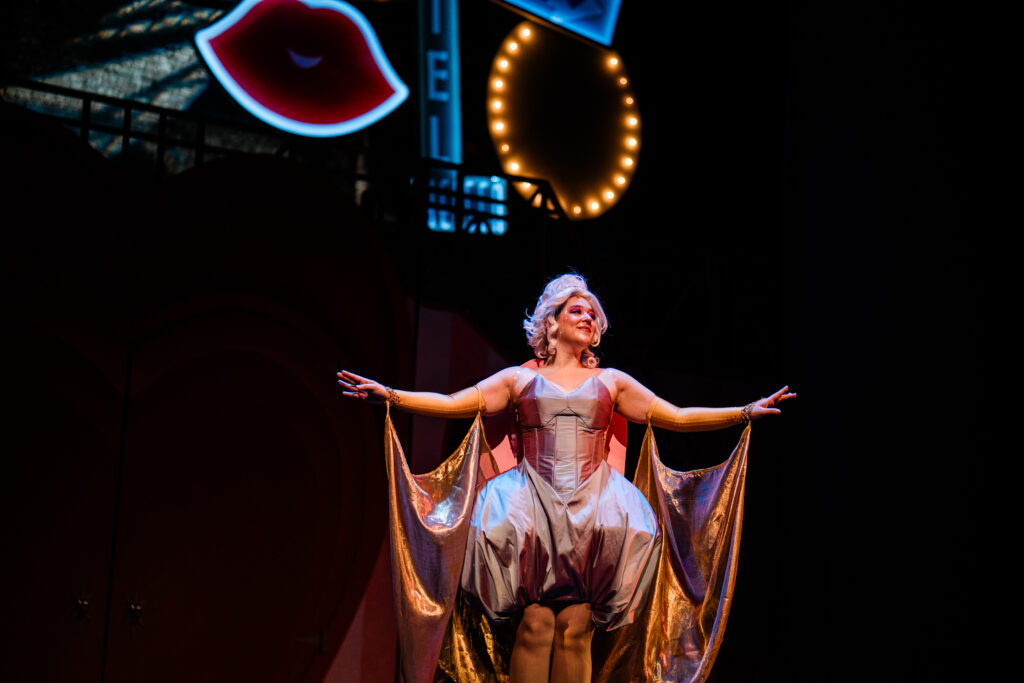
For most of Emerson Stage’s Sweet Charity production, the costumes quickly cycled: 25 cast members, multiple looks each, and constant movement. But near the end of the show, everything paused.
Enter: the Good Fairy.
Costume designer Nina Turovskiy ’26, a Theatre Design and Technology major, envisioned the 30-second moment as something unforgettable: a dazzling, almost surreal entrance that would feel like pure magic, before undercutting itself with humor. In the script, the Good Fairy appears to be a beacon of hope, dressed in a glamorous silver dress and huge shoes. But then she turns around, revealing a cardboard sign on her back: “See you tonight on CBS.”
“I wanted it to be this huge moment that turns into a joke,” said Turovskiy.
Turovskiy’s talent was also acknowledged with the Howard Waldman Performing Arts Award, presented to a graduating senior who demonstrates outstanding potential for a career in theater. The award honors the memory of the brother of Honey Waldman and Gladys Waldman Brownstein.
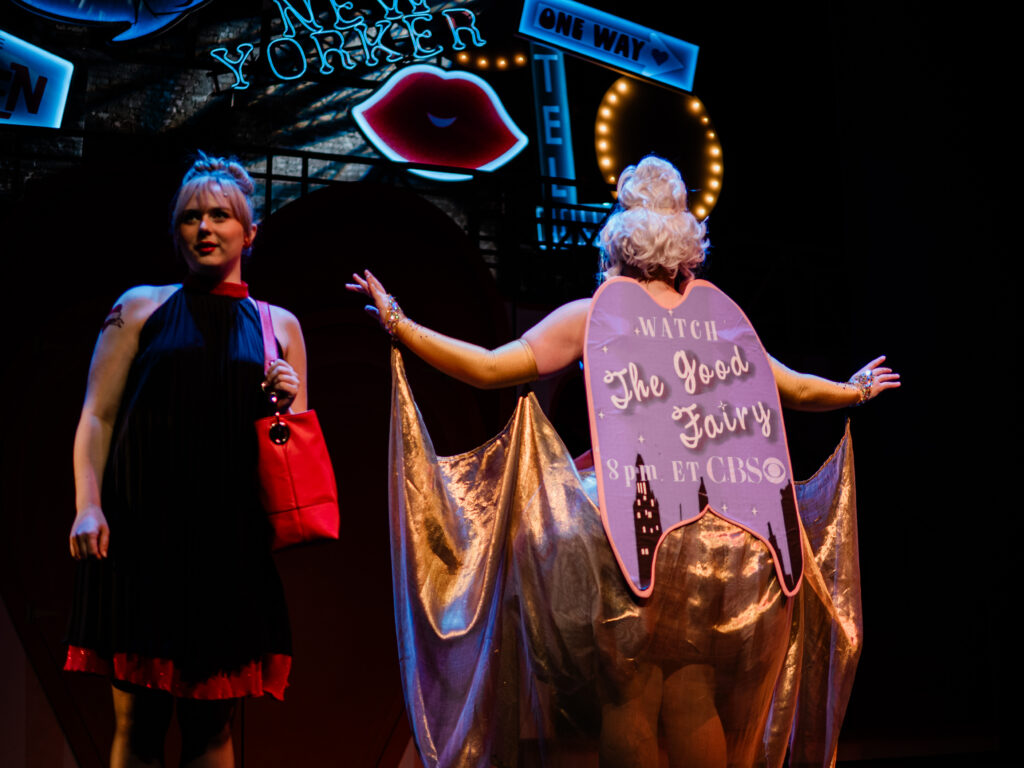
To create that sense of spectacle, she drew inspiration from the 1947 Soviet version of Cinderella, designing a voluminous, pumpkin-shaped gown reminiscent of a carriage. The result is ethereal at first glance, but suited to the show’s playful tone.
A design of the Good Fairy dress and construction photos of the dress. (Rendering by Nina Turovskiy ’26/Photos by Izzy Bacallao ’26 and Melissa Rorech)
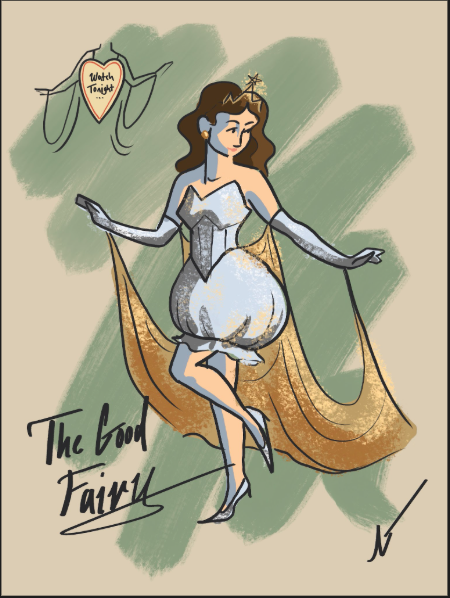
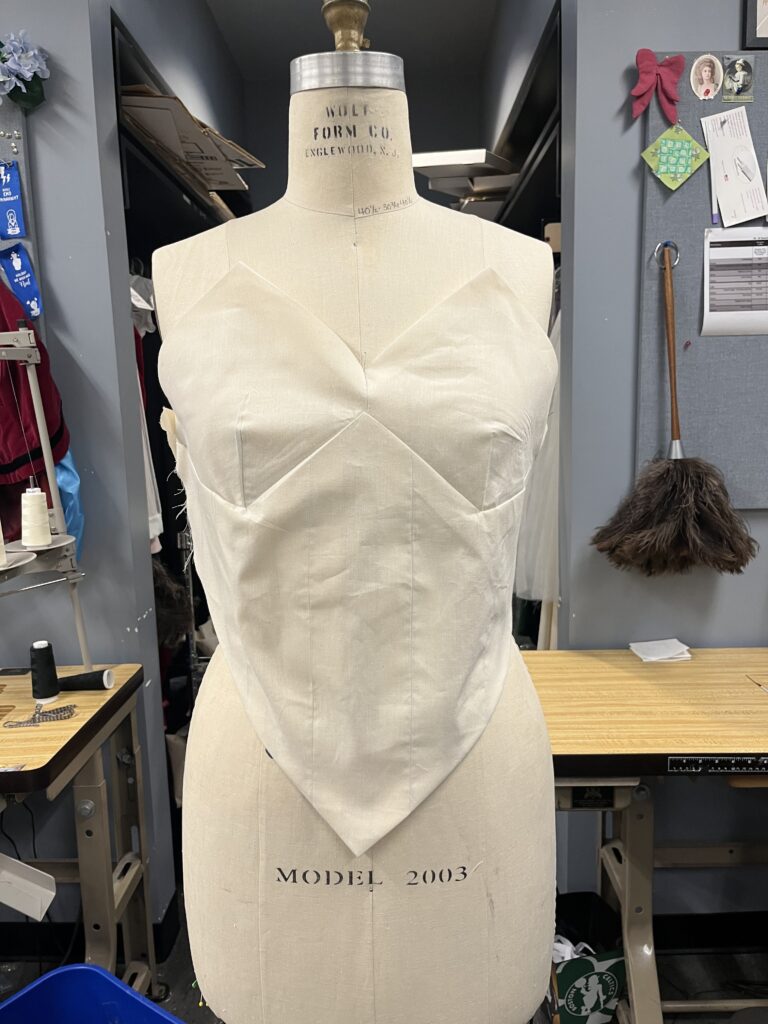
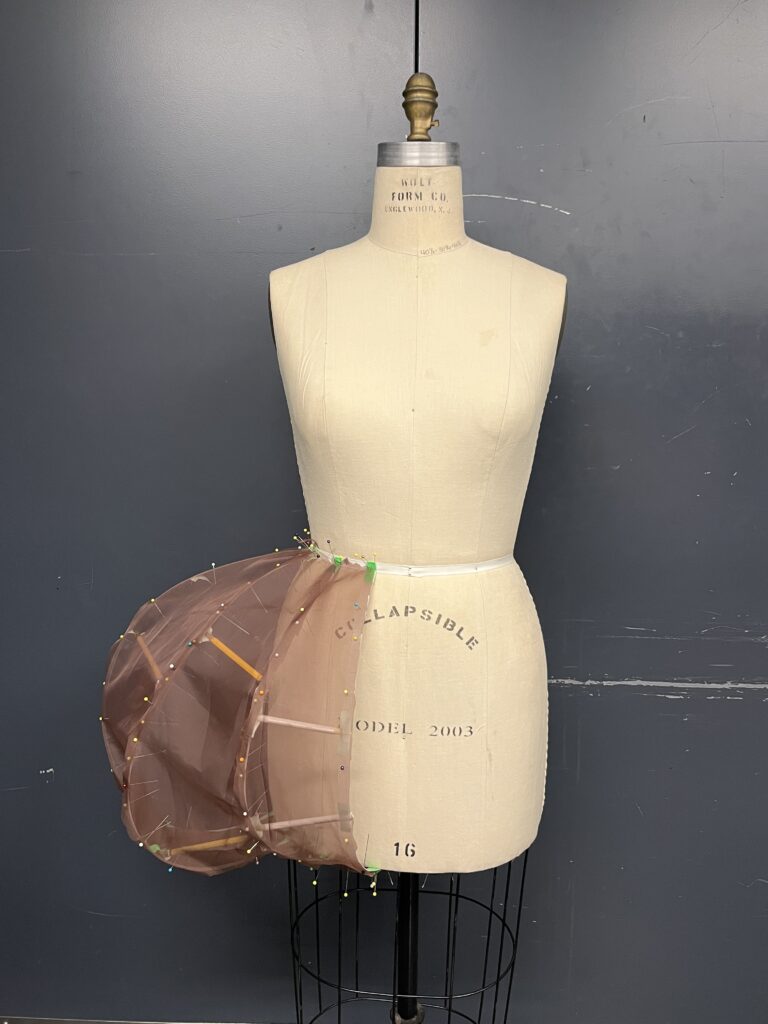
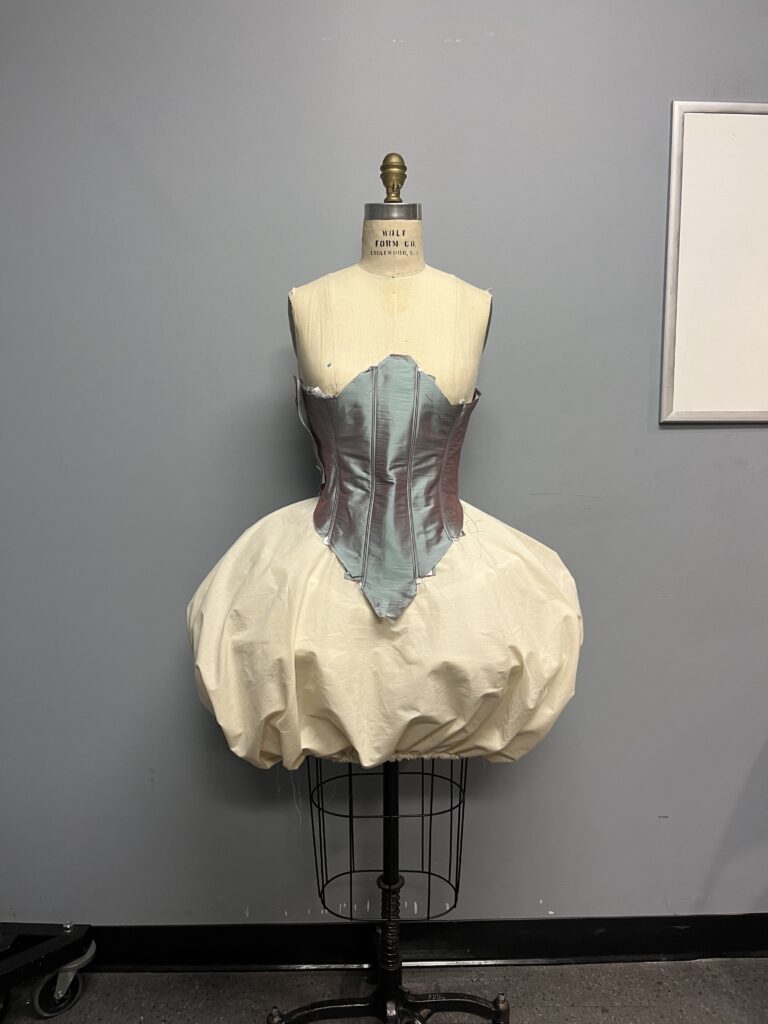
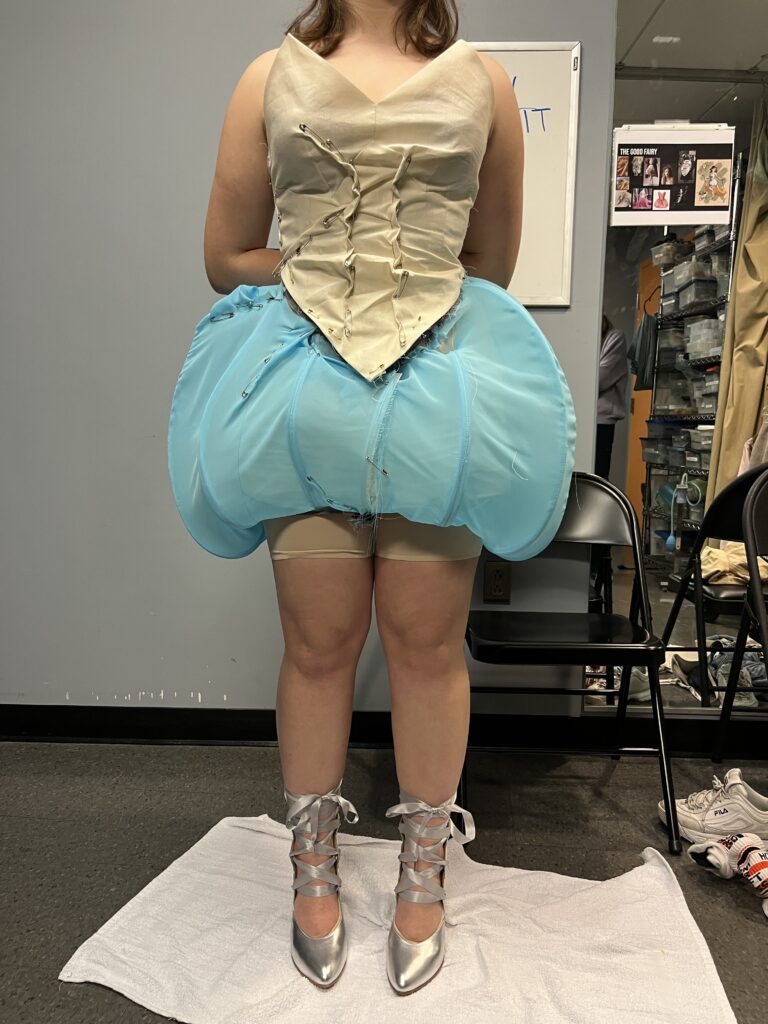
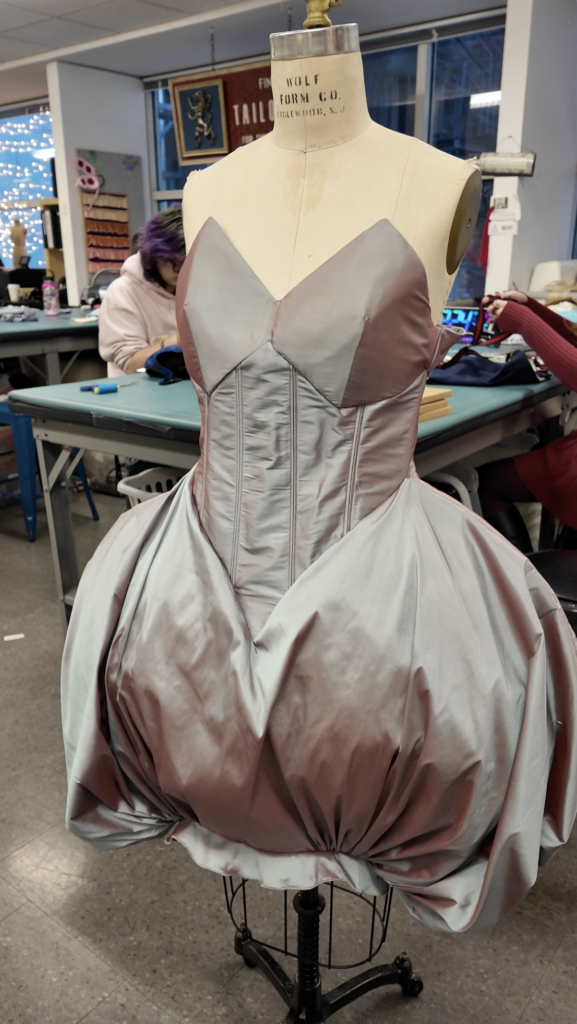
Bringing that vision to life fell to Izzy Bacallao ’26, a Theatrical Design & Production major who built the dress from scratch. During the course of two months and more than 200 hours, Bacallao pattern drafted mockups, and refined the final piece through fittings and adjustments. The dress was one of dozens of costumes worn by performers during Sweet Charity’s run April 16-18.
At the core of the dress is what the costume team affectionately calls “the cage,” which is an internal hoop skirt-like structure that supports the skirt’s dramatic volume. The bodice is equally intricate, featuring boning and sculpted cups reinforced with buckram, along with wiring and pleating to maintain its shape.
“It needed some sort of internal structure to hold up the shape that was desired,” said Bacallao, adding the team talked about many elements of the dress. “We discussed the silhouette of the drawing. Does it need boning? Does it look like a corset? Is it comfortable? Can you move around in it?”
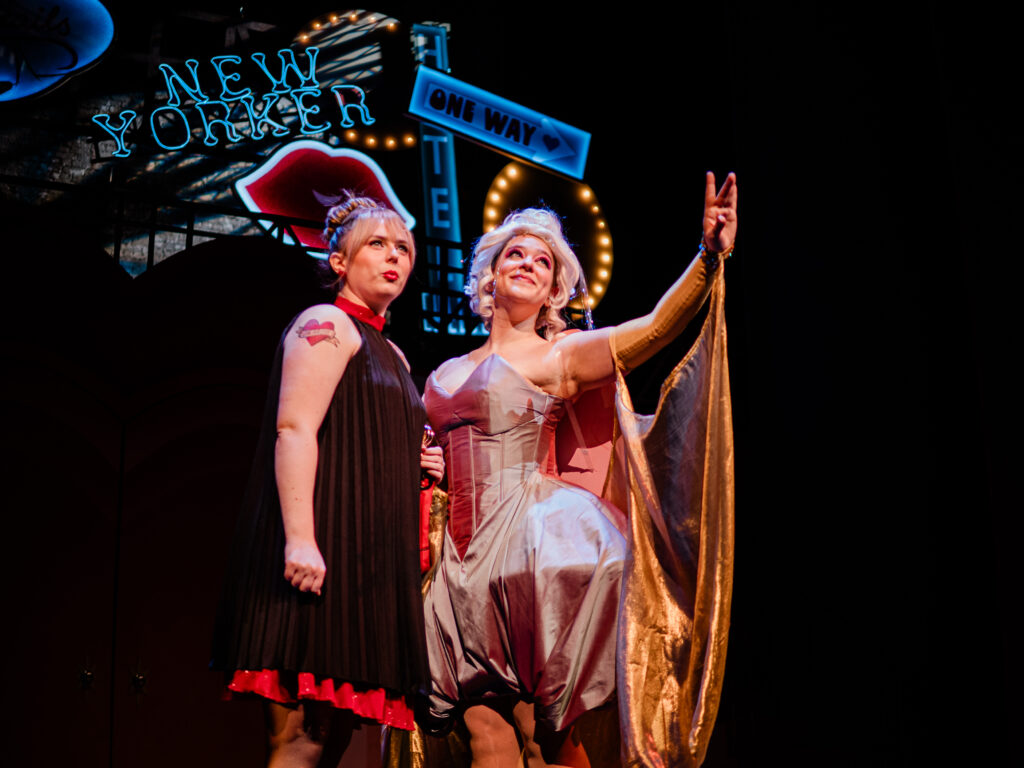
That collaboration extended beyond designer and draper. Performing Arts Cutter/Draper Erika Krause guided the process, while actress Emily Barnett ’26—who wears the dress—played a key role in fittings, ensuring the piece was functional.
She added that the dress helped her find her character, and the dress perfectly captures the Good Fairy’s persona.
“When I first saw the designs, I freaked out,” said Barnett. “Imagining myself on stage in that stunning outfit made me so excited. When I first saw the finished dress, I was so in awe of how they brought the drawing to life, inch for inch.”
Despite its brief time on stage, the Good Fairy dress represents one of the production’s most ambitious builds. It also reflects the hands-on, collaborative training that defines Emerson’s costume program. Both Turovskiy and Bacallao emphasized how working physically—drafting, sewing, fitting—has shaped their growth.
Before coming to Emerson, Turovskiy didn’t realize costume design could be a career path. Now, she’s planning to transform a tailor shop she inherited from her grandmother into a costume house, with the goal of designing for Broadway and film.
Bacallao echoed the impact of the experience. “You aren’t just talking and reading about it. You physically make the thing while working with other Emerson students and mentors. Theater is always collaborative.”
After the final curtain, the Good Fairy dress will continue its life beyond those 30 seconds on stage. It will be on display in early May during a BFA showcase, and likely preserved within Emerson’s costume collection—a lasting reminder that even the briefest moments in theater can take hundreds of hours to create.
Categories
