
Sports Journalist McManus Discusses Growth of Women’s Sports and Media
For sports journalist Jane McManus, covering sports means writing about culture.
“Sports are inherently tied to culture and national pride, and they allow for international engagement. When you cover sports, you engage with that culture,” said McManus. “Being able to cover something that touches people so closely is fun and rewarding.”
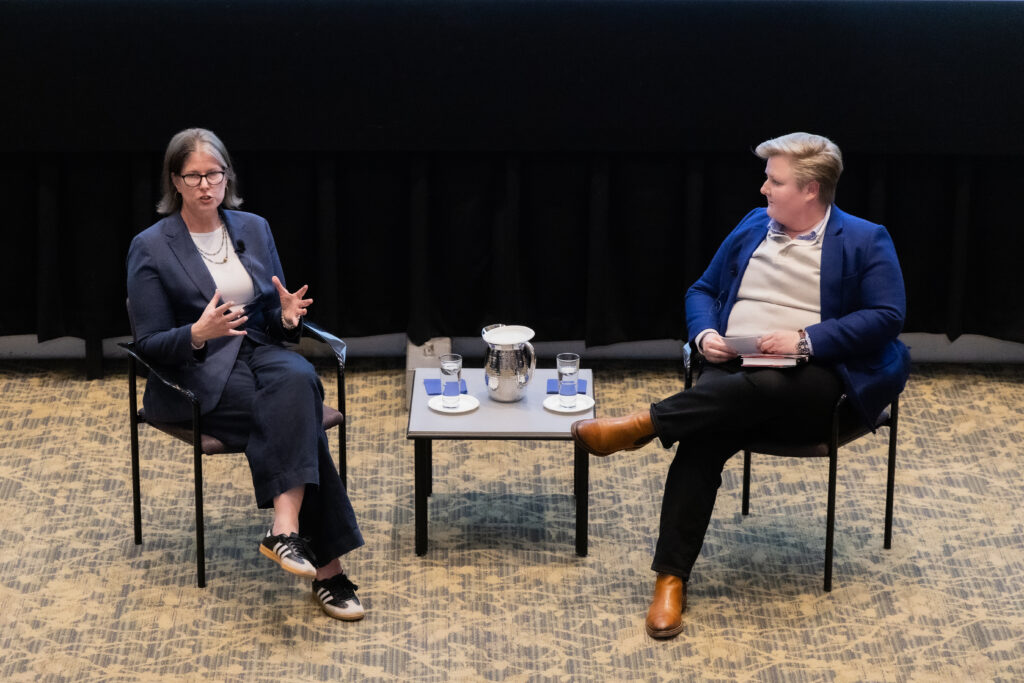
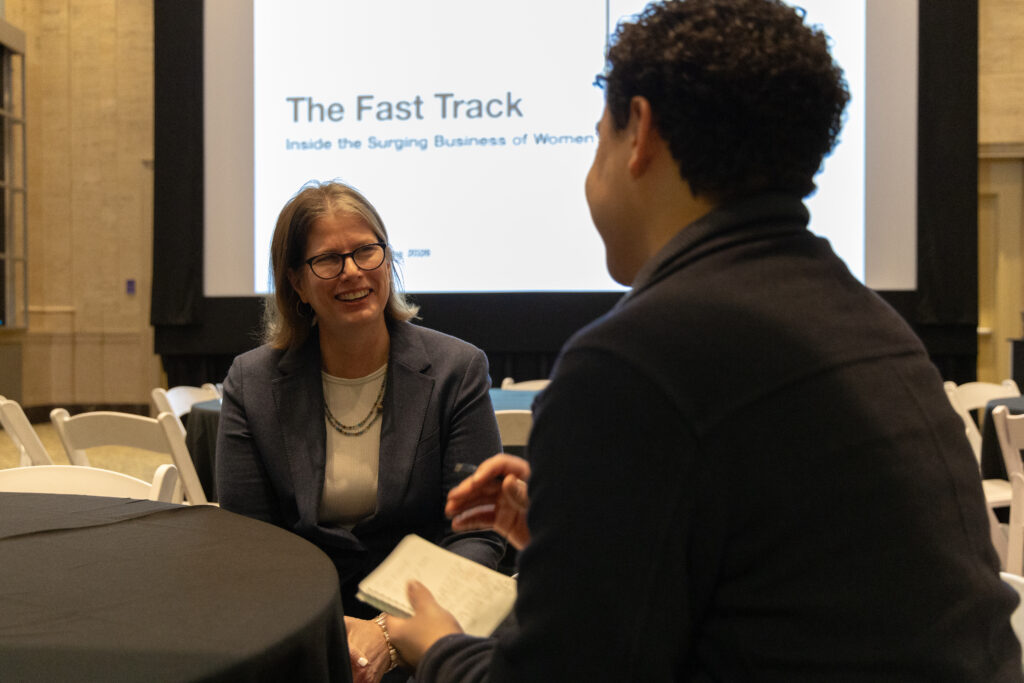
McManus spoke to Emerson students on March 25 in the Bordy Theater, on the topic of gender and women’s sports. McManus currently serves as a senior editor for Storied Sports, a women’s sports media company, teaches at NYU’s Preston Robert Tisch Institute for Global Sport, and at Columbia University. Her book, The Fast Track: Inside the Surging Business of Women’s Sports, was published in 2025. Previously, McManus was a sports columnist for New York Daily News, and worked for ESPN in different capacities, including writing for ESPNW, reporting on the NFL, and hosted different radio shows such as Operation Football and The Trifecta.
During her visit, McManus offered advice for students hoping to enter the field.
“This is an industry where you need to hustle,” she said. “It’s competitive to break into and can often be feast or famine. You need to be ready to compete in a rapidly changing market and continuously set standards for yourself to improve.”
McManus also provided advice for aspiring journalists:
- Constantly update your skills
- Keep up with changing trends
- Be an entrepreneur
- Accept that you’re going to struggle
- Understand your motivation
Communication Studies Associate Professor and Graduate Program Director Mary Anne Taylor moderated the discussion with McManus, and Communication Studies Chair and Associate Professor Gregory Payne provided opening remarks.
“Jane McManus looks at sports as a common currency that unites the world,” Payne said.
McManus discussed her career, and spoke with Taylor about the role of broadcasting in expanding women’s sports, and the recent hot topic of the WNBA’s 2020 collective bargaining negotiations.
“The training wheels are off—now the league is free to sink or swim based on its ability to capture audiences,” McManus said about the WNBA.
Taylor asked about the importance of conversations surrounding women’s bodies and athleticism. McManus noted that women’s bodies have historically been understudied, influencing everything from training to rules—pointing to the lack of checking in women’s hockey as one example.
“You have to show up to demonstrate that there is an audience,” McManus said when asked how to sustain progress in women’s sports. “And you have to fight for policies upholding bodily autonomy—women’s sports exist because bodily autonomy exists.”
During a Q&A, students asked about media scrutiny of women athletes, and the challenges of long-form reporting. McManus acknowledged the persistent focus on athletes’ appearance and behavior.
“That’s why seeing women on the field, engaging in sports and even acting ‘unladylike,’ is important,” she said.
Addressing long-form reporting, McManus discussed writing The Fast Track, and described the challenge of shaping extensive reporting into a cohesive narrative.
“My biggest hurdle was figuring out how to organize thousands of words into a story that justly represents these women,” she said.
Categories
