Building Your Own Major: Quinones ’27 Blends Photojournalism with Path to Law School
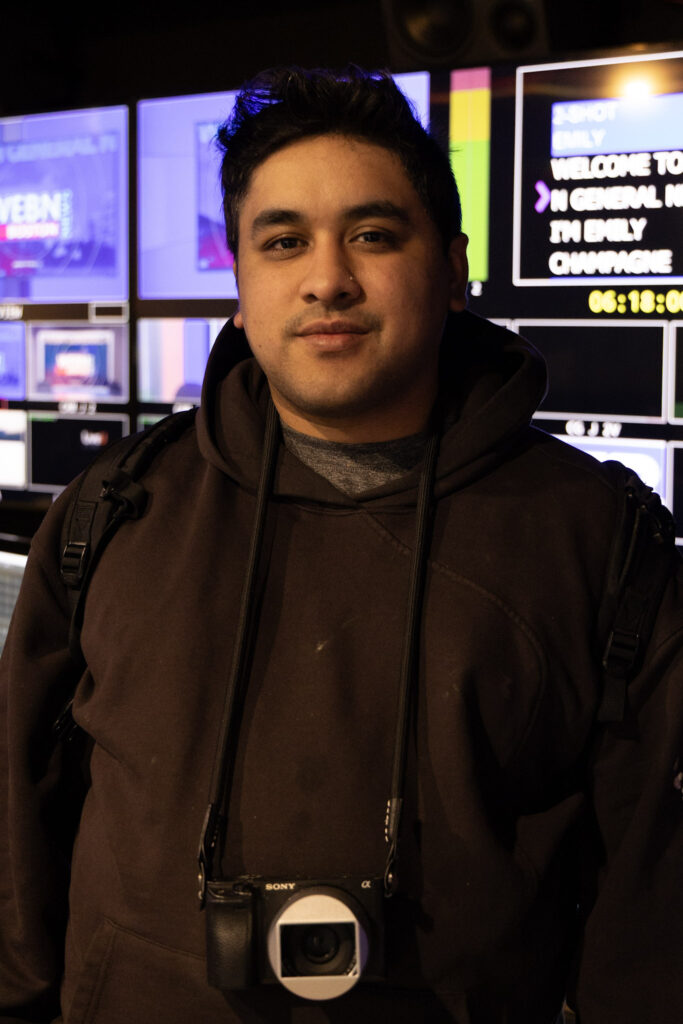
For Marcos Quinones ’27, the Interdisciplinary Studies program has provided a path to combine media, journalism, and pre-law—an approach he’s put into a noted photojournalism project for the Pulitzer Center.
What is your IDS major, and how did you come up with it?
Quinones: I just combined all my interests, and decided to make a [major] that I could be creative with on the media and journalism side, but that also had some conservative structure with pre-law. It just felt like the best way for me to leave with a degree that could be used in many different professions.
Was IDS your original major?
Quinones: Yes. At Hunter College, I was in the Macaulay Honors College, which was IDS-based. When I transferred here and saw that they also had an IDS program, I thought it would be the best fit for me.
You’ve worked as a Reporting Fellow for the Pulitzer Center on Crisis Reporting. Can you tell us about your project and how the opportunity came about?
Quinones: Yes, I just completed that fellowship. My project got published on February 3rd. In my first year of community college, there was a college-wide competition to apply for the fellowship. A bunch of students from my school applied, and I won, so they provided me with a $3,500 grant to cover a story of my choice that I felt was underrepresented.
I originally wanted to do a story on the Young Lords in the People’s Church, but after meeting with the director of the program she recommended that I go document student protests for Palestine [that were taking place in New York]. I did that for a year. I went and interviewed people, took pictures, and then I created a photo essay with a field notes section for the Pulitzer Center website. Through that, I got to meet some pretty cool people. Some of my pictures were featured in the Pulitzer Center’s annual report, which featured the best photos of 2024.
What drew you to Emerson?
Quinones: Gutman Community College partnered with Emerson College for students to attend Emerson’s James Baldwin Writers’ Colony, and I got in on scholarship. That’s where I first connected with Emerson people. After attending Gutman Community College, I attended Hunter College for a semester before transferring to Emerson.
How do your studies complement your already impressive career and the work that you’re doing?
Quinones: I had a great photojournalism professor, [Senior Affiliated Faculty] Joanne Ciccarello. She’s taught me a whole bunch of stuff about the structure of the profession. Photojournalism isn’t just about taking pictures and stating your opinion. There’s a whole lot of fact-finding and structure to the way people write their captions and whatnot. So it was great to learn that stuff. And then the technical skills that you pick up from these classes are super helpful. I’m an older student, so I feel like I came in knowing a lot, but I definitely have learned a lot more here and have had some really cool professors who have helped me figure out how to take it to the next level.
What extracurricular activities at Emerson have been most helpful or rewarding for you?
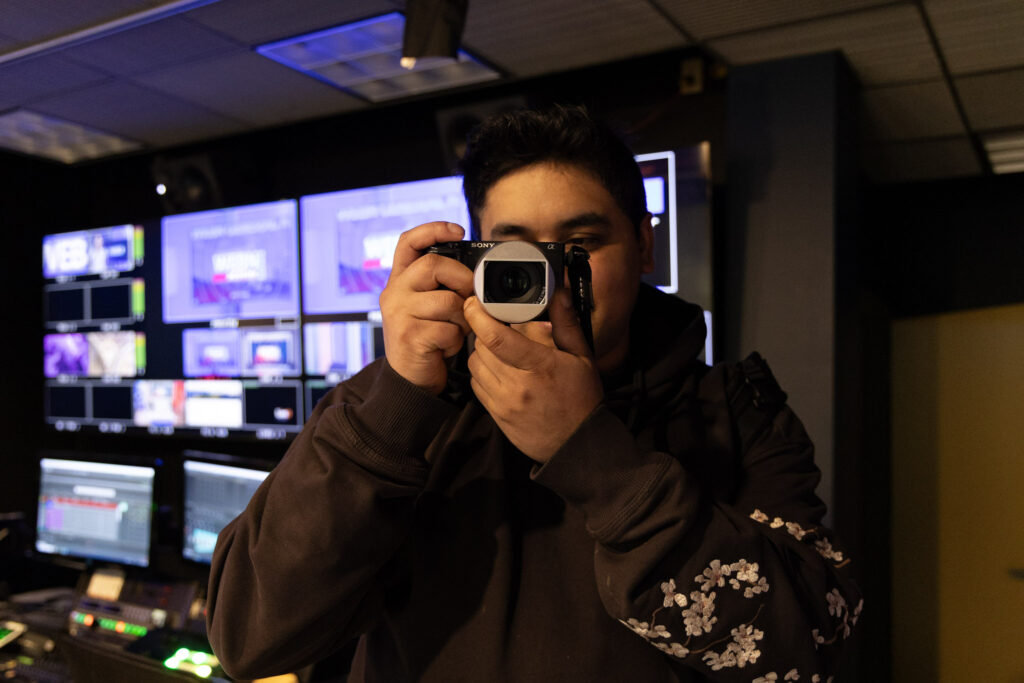
Quinones: I do a lot of BTS (behind the scenes) shoots for films. That’s been fun. I get a lot of time on student film sets where I get to take pictures. I’ve photographed a lot of events for Emerson Today as well, which helped me learn how to do assignment shoots. A lot of my extracurriculars I do on my own—I went to Minneapolis to document what was happening out there [earlier this year], for example. I keep myself busy.
How’s your IDS capstone coming along so far?
Quinones: For the most part, I’ve already completed it. I just need to do more research-based stuff. I’m combining some of my photo essays and trying to do it journalistically, but also with some creative liberties to show what photojournalism could be if we broke some of the rules. It’s unconventional journalism; the way I edit the photos is very different, so it’s kind of what I always wanted to do with my work but couldn’t because of the way the industry is.
What drew you to photojournalism and your other disciplines?
Quinones: I got into photojournalism during Covid. I saw a lot of different things happening around me, so I decided to buy my first camera and then go outside and document what I could. That ended up turning into the career I have now. I went to Minneapolis back then too, when the Derek Chauvin trial was happening. It took off from there. Within my first few months of getting into photojournalism I’d been commissioned by Documented NY to do a story about an encampment of undocumented homeless people. I’ve been interested in law pretty much my entire life, and I’m interested in media because I want to learn other ways of storytelling.
What would you like to do after graduating from Emerson?
Quinones: I’ll continue with photojournalism, but I want to go to law school. I think journalism is something you can combine with any set of skills. I see it as the best way for me to be civically engaged and do something important while also being able to leverage my talents in a way that’ll get me scholarships or grants.
How has Emerson supported you academically, personally, or professionally?
Quinones: I got a grant from IDS to do my capstone, which was helpful. The program is so small that you can speak to the director almost anytime you want, which is pretty cool. [Associate Professor and Director of Interdisciplinary Studies Major] Jaime Tanner has been awesome. The IDS program structure is so open to you taking classes in whatever department that you’re interested in, and that’s always pretty helpful. Getting to meet all these incredible professors has been great. You can sit down and talk with them anytime about projects you have going on. I’ve sent my projects to professors I’ve never met and they’ve taken meetings with me within the same week even if I don’t have class with them. Emerson opening its doors to me to be a part of the James Baldwin Writers’ Colony helped me expand my horizons and experience other countries. We went to Kasteel Well and then visited London and Amsterdam. Emerson’s provided a great foundation for me.
Categories
