
Lessons from the Mud: Finding Stories of our Changing Landscape
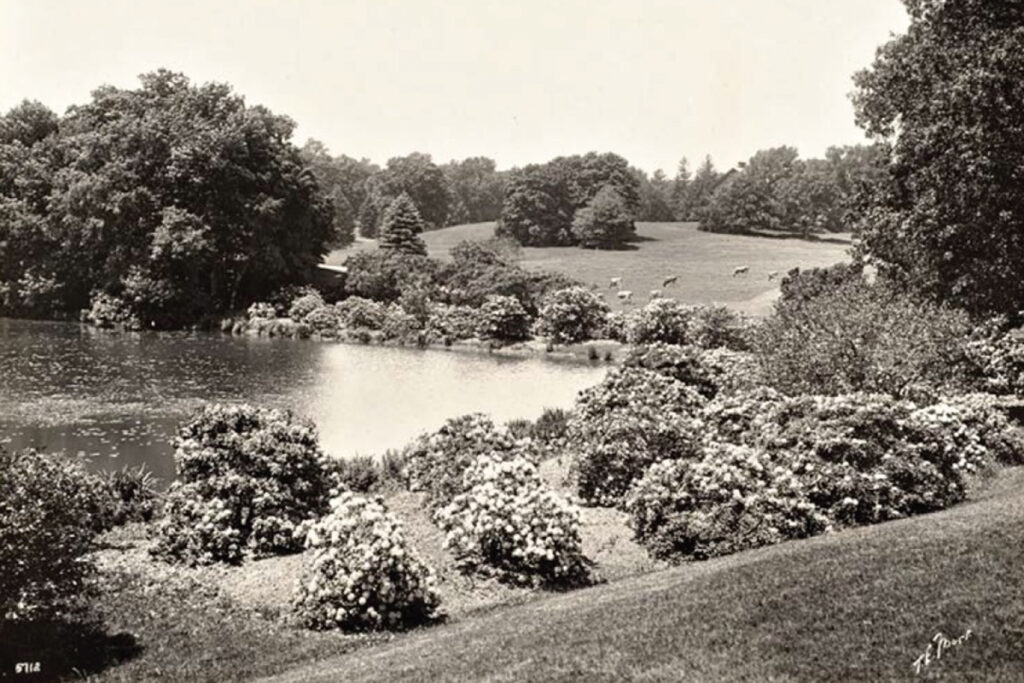
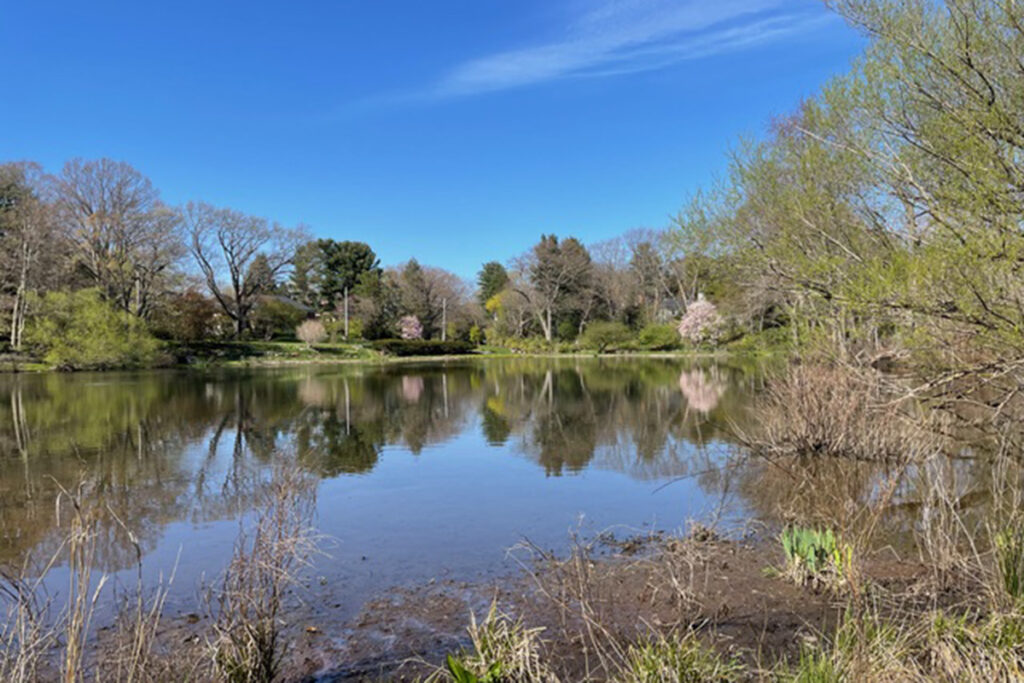
Ten years ago, at a dinner party in Brookline, Mass., Professor Wyatt Oswald was led on a stroll near his host’s home, and came upon a picturesque pond in a park-like setting.
His host explained that the aquatic health of Sargent’s Pond was failing, and that it was slated to be dredged. Oswald had the only natural response.
“I just couldn’t help myself, I was like, ‘What about all the mud at the bottom of the lake? It’s an archive of the history of the landscape!’” he recalled.
Oswald, who teaches environmental studies courses in the Marlboro Institute for Liberal Arts and Interdisciplinary Studies at Emerson and researches how ecosystems respond to climate change, gathers his data by sampling mud cores from New England water bodies and analyzing pollen grains within the muck. Typically, he’s studying samples that date back 14,000 to 15,000 years– when the glaciers retreated.
Read: Incendiary Study: Climate, Not Humans, Shaped Ancient New England Landscape

Sargent’s Pond is not that old. It is part of the former Holm Lea Estate, and was created in the 1870s by one of the property’s former owners. Particles from a 150-year-old mud core may not have much to say about climate change, but Oswald believes they could tell us something about more recent transformations in the New England landscape.
Today, Oswald, with research assistance from two Emerson co-curricular students, has pulled from the sludge stories about New Englanders’ changing tastes and priorities, and possibly even the ravages of disease among trees. Those findings were published in the latest issue of Arnoldia, the quarterly magazine of the Arnold Arboretum.
‘What about the mud?’
Oswald arranged to capture a core from Sargent’s Pond before the dredgers came, and stored it away at the Harvard Forest, a Harvard University facility in Central Massachusetts where his research is based. It sat there for a number of years as Oswald focused on other projects and his teaching.
While on sabbatical a few years ago, Oswald began to mull over his Sargent mud and decided to apply for funding from the Arnold Arboretum, a 280-acre botanical preserve in Boston’s Jamaica Plain neighborhood, now managed by Harvard.
“I applied for this award called the Charles Sprague Sargent Award, which was serendipitous, because it was Charles Sprague Sargent who built the pond in the first place,” said Oswald. Sargent, in addition to owning Holm Lea during the late 19th century, was the first director of the Arnold Arboretum. “I thought it was sort of meant to be.”
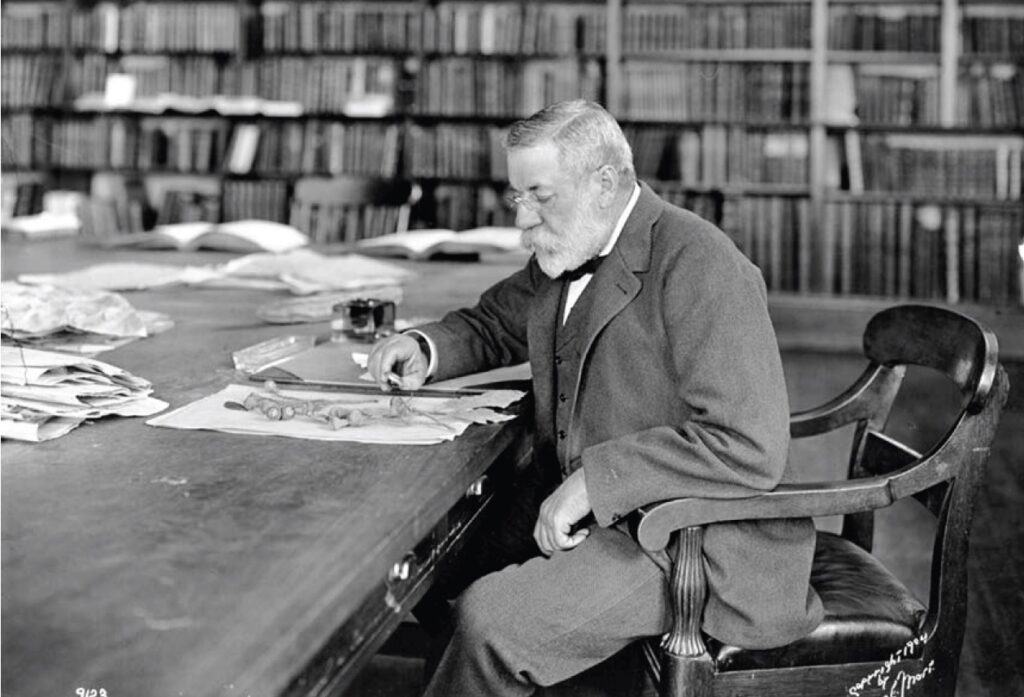
Oswald got the funding, which paid for some of the lab work required to prepare samples for pollen analysis. He also got the idea to try something new: involving Emerson students in a co-curricular program designed around the project.
Ella Mastroianni ’25, a Writing, Literature and Publishing major, and Marketing Communication major Yoshiko Slater ’25, were in Oswald’s Trees and Forests course, and jumped at the chance to explore the natural environment in a new way.
“It was nice to be able to plug them in in a way that they got academic credit for, and they were both really, really engaged in the work and interested in the science and the storytelling,” Oswald said.
While Oswald set about analyzing the various pollen grains camped out in the core so he could tell a story about how flora around the pond have changed over the decades, Mastroianni and Slater combed through the archives at Arnold Arboretum, trying to piece together the story of the humans whose decisions, lifestyles, and tastes influenced what grew around the pond.
“They did this archival historical work,” Oswald said. “They would get themselves down to the Arboretum and set up a time to work with the archivist, and were really good about helping me think about how Sargent’s materials were going to be useful for telling the bigger story about this place.”
As clear as mud
A day of digging into lake mud can yield years of lab work, Oswald said. He’ll subsample a core, collecting cubic centimeters of mud at certain depths. The subsamples are then sent to a lab at the University of Minnesota, which uses chemical washes and sieving to isolate the pollen from the mud (this is what the Sargent Award helped fund).
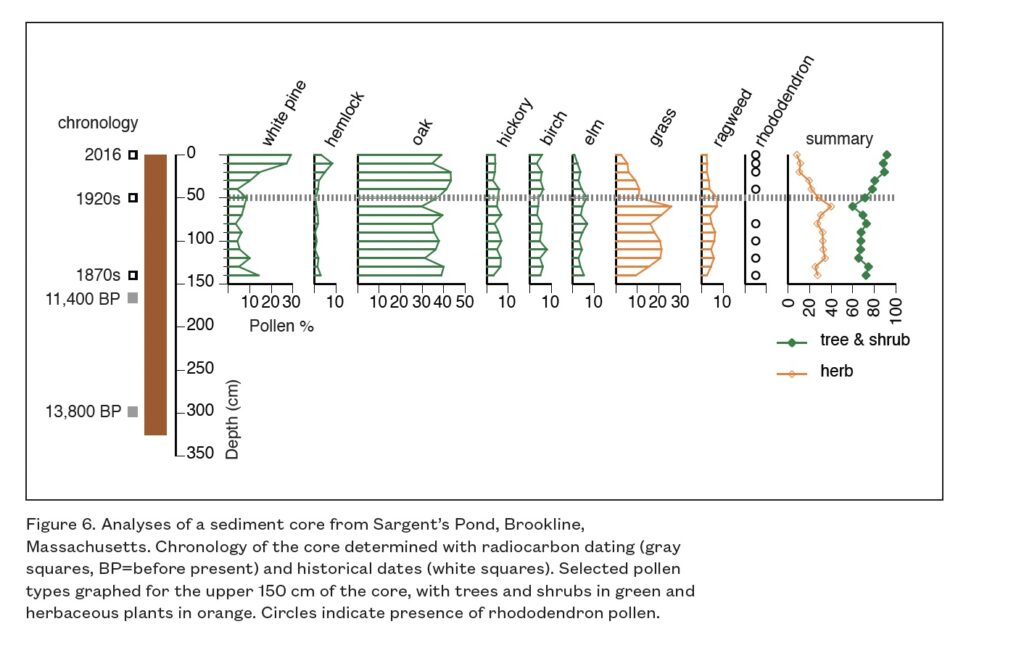
Under a microscope, Oswald can identify what plant these grains came from based on size and shape — often to a genus or family level, occasionally down to the species. If he sees an interesting change in vegetation, he’ll send another mud sample from the depth at which it happened to get a radiocarbon date.
The depths from the 1870s to the early 1900s were dominated by pollen from grasses and ragweed, Oswald said. According to archives unearthed by the students and reported in the Arnoldia article, “Reconstructing 150 Years of Vegetation History on the Holm Lea Estate,” Sargent’s landscape aesthetic was pastoral. The conservationist John Muir, who visited in 1893, rhapsodized about the mansion and grounds and the “pond covered with lilies, etc., all the ground waving, hill and dale, and clad in the full summer dress of the region, trimmed with exquisite taste.”
“[Sargent] very purposefully kept a lot of the estate in sort of rolling, grassy areas and patches of woods, and you can see that in the [archival] photos,” Oswald said.
This would’ve made Sargent something of a preservationist. Southern New England was heavily wooded until European colonists began clearing the land for farms in the early 17th century, creating a landscape with far fewer trees. This environment predominated until the early 19th century, but after the Industrial Revolution, fewer people farmed the land, and much of it reverted back to forests and woods.
“Sargent sort of kept a pastoral landscape going a few decades longer than was the case across the whole region,” Oswald said.
After the turn of the 20th century, as the estate was subdivided and turned into a suburban neighborhood with residents who valued shade and privacy, tree pollen proliferated in the mud. In a more recent core sample, Oswald spotted a subtle drop off in the elm tree pollen counts – right around the time Dutch elm disease began decimating trees across North America.
(He did not see similar evidence for the demise of the American chestnut in the early 20th century. This could be for a couple of reasons, Oswald said: chestnuts weren’t very plentiful in Eastern Massachusetts to begin with, and chestnut trees don’t make as much pollen as other species.)
The further back in time you go looking for changes in regional vegetation, the bigger the lessons you can draw from how ecosystems have responded to climate change over the millennia, Oswald said.
Looking at just the past 150 years provides a more subtle takeaway, he said, which is that we humans are the stewards of our landscapes. “We should be purposeful in the choices that we make about what our vegetation looks like,” said Oswald.
The trees that today ring Sargent Pond, and much of our region, provide us with so much: carbon dioxide extraction, oxygen supply, shade.
“We’ve gotten to the point where we have a forested Greater Boston after a very high loss of forest during the time of European agriculture, and I think we shouldn’t take that for granted, “ he said. “I think a takeaway is to do what we can to take good care of our urban forest.”
Categories
