
Remembering Professor Emeritus Stephen Shipps, Who Inspired Generations of Emersonians
Professor Emeritus Stephen Shipps, whose courses challenged generations of Emerson students to think deeply about art, creativity, and the nature of meaning, has died at the age of 81.
Shipps taught in the College’s Visual and Media Arts Department from 1970 until his retirement in 2012.
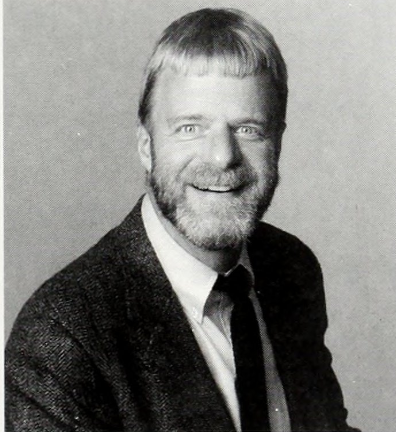
Known for his warmth, curiosity, and intellectual rigor, Shipps left a lasting mark on countless students and colleagues during his decades at Emerson. He was perhaps best known for his iconic course, The Artist and the Making of Meaning, a class remembered by generations of alumni for pushing them to question assumptions, explore big ideas, and see the world through new lenses.
“We recently heard the sad news of the passing of Steve Shipps, Professor Emeritus,” wrote Brooke Knight, dean of faculty and associate provost, in a message to past and current faculty. “Steve was a genial, enthusiastic teacher who cared deeply about his students.”
Knight recalled sharing an office wall with Shipps for eight years and witnessing firsthand the profound impact he had on students who took his classes or sought his advice.
“Those of us who have been at Emerson for a while will know the huge hole his passing leaves in our hearts,” Knight wrote. “I know I will miss him terribly.”
Shipps’ photography was exhibited in galleries throughout Boston, and published as illustrations in numerous periodicals. He garnered many awards during his career, including a National Endowment for the Humanities Fellowship-in-Residence for College Teachers; a fellowship from the Getty Center for Education in the Arts; the Emerson College Alumni Association Leonard J. Riendeau Award for Outstanding Dedication and Contributions to the College; and the Emerson Gold Key Honor Society Award for Outstanding Teaching.
But accolades tell only part of Shipps’ story. Former students remembered a teacher whose wisdom, curiosity, and compassion stayed with them long after graduation.
Michael Mulvey ’80 recalled how Shipps encouraged experimentation and learning through failure in a non-silver photography course: “He pushed us to experiment. [The] best way to learn is by your mistakes.”
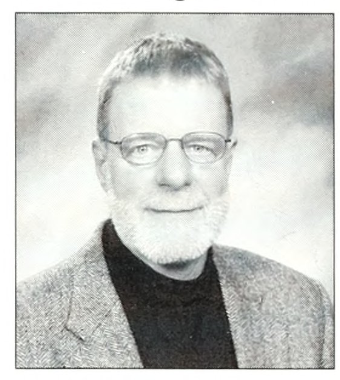
Maureen Giles Camerato ’05 took an interdisciplinary seminar with Shipps—and the first class met on the morning of September 11.
“I remember how calm Professor Shipps was explaining what happened,” she said. “It was much appreciated by a class full of freshmen already anxious on their second day of classes [that semester].”
Others remembered the energy and enthusiasm Shipps brought to every discussion. Sharon Unterman Counts ’96 called The Artist and the Making of Meaning “one of the most influential learning experiences I’ve ever had.”
Paulie Goleburn ’13 said Shipps’ beloved Artist and the Making of Meaning class was the most unique and memorable class they took at Emerson. Said Goleburn, “He had this infectious energy and passion, which was wonderfully youthful for a guy his age. His class actually forced you to think and reconsider your priorities and understanding of the world. His questions made you examine your perceptions.”
For Park Cofield ’05, one classroom moment captured Shipps’ enduring sense of wonder. He recalled the professor reading aloud from a difficult, abstract novel.
“He read page after page with such delight and curiosity! It really struck me at how much joy he found in the fact that something so abstract and inaccessible existed in the world,” Cofield reflected. “He was so amused by the puzzle it left behind and the intentional decisions the author had made to craft each and every page.”
Shipps was regarded just as highly by his fellow faculty members.
Professor Emeritus Tom Cooper remembered Shipps as both a trusted colleague and an artist with a unique way of seeing the world.
“When I wanted to know something about photography or the larger visual arts, Steve saw aesthetically what I and others did not see—hidden design, beauty, pattern, and suggestion,” Cooper said. “He will leave something that we in Hawaii call a ‘puka,’ a hole—one that cannot be filled.”
School of Film, Television, and Media Arts Professor John Craig Freeman said Shipps’ commitment to the arts never wavered.
“Professor Stephen Shipps was beloved by his students and colleagues alike,” Freeman said. “His steadfast commitment to the value of teaching art and the creative imagination, in a national system of higher education which increasingly denigrates any discipline that cannot be directly tied to vocational outcomes, is sorely missed.”
SOF Senior Scholar-in-Residence and Graduate Program Director Jim Lane said Shipps was the ideal colleague.
“His commitment to academic excellence was impressive and he was dedicated to challenging his students to be better thinkers and artists,” said Lane. “His enthusiasm for artistic pursuits and self-reflection was impressive. He was a kind soul and his brand of humor was deeply appreciated. He always made time to talk to you. He would look you right in the eye when he talked because he was genuinely interested in what you had to say. He was a model professor.”
SOF Affiliated Faculty Patrick Marshall ’07 was a student of Shipps, and reconnected with Shipps when Marshall started teaching at Emerson. Shipps was no longer in Boston, but the two corresponded, and upon learning Marshall had a newborn, Shipps sent him a book for his new baby.
“He was a transformative teacher that, in the best sense of a liberal arts education, taught you not what to think, but asked the questions that opened up how to think, how to engage with the world, how to make sense of it, and how to act within it,” said Marshall.
Categories
