
Emerson Partners with EU on Cross-Cultural Filmmaking Exchange
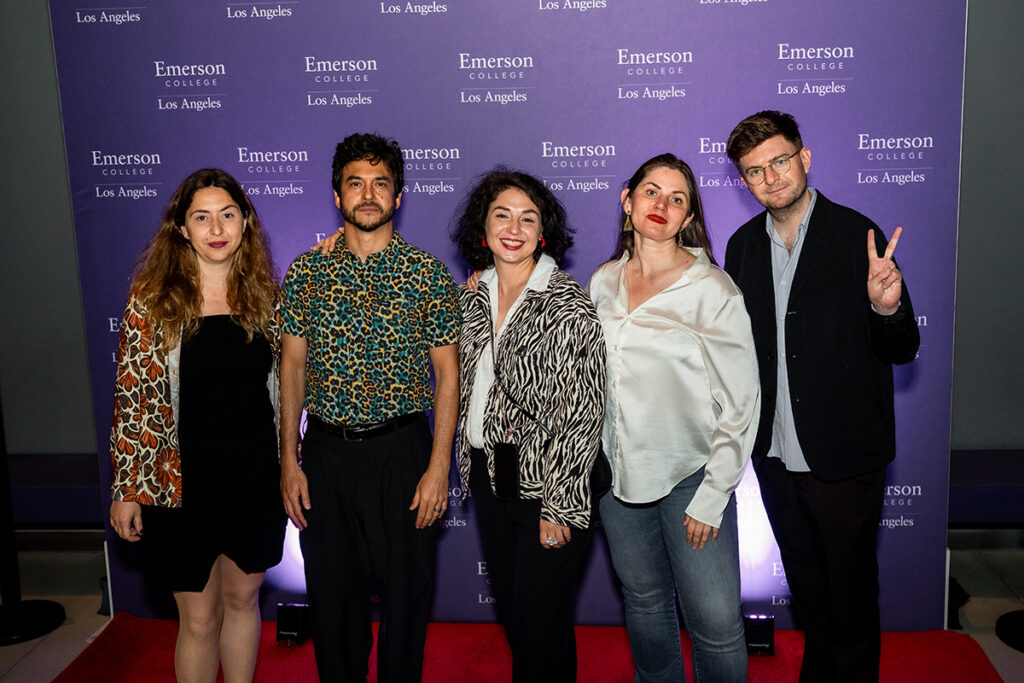
Transatlantic Rising Stars filmmakers, left to right, Sofia Exarchou, Guillermo Galoe, Mara Tamkovich, Moonika Siimets, and Leonardo van Dijl at an Emerson LA reception for the delegates, Emerson community members, and people from the film industry. Photo/Joshua J. Ortiz 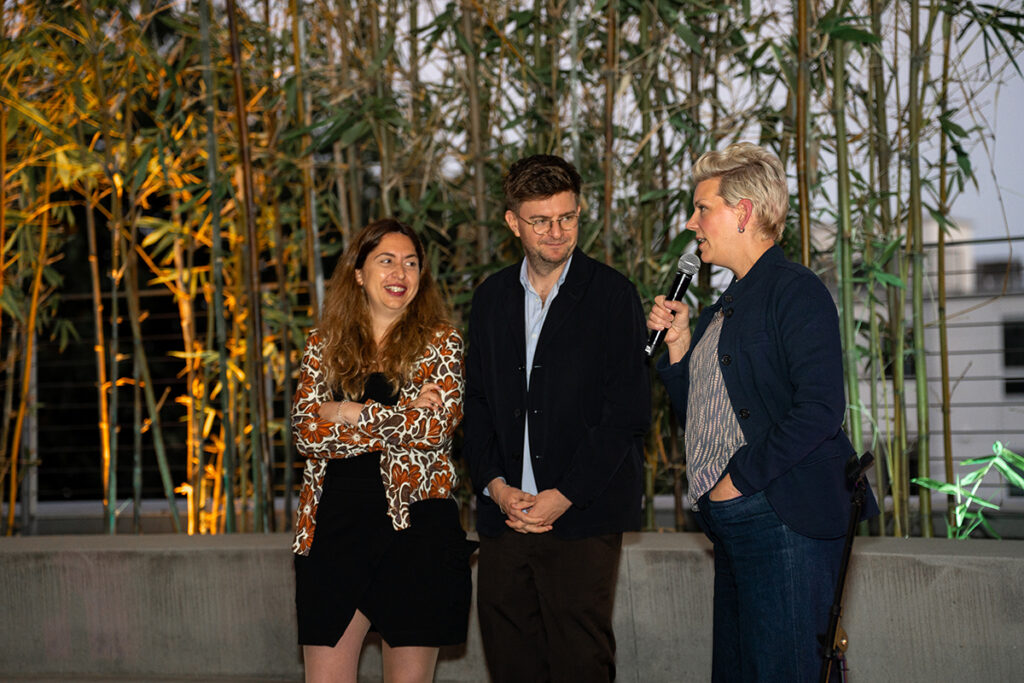
Writer/director/producer and director of the Rising Stars filmmaker program Seanne Winslow, right, introduces filmmakers Sofia Exarchou and Leo van Dijl at ELA. Photo/Joshua J. Ortiz 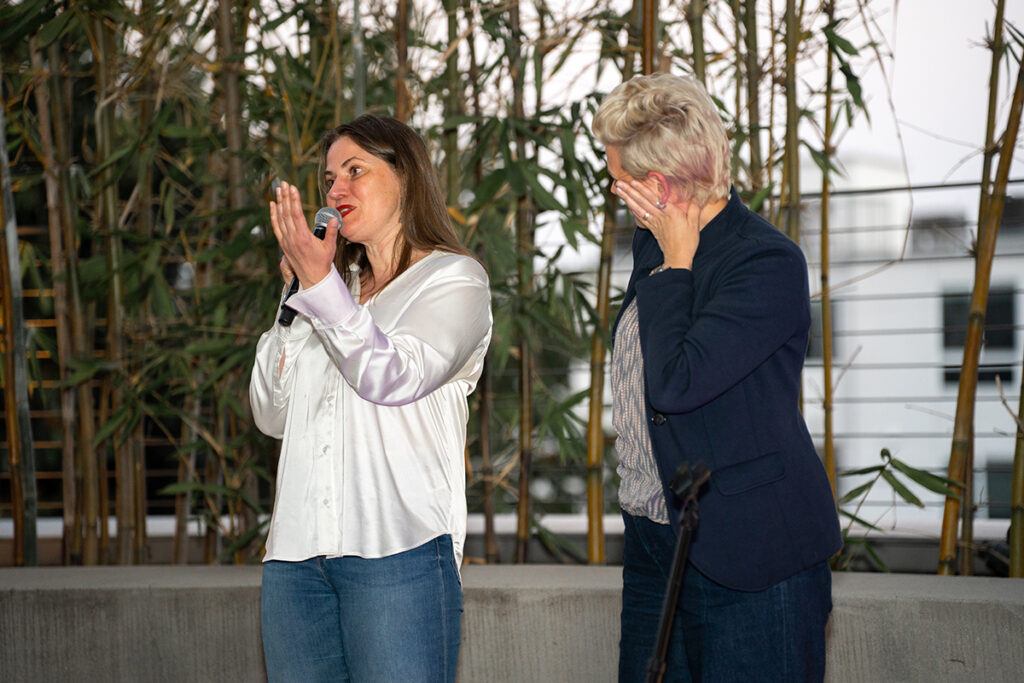
Estonian filmmaker Moonika Siimets speaks at the ELA reception. Photo/Joshua J. Ortiz 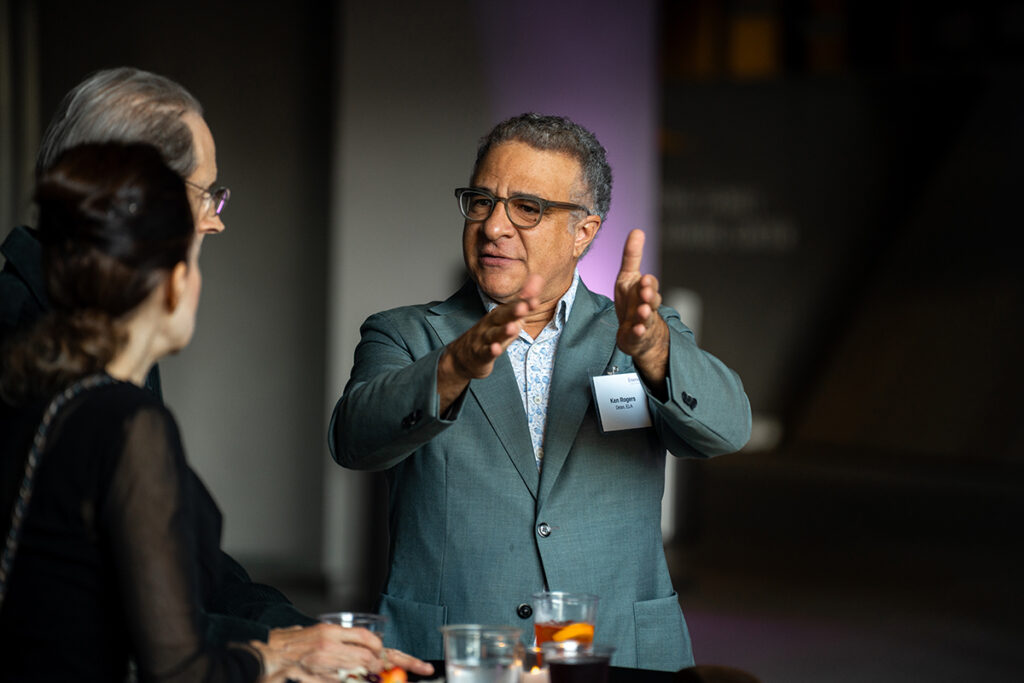
Emerson Los Angeles Dean Ken Rogers speaks to guests at the ELA reception for the Transatlantic Rising Stars delegation. Photo/Joshua J. Ortiz
Emerson film students on both coasts had the opportunity to discuss their craft with five of today’s most exciting European filmmakers this summer through a European Union program designed to strengthen creative and industry ties between artists on both sides of the Atlantic.
The Transatlantic Rising Stars Project is a three-year initiative of the EU Delegation to the U.S. created to “advance artistic development, foster dialogue, build community, and boost visual artists, musicians, and filmmakers.”
Emerson alum Michael Nowak ’16, lead business development manager in strategic communications and public diplomacy for Stantec Belgium, was instrumental in getting the College involved in the film track of the project, which is being led by award-winning writer (Netflix’s Nowhere), director (The Falconer), and producer (The LEGO Movie) Seanne Winslow.
“The Transatlantic Rising Stars program connected our students and faculty with exceptionally talented and accomplished European filmmakers who generously shared their craft and journeys,” said Shaun Clarke, interim dean of the School of Film, Television, and Media Arts. “At the same time, it allowed these international filmmakers to experience Emerson’s world-class curriculum, facilities, equipment, faculty, staff, and students.”
Nowak, while building the proposal for the project, reached out to his former professor, Senior Distinguished Producer-in-Residence Linda Reisman, for advice on what a film track might look like. He also wanted to know if his alma mater, with its Los Angeles campus and connections and programming in Washington and Europe, would get involved.
“Taken together, these factors pointed to Emerson as an authentic partner, one that could not only collaborate but help advance Transatlantic Stars’ goal of building sustainable, long-term transatlantic relationships,” Nowak said.
The five filmmakers who traveled to the U.S. with the program were selected from a pool of over 160 applicants. All won accolades for their work.
Spanish filmmaker Guillermo Galoe won a Société des Auteurs et Compositeurs Dramatiques (SACD) Award during Cannes Critics Week for his debut feature, Sleepless City; Belgium’s Leonardo van Dijl won the same award in 2024, as well as the Gan Foundation Award for Distribution for his film, Julie Keeps Quiet, executive produced by Naomi Osaka, according to Cineuropa. Greek filmmaker Sofia Exarchou’s first feature, Park, won the San Sebastián New Directors Award. Mara Tamkovich of Poland premiered her debut, Under the Grey Sky, at Tribeca, and was nominated for the European Film Awards’ European Discovery – Prix FIPRESCI.
Estonia’s Moonika Siimets, whose films The Little Comrade and The Black Hole gathered nominations and awards at festivals in Europe and South Korea, called the Rising Stars project a “very interesting adventure,” one that gave them the opportunity to learn about the American film industry, and meet people who can inspire them and possible help them grow, creatively and professionally.
“It’s a little bit like building cultural bridges,” Siimets said. “I think it is time [for] humans to keep up with each other in different cultures so that the world will get better.”
The filmmakers began their two-week journey at Emerson’s Boston campus, where they got a tour of the College’s filmmaking facilities, from the analog to the cutting edge — Steenbeck film editing tables and a darkroom, a sound editing studio, and the Emerging Media Lab, where students can work on animation, game design, virtual and augmented reality projects, 360-degree cinema, and more.
The visitors seemed particularly impressed with the Equipment Distribution Center, where students, beginning in their first year, have access to industry-grade cameras, lights, and sound recording equipment.
After the tour, the filmmakers met with students in the Global BFA in Film Art program who are studying in Boston for the summer before returning to Paris College of Art for the next leg of their joint degree. Students and filmmakers gathered around tables in the Bordy Theater to talk about the craft, inspiration, perseverance, and their mutual love of film.
Lia Contreras ’29 and Bonnie Watkins ’28 sat at a table with Galoe, who talked to them about how to keep the spark alive when working on a project for a long time.
“[Galoe] says to just continue to keep on doing it and push through it,” Contreras said. “He compared it to a relationship, and I thought that was an interesting perspective to have.”
Talking to an auteur filmmaker was a great way to put what they’re learning in the GBFA film program into context, Watkins said.
“Being in Paris, we’ve been learning about the auteur style of filmmaking, which is completely different than commercial filmmaking, and so speaking to an auteur, seeing how that works, where you may be the cinematographer instead of working with another individual, I feel like that’s important to see,” she said.
From Boston, the EU group made their way to the Berkshire International Film Festival in Western Massachusetts, where their films were screened for a new audience. Then they headed to Los Angeles, to visit studios and meet with content developers and industry executives, including Juan Devis ’93, P ’28, who recently was named president of Film Independent, the nonprofit behind the Spirit Awards.
The visit demonstrated the power of cross-cultural creative exchange and support for independent filmmaking, Emerson Los Angeles Dean Ken Rogers said, as well as showcasing Emerson as “a hub where filmmakers from different countries can come together to discuss their work and look for international co-production opportunities.”
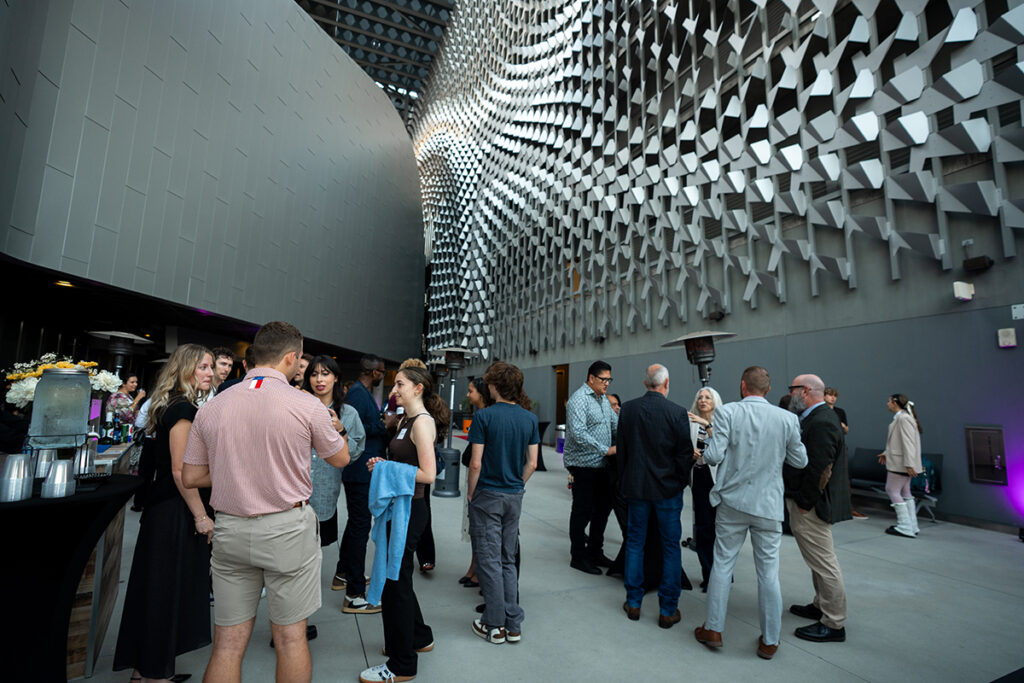
Students in LA accompanied the group on some of their studio stops, and connected with the filmmakers at a reception ELA hosted for the delegation, industry people, students, alumni, and faculty. This year’s project concluded in Washington, D.C., where the filmmakers joined visual artists and musicians with the Rising Stars Project for a State of the Arts Night public summit.
Rogers said in years two and three of the project, he hopes to expand the program to include screenings and discussions of all the selected filmmakers’ work, along with panel discussions on the future of transatlantic filmmaking, and more opportunities for students to engage in cultural exchange.
Clarke, SOF’s interim dean, agreed that the program was beneficial to students and filmmakers.
“This is a valuable partnership for our school, and I look forward to our continued collaboration,” Clarke said.
Categories
