Leeves Provides Weeklong Master Class on Table Reads, Auditions, and More
For Riley Caiazza ’27, hearing her script read aloud for the first time was an important milestone. But having Emmy Award-nominated actress Jane Leeves, P ’27, lead that table reading made the experience even more meaningful.
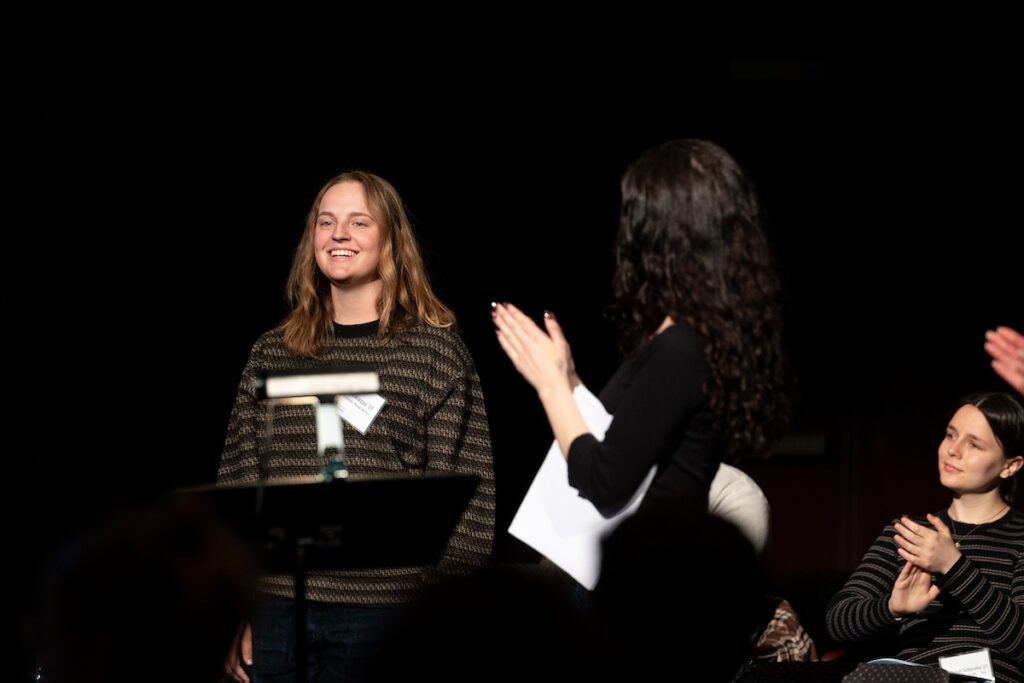
“I thought it was super insightful. I loved collaborating with writers and actors who delved into the characters,” said Caiazza, president of the Emerson Comedy Workshop.
The table reading brought together collaborators from across Emerson. Caiazza had developed her script prior to the workshop in a class with School of Film, Television and Media Arts Assistant Professor Owen Egerton. Performing Arts Associate Professor and Interim Chair and Head of Acting Lindsay Beamish recruited actors, and the writers were part of a comedy workshop course led by Professor and Founding Director of the Center for Comedic Arts Martie Cook ’82.
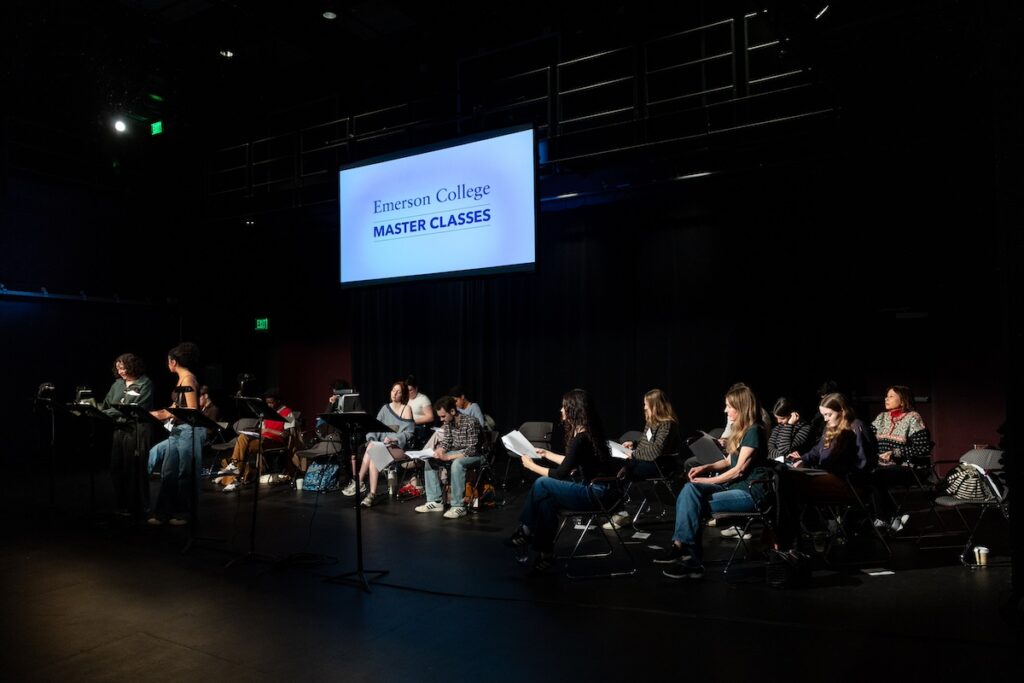
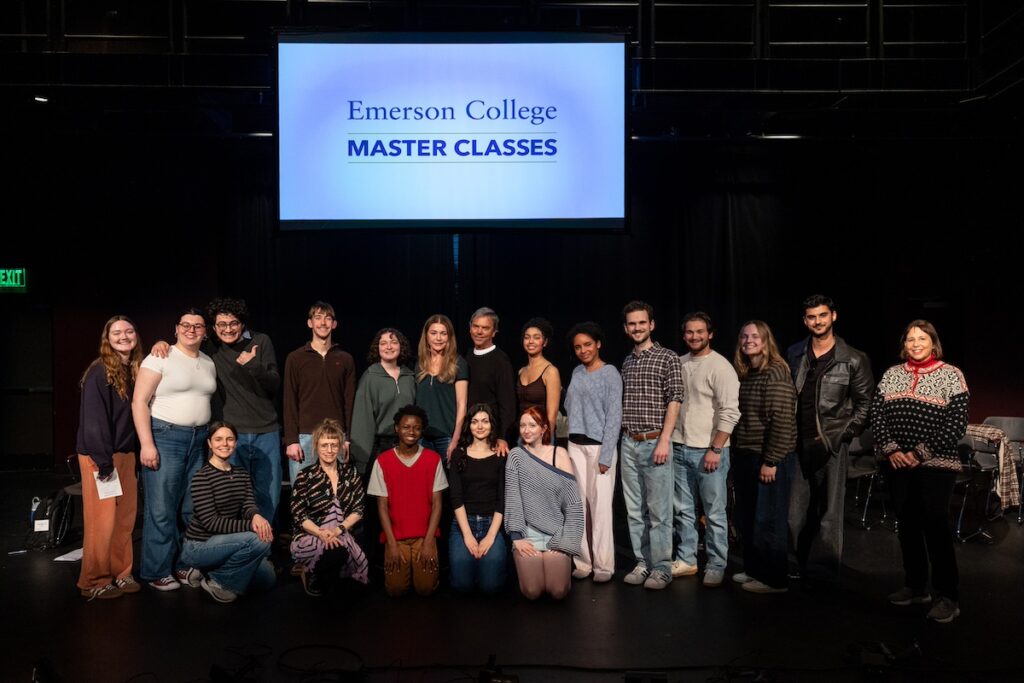
The group assembled on March 24 with Leeves, as part of the actress’ weeklong visit to Emerson. Leeves and her husband, former Paramount executive Marshall Coben, P ’27, spent the week participating in workshops with students, and meeting with students, staff, and faculty in acting classes and a Business of Creative Enterprises course. Levees’ and Coben’s visit culminated with a Master Class on March 27—a final reading of Caiazza’s original comedy, Magic Meadows, in front of an audience.
Emerson College Master Classes is a dynamic initiative directly supporting the Extraordinary Emerson 2030 strategic plan. The program connects students with accomplished professionals and industry leaders in the arts and communication, providing the real-world expertise essential for career readiness. Master Classes are held in Boston and Los Angeles exclusively for the Emerson community.
The Best Shows Are Built on Collaboration
One of the classes that Leeves and Coben visited was a Creative Collaboration course taught by Marketing Communication Affiliated Faculty Nerissa Williams Scott, MFA ’15, where they emphasized the importance of teamwork in the entertainment industry.
“The most successful projects I’ve been part of have been the most collaborative ones where everyone in the building had a voice,” said Leeves.
She pointed to her experience on the Emmy Award-winning show Frasier as a defining example of effective collaboration, noting that everyone—from the prop department, to wardrobe, to writers and actors—contributed to the creative process.
“We would start our days by reading through scripts…some are wonderful, and others needed changes after the table reading,” said Leeves. “After the readings, the director would ask if anyone had questions. That would start the discussion and sometimes there was silence. Silence is good because you don’t need to have all the answers immediately.”
After discussions, writers would revise scripts before returning the next day to continue refining the episode. Actors and writers frequently worked together during rehearsals, reviewing scenes and making adjustments.
“Actors and writers have the same goal – to make [the scene] sing. It’s having that trust in each other, and trusting you can be wrong and you don’t always have the answers,” she added. “Sometimes a light bulb would go off based on what a writer would say. The worst word is ‘no.’ No shuts creativity off.”
Coben also offered advice to students hoping to enter the industry.
“Don’t ever be too proud to take a low-paying job, or even one that doesn’t pay,” he said. “That’s how I started.”
Magic Moments with Magic Meadows
Back at Caiazza’s table reading in the Judee Wales Watson Theatre, laughter frequently broke out as actors brought Magic Meadows to life.
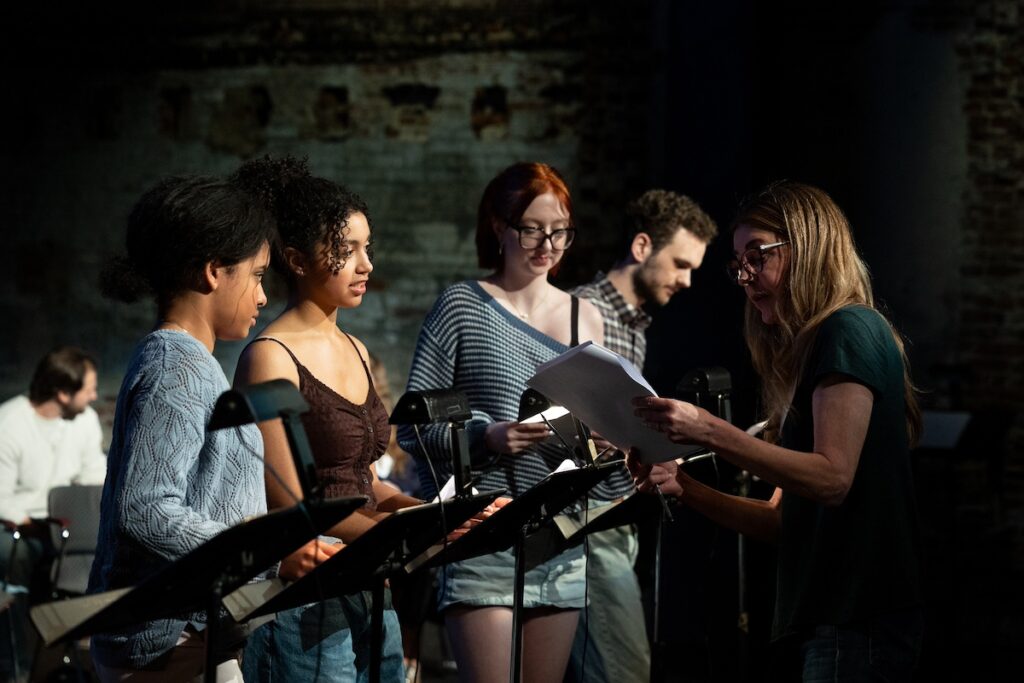
As the script was read, participants took notes.
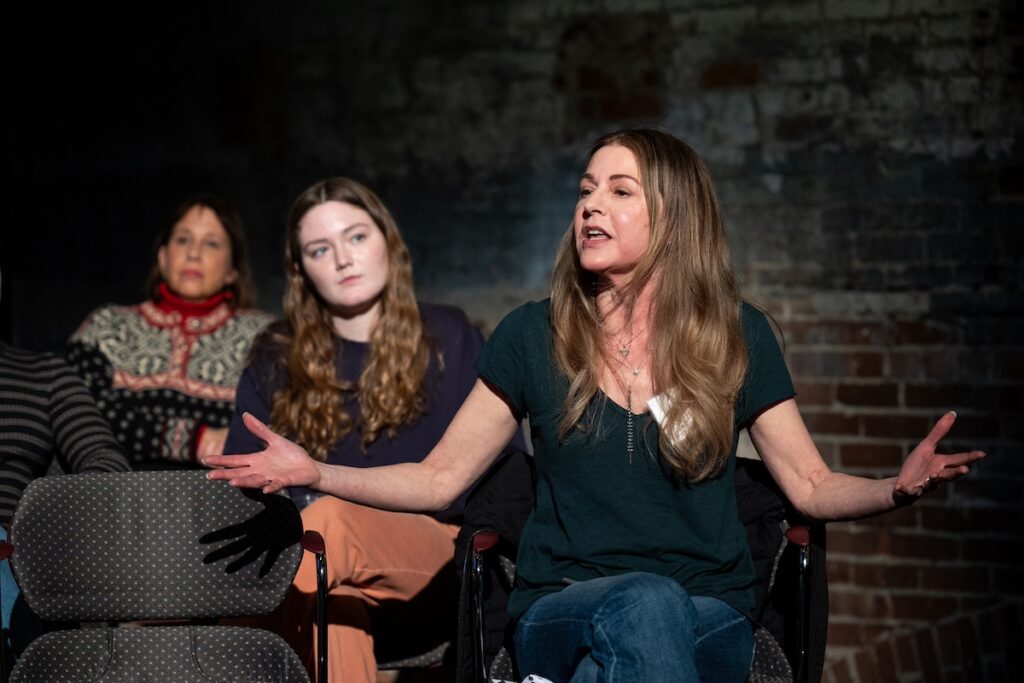
Afterward, Leeves led a feedback session modeled on professional table reads.
“Now this is when we would sit and answer any questions that writers and actors had for each other,” said Leeves. “Any constructive criticisms, any comments about your character that you need to understand…”
She began by asking Caiazza about the inspiration behind the script.
“I was thinking of places I’ve been to…like the really shady fair in the town I grew up in…and bringing all of the weirdest people [into the script],” said Caiazza.
Leeves and Coben then asked questions about the characters’ jobs and backgrounds—details that help actors shape their performances. Caiazza explained that the roles were seasonal summer jobs.
Coben asked Ariana Barbosa ’29, who played the lead character Alex, for her perspective.
“She lives a life that doesn’t have that much whimsy,” said Barbosa. “I feel that she feels the most alive when she goes back to this job and sees other kids doing it and hopes to cling onto the wonder they have and bring it back to her life.”
“Wow. That gave me chills,” said Coben.
Following the feedback session, Beamish discussed next steps for revisions ahead of additional readings. Leeves planned to continue working with the actors, modeling the process she experienced on Frasier.
That process gave students a glimpse into a professional creative environment.
“From the first table read to the final performance reading in front of a live audience, this was collaboration at its finest,” said Cook. “But most importantly, it taught students how the script gets infinitely better when everyone in the room has a voice, listens to each other, and is open to the ideas of others.”
As the workshop concluded, Leeves and Coben continued speaking with Caiazza, offering encouragement and feedback.
As they left, Leeves paused and turned back to the young writer.
“I feel very inspired.”
Categories
