
Emerson Stage Creates a Contemporary Vision of ‘Julius Caesar’
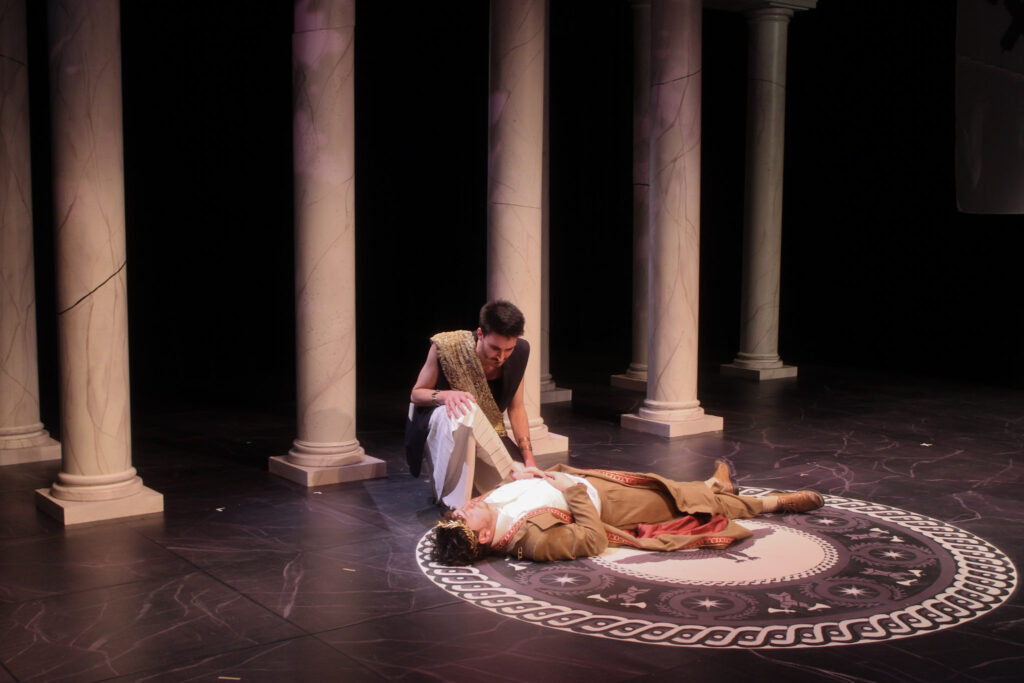
Emerson Stage’s production of Julius Caesar presents the classic Shakespearean tragedy of ancient Rome through a modern lens, revealing striking parallels to political conditions from centuries ago.
“We come back to Shakespeare because he writes about the best and worst of the human condition,” said the show’s director and Performing Arts Affiliated Faculty Bridget Kathleen O’Leary. “Technology changes, time periods change, but how humans behave and how politics fails doesn’t change much. That’s why this play feels so powerful right now.”
For O’Leary, what makes this production special isn’t a single design choice or staging innovation – it’s the context of the show that brings everything together.
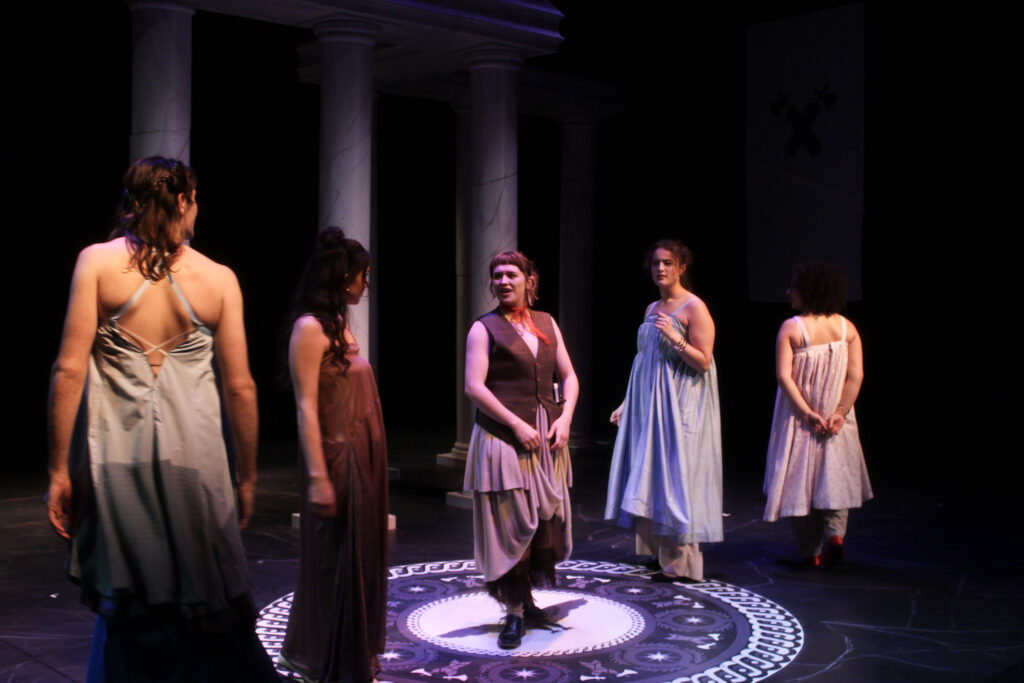
Dramaturg Bee LaClair ’26 views Julius Caesar as a play about power. “Our designers created a world that feels simultaneously liminal and too familiar,” she said. “Shakespeare’s difficulty pushes us to discover new truths.”
Emerson Stage’s Julius Caesar ran December 3-6, and presented the dramatic crises of assassination, public unrest, and shifting loyalties while blending modern political imagery with Roman history.
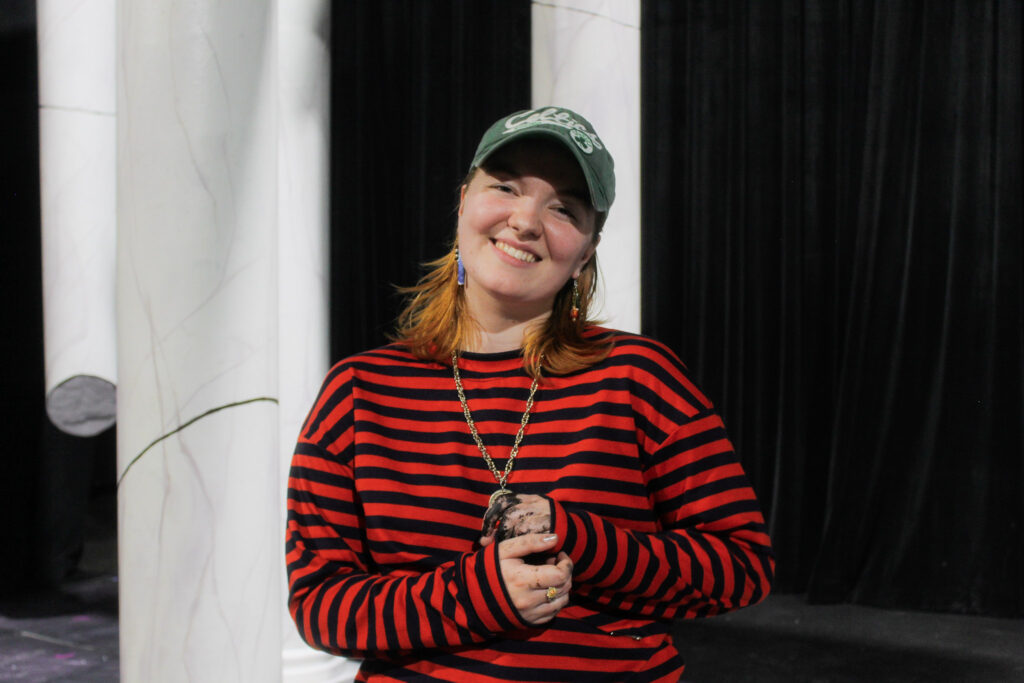
Costume Designer Madeline Henry ’26 wanted to find the balance between modern and ancient costumes. She created designs that represent modern Rome by using current looks such as sleek suits and clean silhouettes.
“We’re beginning in what Rome might look like in an adjacent timeline,” Henry explained. “It’s modern, but still ancient. And then we gradually bring the story back toward traditional Roman garb as everything collapses.”
Henry shared some new approaches she implemented for the costumes in the show. “We incorporated costumes into fight choreography in a really fun way. It’s something I hadn’t done before.”

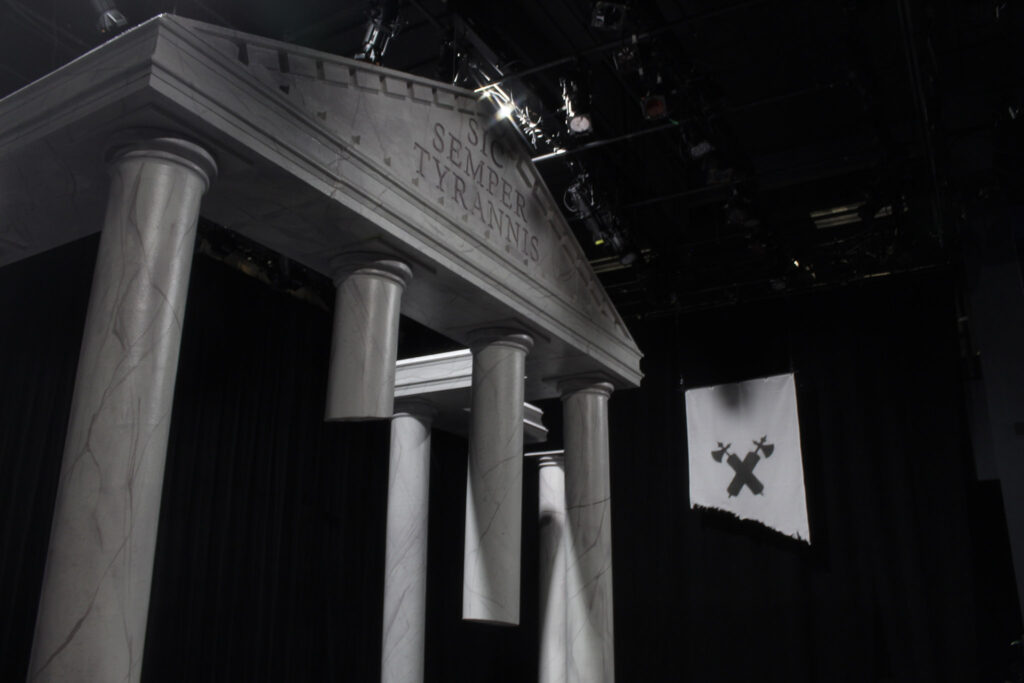
The complex balance between modern and ancient times is also reflected in the scenery. Scenic Designer Zoe Mills ’26 describes the set as a deliberate blend of eras.
“It’s modeled both off ancient Roman architecture and the buildings in Washington, D.C., specifically the Capitol Building,” she said. “I wanted this world to echo Shakespeare’s Rome and the world we live in now. ”
Modern Casting for A Historical Show
When casting the show, O’Leary didn’t take gender into consideration when assigning roles to the actors.
“We have gender-queer actors playing gender-queer characters. Brutus and Cassius, historically male, are both played by female-identifying actors,” said O’Leary.
Aisha Akorede ’25 played Cassius, a traditionally male character, and said the biggest challenge was portraying Cassius’ intention in everything he says and does.
“This role has been a multitude of excitement and nerves,” said Akorede. “Shakespeare is a meticulous language that is very hard to consistently convey. But exploring how to learn it has been so much fun.”
“Every time I rehearsed my scene with Cassius, it changed more and more. Our relationship reshaped the entire moment,” said Connor Rossi ’26, who played Caesar.
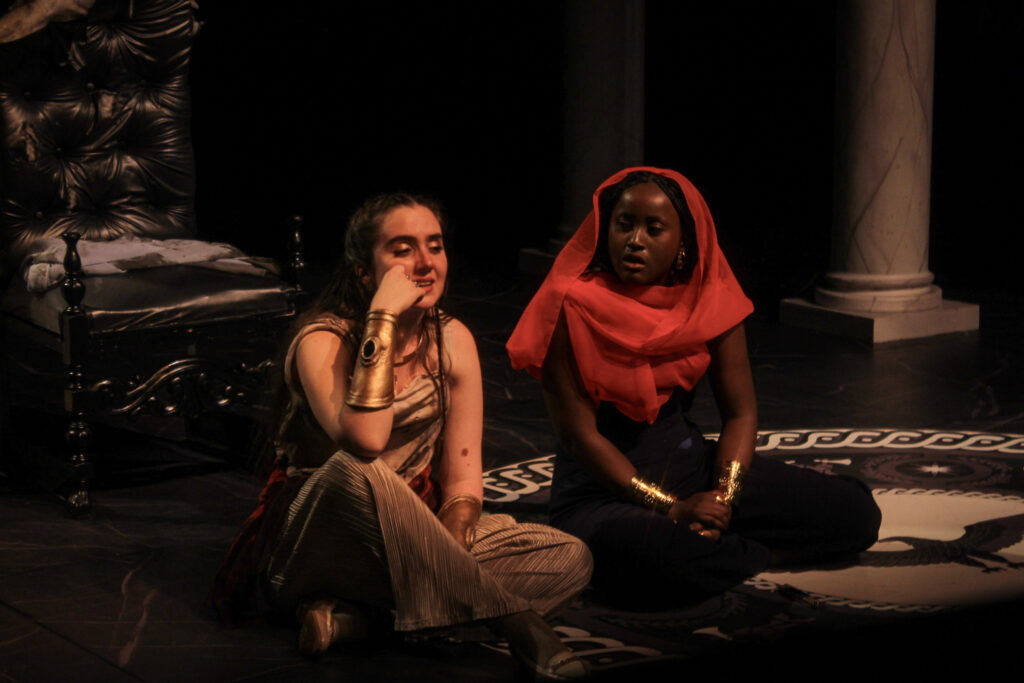
O’Leary shared that one of her favorite moments in the show was at the end of Act One, when Antony, played by Peter Kolodziej ’26, delivers a long speech to the citizens of Rome—played by the audience itself. “That moment holds a mirror up to the audience,” she said. “It asks them to recognize themselves in the crowd, in the political chaos. It’s incredibly powerful.”
For O’Leary, there was also great power in how hard the cast and crew worked to create a vivid, elegant, and beautiful world. “I’ve been really humbled by what this student design team has brought. Their work is on par with the professionals that I work with outside of Emerson.”
Categories
