
Suzie Hicks ’18 ‘the Climate Chick’ Uses Stories, Hope to Reach Kids
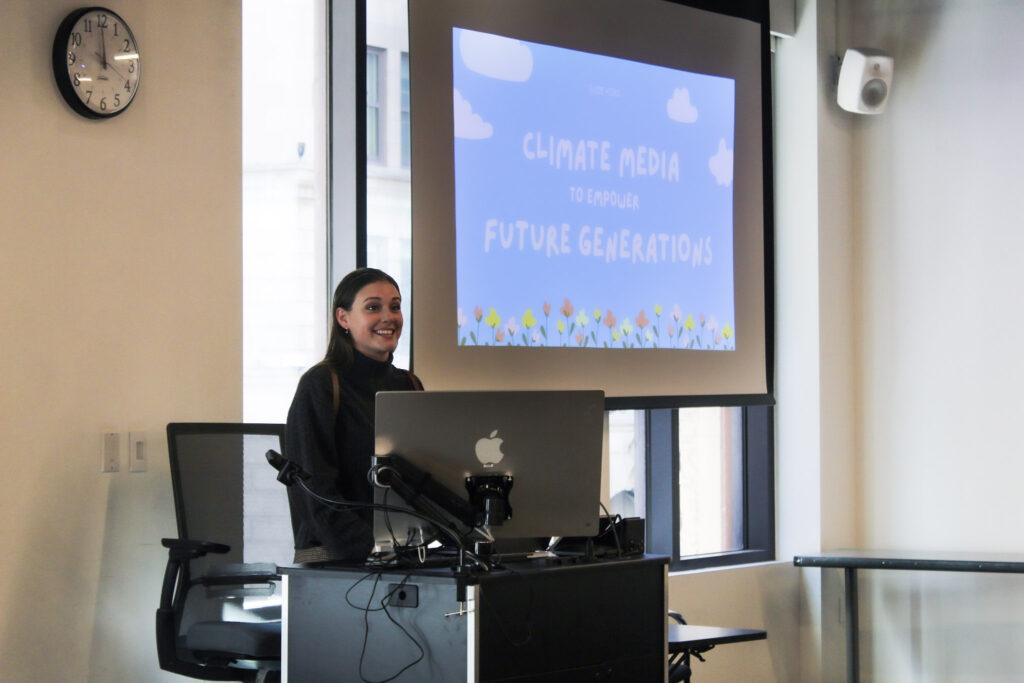
Suzie Hicks believes people learn better from stories than they do from hard data, and that’s why she feels Emersonians are uniquely positioned to change the world.
“We need to recognize that we have to come together to change the world. If we focus too much on individual actions, we risk losing sight of the larger systemic changes needed to solve the climate crisis,” said Hicks ’18, media maker, environmentalist, and creator of the award-winning children’s series Suzie Hicks the Climate Chick and Sprout.
Hicks was leading a workshop on Climate Media to Empower Future Generations on October 20 during last week’sTeach-in on Sustainability.
Media producers are responsible for spreading reliable and essential information to audiences, said Hicks, which is why it’s critical to teach children about climate change.
“Only half of surveyed parents talk to their kids about climate change, and most school districts do not require teaching about it,” Hicks said.. “In fact, in 2025, the word ‘climate’ is being actively banned by a lot of school districts. And so there is this gap — kids need to know the information, but they don’t have a way to get it.”
Hicks said The Climate Chick was inspired by Sesame Street, which is known for, among other things, talking to kids about segregation and racism when their parents struggled to start the conversation. She said it’s also important to discuss the realities of climate change in an accessible, hopeful way.
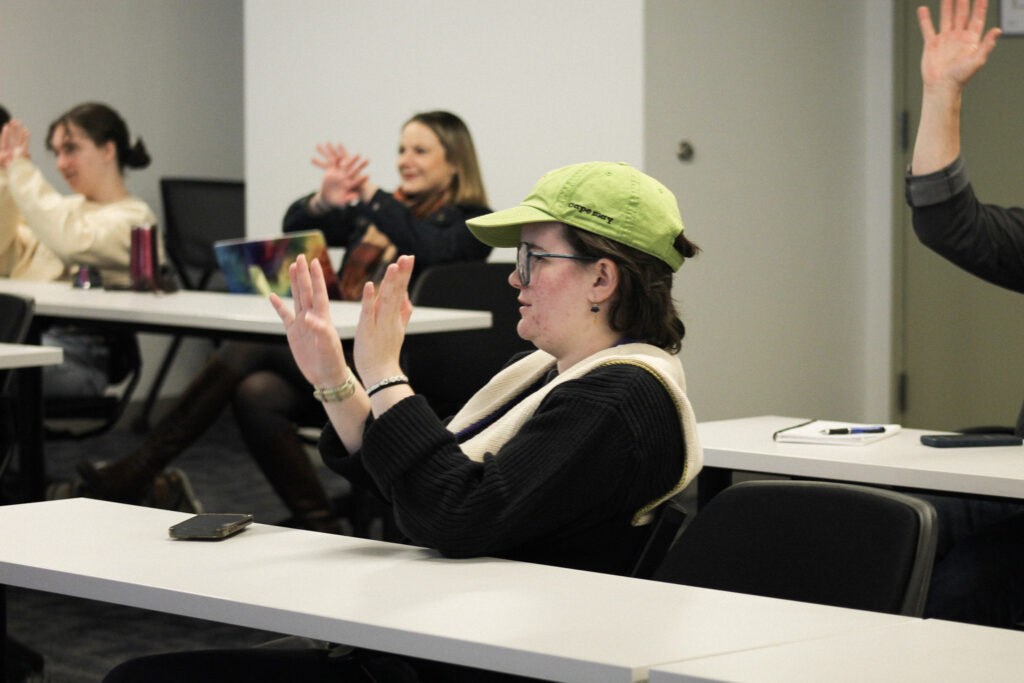
“I think the biggest takeaway is that kids are way more capable than we think,” said audience member Audrey Larson ’28. “They have a strong sense of justice, and if we support that, they will take action on their own.”
“It’s terrifying thinking about climate change, but the only way that fear becomes real is if we do nothing,” said audience member Marshall Mariabella ’27.
Hicks encouraged Emerson students to take collective action to effect change. Individual actions are important, but group action creates more impact, and it keeps individuals persistent. Hicks was involved in the Earth Emerson Club while at Emerson, and urged students to join a club.
“What I want students to take away is that they have the power to change the narrative on anything they want,” said Hicks.
Categories
