
Next-Gen Journalists Present Big Ideas at Pitch Slam
What makes a good pitch?
This question rang in the ears of many Emerson students as they entered the Bordy Theater on March 26 to participate in the Writing, Literature and Publishing (WLP) Department’s Magazine Pitch Slam.
“This is an incredible opportunity for students to learn the complicated art of pitching and to build connections with professional editors,” said WLP Associate Professor Benoit Denizet-Lewis, who moderated the event and has been hosting Pitch Slam for close to 10 years.
This year’s event featured 34 students pitching essays, investigative articles, personal narratives, and more to a panel of four highly-regarded journalists. It was an opportunity for students to exercise their creative and analytical skills while exposing them to tailored feedback from industry experts.
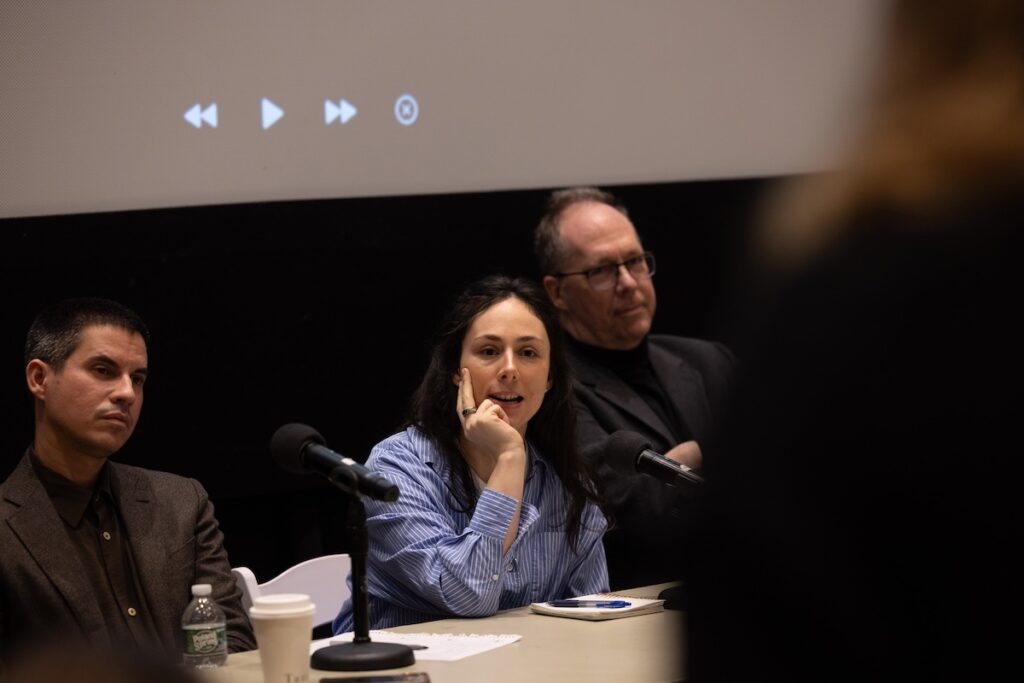
The panel of invited journalists consisted of: Erik Maza, editor-at-large for New York Magazine; Hannah Pasternak, lifestyle director at SELF Magazine; Andrew O’Hehir, executive editor at Salon, and Analissa Quinn, editor at The Boston Globe Magazine.
Parvathy Sankunni ’26 pitched an article focusing on the effect that health-tracking devices like smartwatches have on our emotional health. Sankunni probed why people pay more attention to what their devices say about their health, rather than listening to their own bodies.
“I feel very brave for being able to organize my pitch and present it to [the panel],” said Sankunni. “Having access to all these really cool people was an amazing opportunity.”
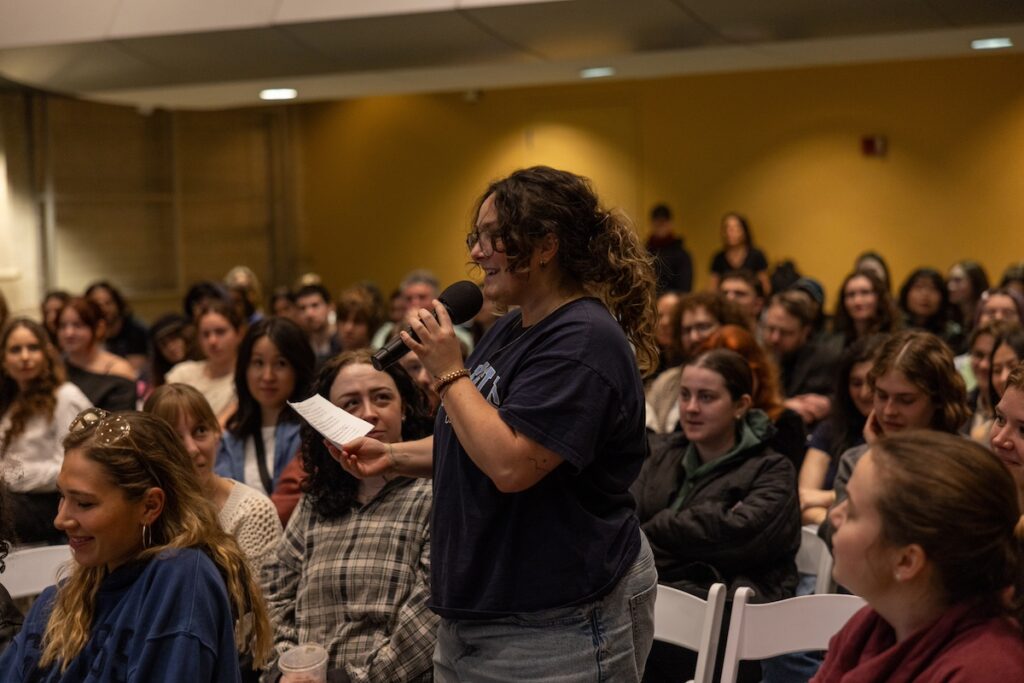
The students were given one minute to pitch their ideas to the panel, and afterwards received immediate feedback from the panelists.
Pitches touched on personable topics like dating, ideology, culture and social media, as well as credit card debt, memes, gut health, and teeth.
Anna Sarlin ’27 pitched a story that would investigate the culture around mosh pits: large groups of people who gather at concerts to slam against each other as they enjoy the music. Sarlin is interested in analyzing the parallel between the intimidating appearance of mosh pits and the uniquely respectful and wellbeing-centered culture that “moshers” partake in.
“I appreciated the opportunity to experience a freelance pitch setting,” said Sarlin. “Hearing from industry professionals and gaining insights from their words was very helpful.”
The Pitch Slam is both a good opportunity for students to practice pitching, and it can open the door for them to turn their pitches into published stories. Such was the case last year when Maddie Barron ’26 pitched an article to the New York Times Magazine about a tourist trap in her hometown. The article didn’t fly but something about Barron’s pitch drew the editor in, and she invited the WLP major to send her another idea. Ten months later, and after several rewrites, Barron’s column, “T-Shirts Gave Me the Education I Never Got at School,” appeared in the February 22, 2026 New York Times Magazine.
“An undergraduate getting published in The New York Times Magazine is astonishing, that almost never happens,” said Benoit Denizet-Lewis, who, as a contributing writer for the magazine, would know. “It’s the kind of thing that’s possible with this kind of event.”
Barron wasn’t the only student at last year’s Pitch Slam to land an article. Kelly Rota, a Publishing and Writing graduate student, pitched an article she wrote for affiliated faculty member Jess Zafarris’ magazine class and ended up with an online byline in Sierra, the Sierra Club’s magazine.
This year, Barron again participated in the Pitch Slam, with her idea to look into Dream Baby Press’s Burger King Book Club: a gathering of like-minded readers from New York City who come together to celebrate their love for literary exploration.
“I really enjoyed the adrenaline of the moments leading up to the pitch,” said Barron. “I appreciated the opportunity to talk about a culture I’m really passionate about and engrossed in.”
Also this year, Christian Jones ’26 pitched a story about raw milk. Specifically, Jones sought to cast a spotlight on the recent trends regarding raw milk consumption, and how it’s manifested in Massachusetts.
“This was a great learning experience,” said Jones. “It’s my first time ever pitching something like this, so it was nice to get a feel for what editors are looking for.”
Jagger van Vliet ’26 pitched an article that would analyze modern internet culture by questioning whether Gen-Z had unconsciously revived the anti-art Dadaism movement. Van Vliet drew parallels between the chaotic memes of today and the absurdism championed by this early-20th century approach to creativity.
“It’s good to have more faces who you know in the industry,” said van Vliet. “It’s a good way to get your foot in the door.”
Erin Clossey also contributed to this story.
Categories
