
Emerson Research Explores How Bad Bunny’s Music Shapes Social Awareness in Puerto Rico
When rapper and singer Bad Bunny takes the stage at the Super Bowl halftime show on February 8, his performance is sure to have heightened cultural significance. His music has long been intertwined with the cultural and political realities of Puerto Rico, but new research from Emerson College suggests his influence may be shaping how listeners understand some of the island’s most pressing social issues.
A new survey conducted by Emerson College Polling examined how Bad Bunny’s music affects public perceptions of gentrification and gender-based violence in Puerto Rico. The survey was conducted in conjunction with Communication Studies Senior Lecturer Owen Eagan and students in the School of Communication’s Research Co-Curricular program.
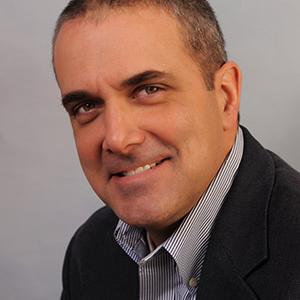
“In a constantly evolving social, cultural, and political landscape, these survey results show the impact that popular music can have on changing people’s views on notable social issues,” said Eagan. “More importantly, these findings demonstrate that Bad Bunny’s music could play a significant role in creating positive change in Puerto Rico and beyond, improving the lives of women.”
Music as a Lens for Social Change
Eagan said the idea for the project emerged when he was studying how media can combat gender-based violence. “I was conducting research for another project on the ways in which entertainment education has been used to combat gender-based violence and discovered that Bad Bunny had used his platform to address this issue as well as other social issues,” he said.
The Emerson Polling survey found that 85% of respondents described gentrification as a “very serious” or “somewhat serious” problem, while 94% said the same about gender-based violence. Among those who listen to Bad Bunny’s music, 54% said his music had a positive influence on their views of gentrification, and 38% said it had a positive influence on their views of gender-based violence.
The strongest impact appeared among listeners familiar with “Andrea,” a song many believe was inspired by the real-life killing of Andrea Ruiz Costas. However, Bad Bunny has said this song isn’t specifically about her but is meant to promote respect for all women. Sixty-nine percent of respondents who knew the song said it increased their awareness of gender-based violence, and 47% said it led them to discuss the issue with family or friends.
“What stood out to me was the degree to which Bad Bunny’s music had a positive influence on his listeners,” Eagan said. “Since he is one of the most popular artists in the world, I think this research sheds new light on the power that artists have to shape behavior through their music.”
Hands-On Research Through the SOC Research Co-Curricular Program
Makeighly dos Santos ’26, Gray Gailey ’27, Abigail Lincks ’27, and Monica Rivera Sosa ’26 joined Eagan on this project as part of the School of Communication’s Research Co-Curricular program, which is a one-credit, non-tuition course that allows students to assist faculty with research while gaining hands-on experience.
Eagan has done Emerson research through the program for the past decade. As part of the process, students complete CITI Certification, a requirement for conducting college-level research, and work on all stages of the projects.
“My research assistants were involved in all aspects of the research process which included conducting academic research, designing the survey, developing the methodology, and interpreting the results,” Eagan said.
Additionally, Sosa, who is from Puerto Rico, translated the survey into Spanish and helped provide cultural context for the research.
A Student Perspective on Culture and Awareness
For dos Santos, participating in this research was both academic and deeply personal.
“Women die daily at the hands of their supposed love. Their lives are ripped away, and this is normal. This project gave me an opportunity to help change this norm,” dos Santos said, pointing to the story behind “Andrea” as a powerful example of how music can elevate awareness.
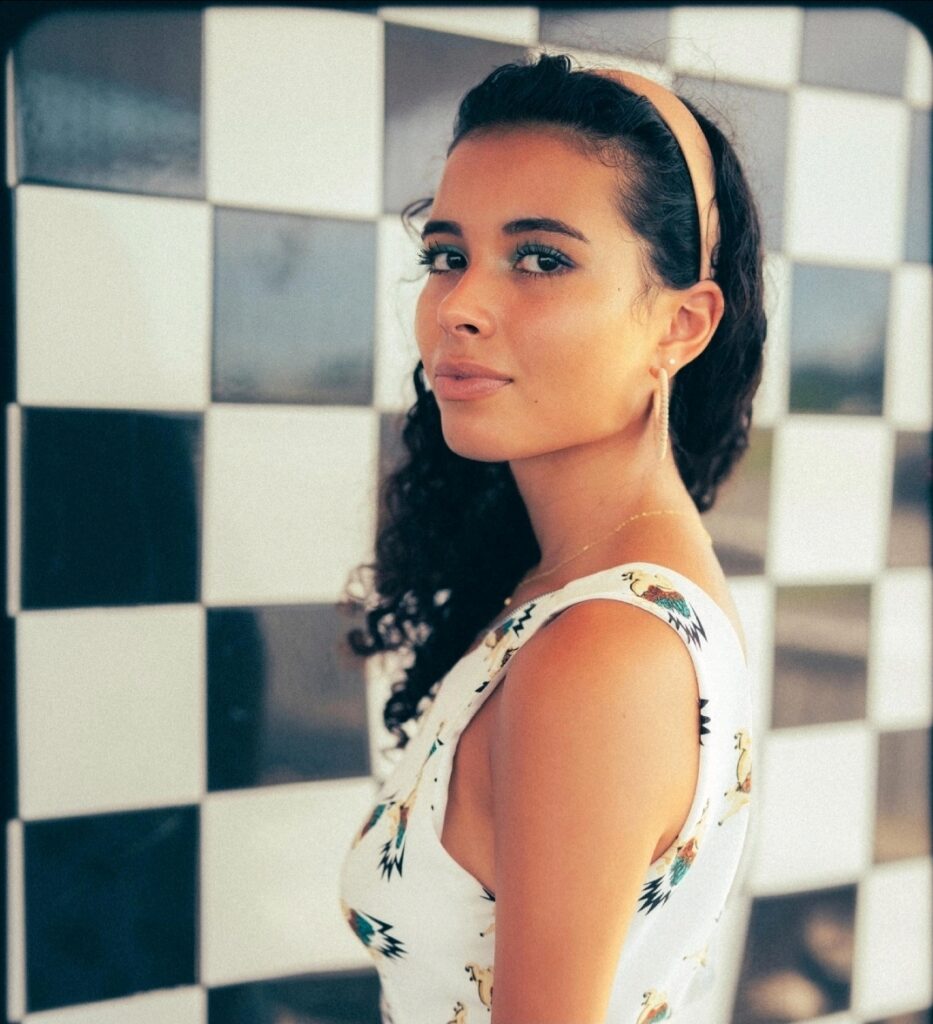
“Looking at Bad Bunny’s music, especially ‘Andrea,’ created a unique opportunity to examine whether an artist people already trust and engage with can shape awareness and conversation around these issues,” she said.
Dos Santos said one of the most important lessons she learned through this project was understanding the limits—and power—of data.
“The data does not tell us that music directly changes behavior or fixes social problems. What it does show is how culture shapes awareness,” she said. “Music can move people beyond passive listening into dialogue. This is the first step toward broader social change.”
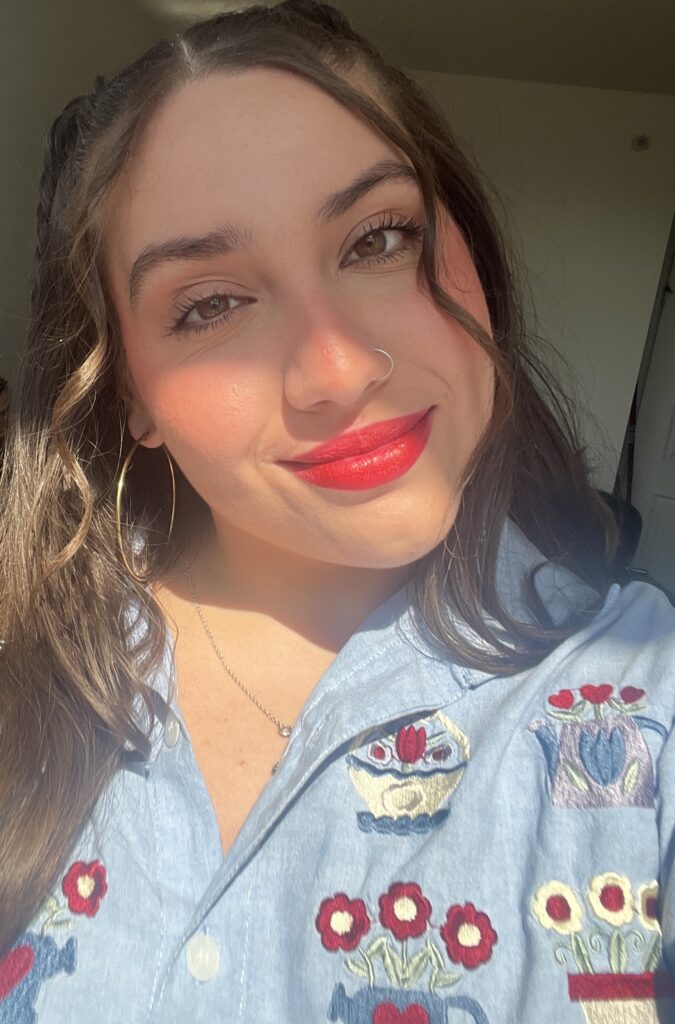
Sosa, who is Puerto Rican, said Bad Bunny’s music is important to her. So having the opportunity to work on a project focusing on the artist’s influence helped her gain a deeper appreciation of his cultural impact. She said that she relished the opportunity to provide background to her peers on Bad Bunny, Puerto Rico, and various socio-political factors as part of this project.
“This helped us draft appropriate questions and later translate them to the correct vernacular of Spanish to send into the field,” said Sosa. “Simultaneously with this project I was taking Survey Research to understand how surveys are created, weighted, and analyzed. These skills have already helped me see public opinion polling from a new perspective and add to my skill set.”
Bridging Research and Real-World Impact
While nearly half of respondents said conditions surrounding gender-based violence have worsened or stayed the same since Puerto Rico’s 2021 state of emergency declaration, the survey also revealed widespread belief in the influence of artists. Eighty-one percent of respondents said musicians have at least some influence on social issues, and 78% said artists should do more through their work to address them.
“This type of research is important because it demonstrates how artists can make a difference through their music,” Eagan said. “These findings demonstrate that this strategy could be easily adopted by popular artists and would likely have a significant impact.”
Sosa feels the research means more awareness is being placed on the current political status of Puerto Rico and the challenges faced by the island and its residents.
“I think the next steps would be to poll public opinion on these questions from mainland U.S. citizens to compare what they know and believe about Puerto Rico,” said Sosa. “In this political climate it’s incredibly important for people, especially young people and students, to be aware of what’s going on beyond the bubble of their own personal lives because knowledge and awareness is power. Power is impact. Bad Bunny spreading awareness globally through his music is giving power back to his people.”
Categories
