Career Readiness Initiative to Support Students from ‘Orientation to Graduation and Beyond’
A first-year student arrives at Emerson for orientation and is introduced to three people:
An academic advisor will keep them on track with credits and program requirements. A faculty mentor will guide the student through their major and make sure they’re getting the professional skills and connections they’ll need to succeed post-graduation. And a career partner will help them with resumes and cover letters, and introduce them to internships that will set their careers in motion.
This scenario, in which a student is prepared for a fulfilling career from the moment they set foot onto campus in a streamlined, coordinated way, is one recommendation of the Career Readiness Initiative, part of Extraordinary Emerson 2030, the College’s strategic plan.
The initiative supports two goals of EE 2030: expanding and strengthening career readiness for students, and growing collaborations and partnerships within industries, organizations, and communities. It aims to boost first-job placement and satisfaction to at least 90 percent by Fall 2027, and grow the number of students completing an internship by at least 20 percent by Fall 2028.
As an arts and communication school with a liberal arts foundation and experiential learning integrated in the curriculum, Emerson is unique, said Associate Provost for Academic Programs Maria Koundoura, who is leading the Career Readiness Initiative’s implementation. No matter an Emerson student’s major, they are getting hands-on training in their field of choice, and faculty have always helped steer them to opportunities beyond campus.
“We already do it. It is at our origin [as a college],” Koundoura said. “The Initiative is about having it be integrated, organically, from orientation to graduation and beyond.”
Last spring when the strategic plan was launched, the Career Readiness Task Force was assembled to audit and map all career development programs at the College’s campuses, and look at best practices at comparable schools. Based on their research, the task force made a number of recommendations, including providing career partners for all incoming students.
Already this fall, the Career Development Center was moved under Academic Affairs to better align career prep and internships with academic programs. Starting January 26, Gretchen Heaton, until recently associate vice provost for career and professional success and high impact practices at the University of New Hampshire, will join Emerson as the new assistant vice president for career development.
Also this academic year, departments began tracking the alignment of the academic programs with experiential learning, which will better help students, mentors, advisors, and career partners see competency skills and possible careers. The College now requires graduating seniors to fill out the First Destination Survey, which will yield better data on where recent graduates are ending up.
Another task force recommendation was to better integrate technology to make the career development process seamless. Some of that will be achieved with the adoption of Workday Student, when faculty mentors, advisors, and career partners will be able to see a student’s class schedule, internship history, and extra- and co-curriculars. Handshake, the tool that the Career Development Center uses to connect students with internships, will also be integrated into Workday Student, and be made easier to navigate, both for internal audiences as well as alumni and external partners.
While much of the initiative focuses on better systems and processes for preparing students for careers, Emerson’s alumni community will also play a role, whether through the Emerson Mafia, or the Master Class initiative, which Koundoura also co-leads with the Division of Institutional Advancement. Master Classes bring successful alums and friends in a wide range of fields to Emerson classrooms and stages to provide advice and mentorship, as well as networking opportunities, to students.
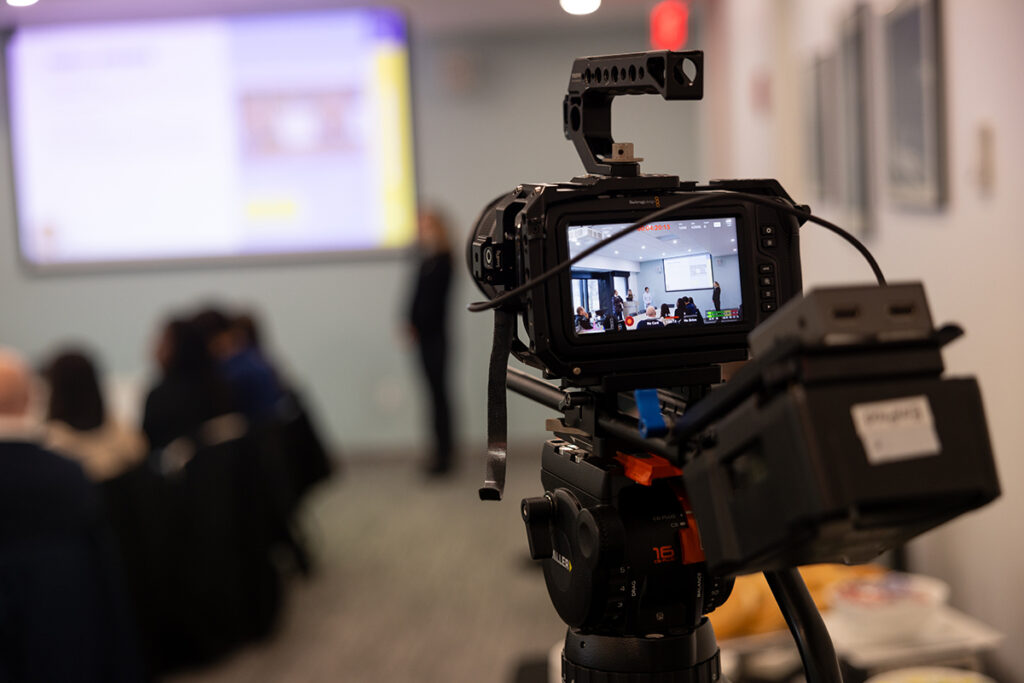
“What happens with the Master Classes is that current students see alums expressing, and showing, what they’ve learned in class in their careers, so they’re also seeing the end result of their own learning pathways,” Koundoura said.
Director of Career Services Carol Spector said she’s very happy the department is now under Academic Affairs, and is hopeful that the changes that come about through the Career Readiness Initiative will result not only in better career outcomes for recent graduates, “but a more successful journey from freshman year to senior year in the sense of recognizing how they can build their skills, how to put them on a resume, how to talk about them confidently.”
“I think when … students … see what they’ve accomplished and know what kind of skills they’re developing, they’re able to more confidently talk about it and feel better about the next step they take,” Spector said.
Categories
