
Meet New ELA Dean Ken Rogers ’91
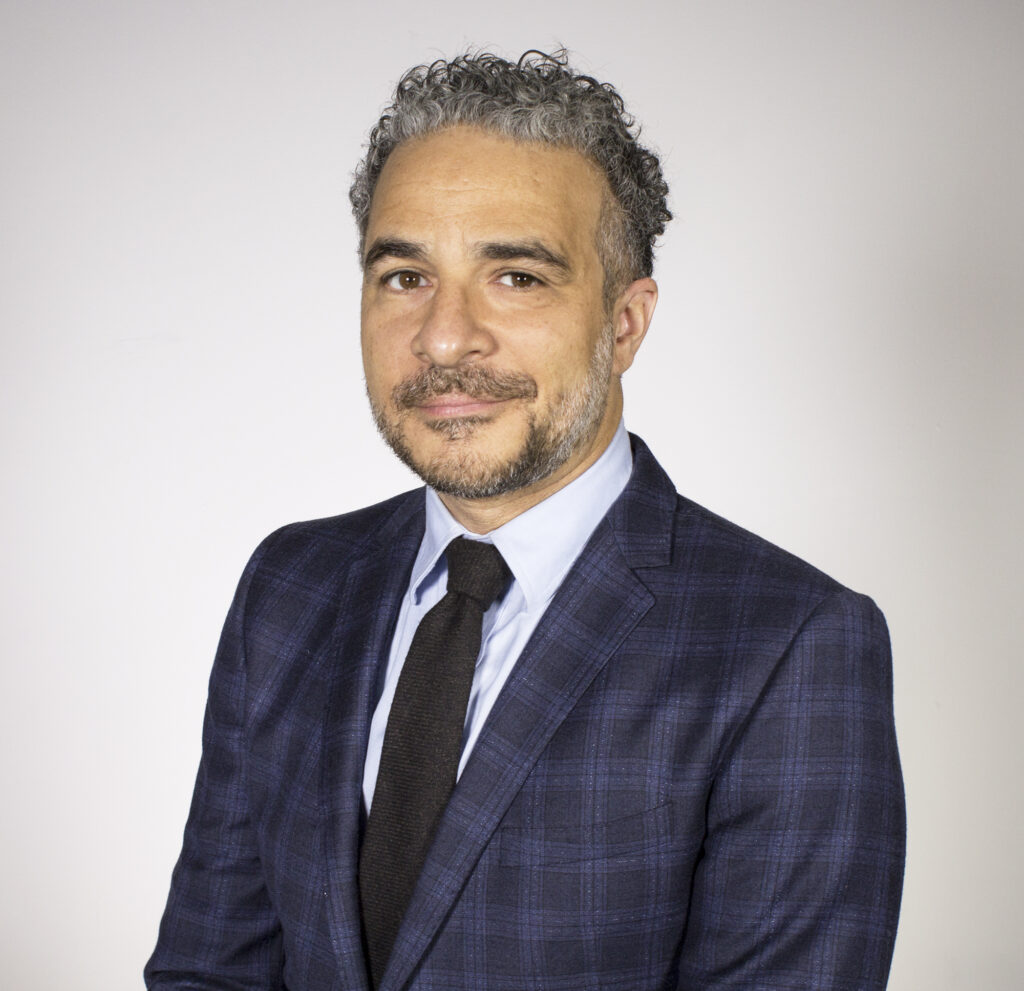
Ken Rogers ’91 is a media scholar, an academic entrepreneur, an ardent Emersonian, and, starting in February, the new Dean for Emerson Los Angeles.
As Rogers prepares to transition from his role as Associate Dean of Research & Graduate Studies in York University’s School of the Arts, Media, Performance & Design, and Associate Director of the MBA in Arts Media and Entertainment at York’s Schulich School of Business, he took some time to talk with Emerson Today about his Emerson roots, his vision for ELA, and what was really going on at Charlesgate back in the day.
Interview has been edited for length and clarity.
Q: What drew you back to Emerson?
A: Emerson is the place where I discovered my creative voice. It enabled me to pivot career paths because I had a strong liberal arts background, but I also had this kind of professional, creative background.
And I love the place. There’s an energy to the school that is unlike any other. I’ve worked across higher ed in many different scenarios: at big research universities and small liberal arts colleges. And I really think [Emerson has] a profile that’s unique. I think it’s a moment for me to come back and give back to the school that gave so much.
Q: What do you see as ELA’s greatest strengths, and where are there opportunities for growth?
A: I think Emerson has established a unique satellite school [among] major film schools in the United States. All the people that I know in the industry know that Emerson interns are absolutely the best, bar none, out of all the top-10 film schools. They come prepared, they come hungry to work, they come with an appetite and drive for success. And I think we’ve had one of the most incredible and successful internship programs in the business of higher ed in the film industry and other parts of the creative sector.
At the same time, I think the industry’s changing. There’s been a lot of disruption. I think it’s important to create an environment where students can get a hold of the cutting edge of where the industry’s headed. I think there are opportunities for us to open up experiential education and pivot into lifelong learning as well, to make sure that it’s not just a place where students go to have their internship experience, but it’s a hub and a home for them throughout their careers at every level.
Q: What do you see as the most exciting development happening in film or media right now?
A: I would say that we’re in an era where the most exciting developments and the most transformative developments are also sometimes giving us the most pause and making the industry a bit nervous. I think the two major events would be the shift to streaming and the decline of theatrical distribution, and more recently, the rise of AI and the way it’s disrupting and changing the workflows of production.
I believe that Emerson has always been a cutting-edge, forward-thinking school. I think we’re nimble and we can adapt. And one of the elements I want to bring to ELA is to make it a hub where we are at the cutting edge of the conversation of where things are headed, to make sure that [Emersonians] entering the industry have an edge on the future, but also that people who have been out there and maybe are concerned that things are changing in ways that they’re unable to adapt to can re-skill, train, get up-to-date. I want to serve Emersonians at every stage of their career in LA thinking about these future disruptions.
Q: What were your favorite classes while you were at Emerson?
A: Edna Ward’s psychology class and Ted Romberg’s philosophy classes really gave me a base liberal arts education that was competitive with any top liberal arts college across the U.S. And that was really, really important because those foundations are bases of knowledge that you take with you, that give you quality of life, that make you an adaptable person to any industry.
And Sam Cornish‘s Black literature class, which was inspiring, engaging, political, and disrupted a lot of the presumed ideas around the canon of literature.
Stephen Shipps’s photography engaged me. It was one of the reasons that in my film career I turned towards cinematography. The way that he taught in the dark room gave me a lifelong passion for photography and led to me teaching photography at NYU Tisch many years later.
I would also mention Jane Shattuc and Michael Selig. They were two very, very rigorous cinema studies professors that were catching that new wave of engaged, theoretical ways of approaching the study of film and television. It was because of those courses that I was able to compete and later in my career apply for and get a PhD in film studies.
Q: I have to ask you as a former resident: Was Charlesgate haunted?
A: I’m going to withhold saying definitively one or the other because I want to make sure I’m appealing both to skeptics and also to believers. But I will say that there was some pretty weird stuff that happened to those who lived there that I still can’t explain to this day. And I was one of the privileged few to get a glimpse at the stables, but I didn’t stay too long.
Q: Good call. In what ways did Emerson shape you as an academic, as a professional?
A: I think it freed me a little bit from the restrictions of conventional thinking. It was a place where you could explore ideas no matter how eccentric or creative or out there, and there would be an appetite and a community that would support them, both at the faculty level and in your fellow students. And I learned as much from my friends and my fellow students as I did from my professors.
One of the things I loved about Emerson is that I changed quite a bit in my time there. It was a kind of school where I could move around and I could explore and take a bite out of all of these different ways of thinking and ways of seeing the world and studying. Not a lot of schools provide you those kinds of freedoms and that capacity to explore and find your place and voice. And I think Emerson still does that better than any school I know.
I would say the other thing that has really shaped me is that it’s a community like no other. A lot of people feel affinity for their alma maters, but I was so impressed just even going through the interview process [for dean] of how many Emersonians come back to work at Emerson. They want to reconnect to the experiences and the friends that they had there, and they appreciate the way the school has supported and shaped them throughout their careers. And I’m one of those people. I think that community is really what brought me back more than anything else.
Categories
