
Theater Majors ‘Dance Smart,’ Learning the Science of Movement to Stay Healthy
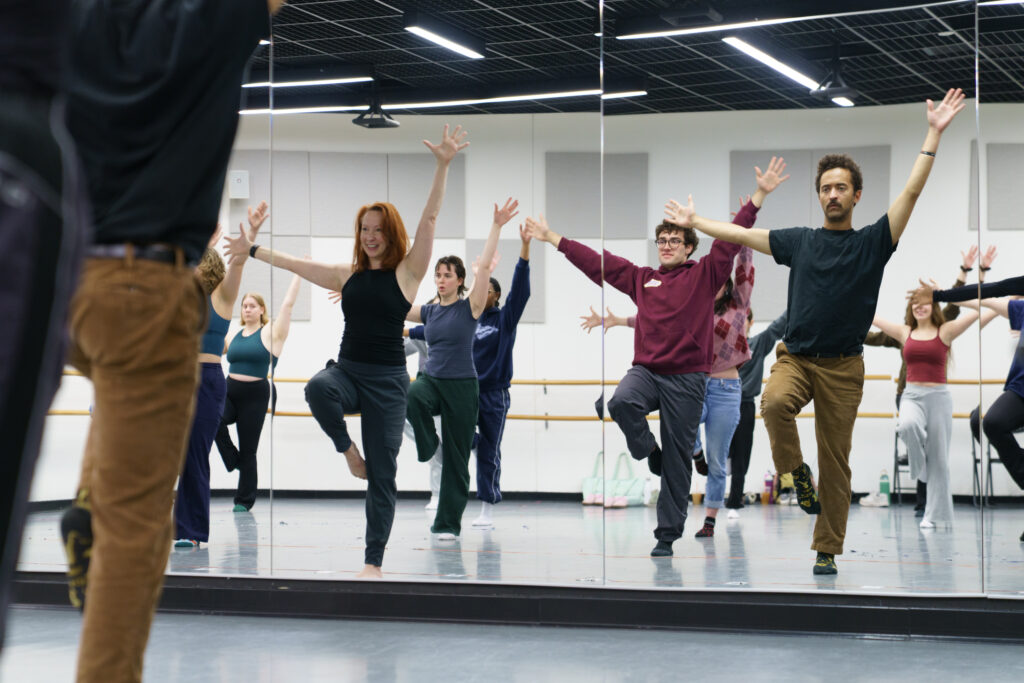
You might not expect to see anatomy diagrams projected in a dance studio — but at Emerson, muscles and movement go hand in hand.
In Dance Smart, a class taught by Performing Arts Affiliated Faculty member Stephanie Heroux, musical theatre students learn how to keep their bodies healthy and performance-ready for the long run.
As the class began, Heroux stood before a group of seniors in leotards and sweats, reviewing a quiz on tendinitis.
“Anything ending in ‘-itis’ means inflammation,” she reminded them. The students nodded knowingly as they’ve been learning to decode the language of the body.
The diagrams then gave way to movement. Heroux led students through a sequence of stretches and breathing exercises. At first they stood on two legs, then one leg, and then made their way to the floor.
“Place one hand at the bottom of your sternum. Feel your diaphragm move as you exhale,” said Heroux.
Artistry meets anatomy as students twist, balance, and adjust, discovering muscles they didn’t know they had. One student remarked that it was a game of Stephanie Says.
Heroux, who founded her own jazz dance company, created Dance Smart four years ago and has been teaching it ever since. The class combines her knowledge from more than 15 years as a professional dancer, her work as musical theater teacher at Emerson, her work as a choreographer, and her clinical training in physical therapy.
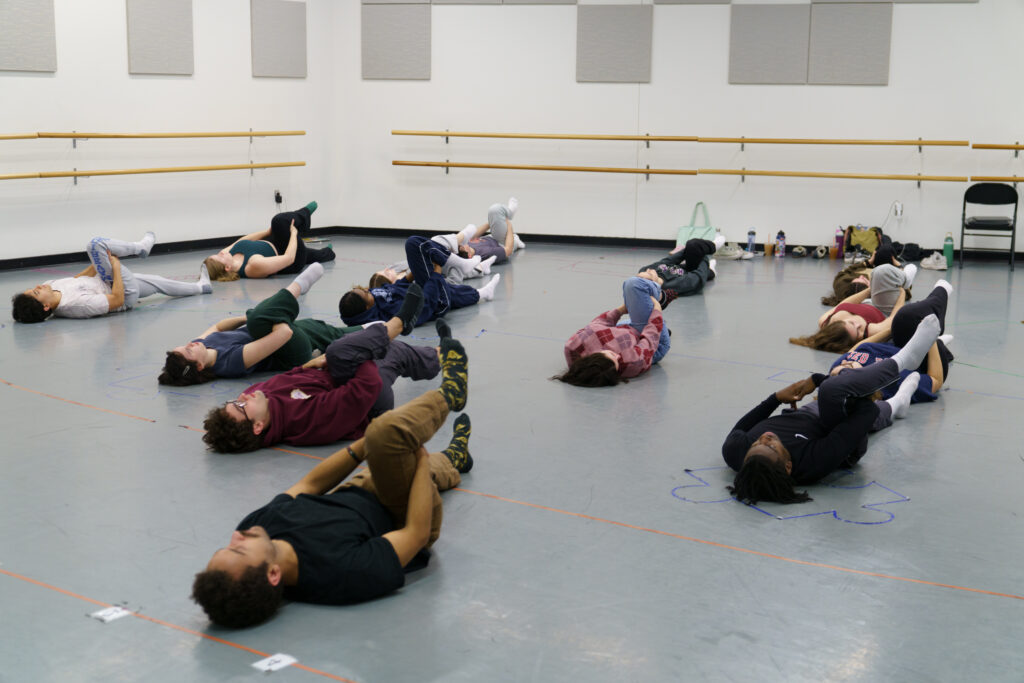
The course, exclusive to Musical Theatre BFA seniors, focuses on injury prevention, conditioning, and understanding the mechanics behind every movement—from high kicks and dancing in heels to stage falls.
That’s because injuries can mean performers miss production time – and eventually may lead to shortened careers.
“I realized so many young performers were coming to class with injuries they couldn’t shake or didn’t know how to prevent,” said Heroux about repetitive injuries like sprained ankles, and overall wear and tear. “I didn’t have the tools to teach them that at first, which is what led me to get my doctorate in physical therapy. This class fills that gap. It’s about longevity — helping artists sustain their careers and stay out of the clinic.”
Her students feel that difference. Musical Theater major Bridget Devine ’26 said the class has completely changed the way she approaches performance.
“It’s really cool — there hasn’t been a class focused on injury prevention before,” said Devine. “As performers, we repeat the same movements over and over. You can easily overuse something and get injured. Now I understand how to condition my body differently depending on the show — and how to keep myself strong for the future.”
Those light bulb moments are what Heroux loves about teaching the class. She likes when students figure out why they feel a certain way when they do a certain movement. She wants students to know how to be diligent practitioners to train their bodies.
In class, Heroux will show students blooper reels of people falling off stages, or watch shows like The Lion King, which has heavy puppetry that takes a toll on performers’ bodies. While watching the videos, students forecast what movement could injure a performer.
“I’ve had students say, ‘I’m in this production crawling around,’ and it starts to hurt, but now they have a conditioning program, and it has an immediate impact on their life,” said Heroux.
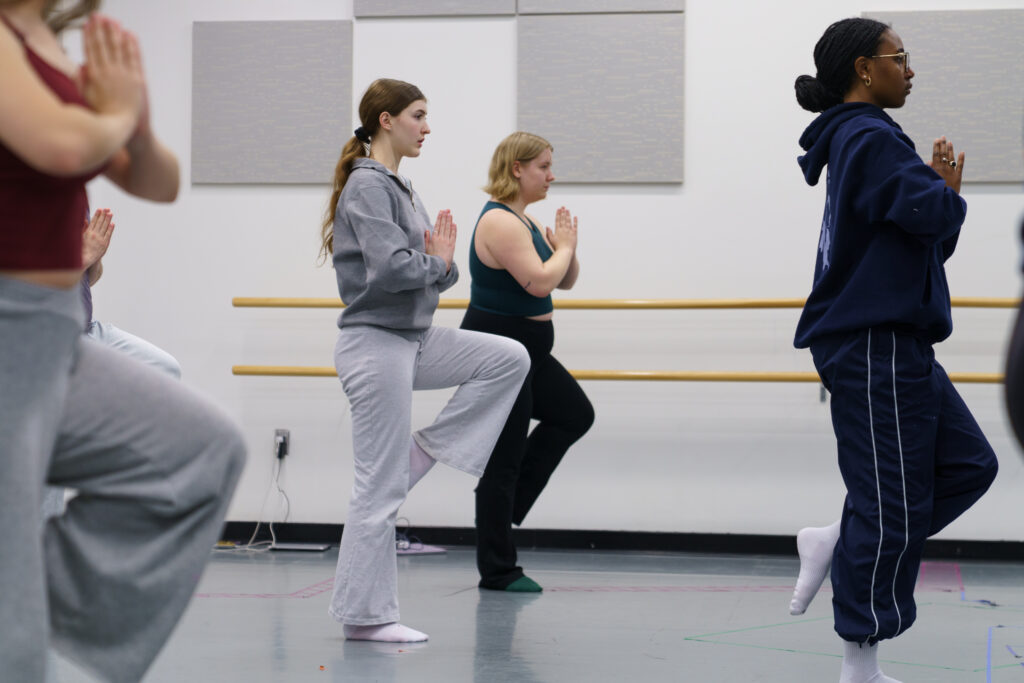
Heroux’s lessons extend beyond the studio. She also works as a physical therapist with the American Repertory Theater, treating professional performers between shows and teaching them techniques for sustainable movement.
“It’s preventive care, not reactive care,” she said. “I want my students to leave Emerson knowing how to prepare their bodies for the demands of performance — not waiting until they’re hurt to learn.”
Back in class, students roll onto their backs, stretch into big X-shapes, and balance in “airplane” poses.
“Who feels more alive than 15 minutes ago?” Heroux asked. Almost every hand goes up.
And that’s exactly the point. Through breathwork, alignment, and body awareness, Dance Smart isn’t just about stronger performances — it’s about giving artists the knowledge to thrive long after the curtain falls.
Heroux says she’s proud that Emerson has made space for a course like Dance Smart.
“Preventive medicine is powerful,” she said. “I tell my students all the time — I want them to choose to stop performing when they’re ready, not because their body gives out. If they understand how their body works, they can have long, healthy, creative careers.”
Categories
