
Emerson Takes Over the Museum of Science, Questioning What it Means to ‘Be Human’
Emerson College infused the Boston Museum of Science with its spirit of creativity, curiosity, and innovation during Emerson Day — a museum takeover held as part of the Museum’s year-long Being Human series.
The event, held on November 22, included student-led presentations, introspective exhibitions about AI, a student short-film festival and free hearing screenings by Communication Sciences and Disorders students, all run by Emersonians in collaboration with members of the Museum of Science.
Emerson College President Dr. Jay M. Bernhardt said the partnership between the College and the Museum of Science is a meaningful one. “It amounts to a partnership between world-class science and world-class storytelling,” said Bernhardt. “Being human is to create, to question, and most importantly, to share.”
Museum of Science President Tim Ritchie agreed: “It’s crucial to use art and curiosity to wonder how the world can be different, how it can be improved.”
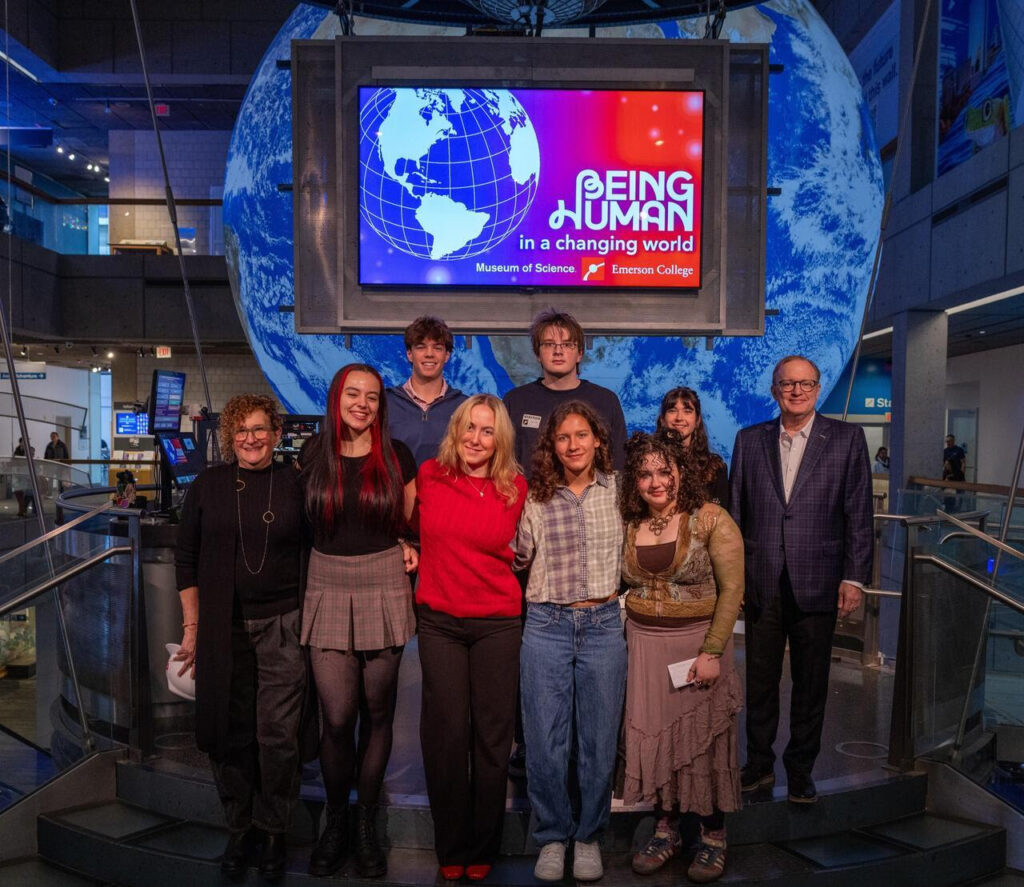
The takeover is part of a multi-year collaboration with the Museum of Science that includes performances, student-created competitions, classroom visits from experts, and more. The partnership with the MOS began earlier this year when the Museum enlisted Emerson and other institutions to help them explore their Being Human theme.
“The Museum of Science’s mission includes making science accessible to everyone and anyone,” Marketing Communication affiliated faculty member Sharon Topper said at the onset of the collaboration. “The way to do that is by telling the stories through communications and the arts. That’s where Emerson College and the Museum of Science share a sense of curiosity, exploration, and adventure.”
Being Human in a Changing World
At the November Takeover, Emerson students took the stage analyzing the central theme of Being Human.
Cameron McAllister ’28, a Political Communication major and men’s tennis team member, questioned what sports fandom reveals about being human.
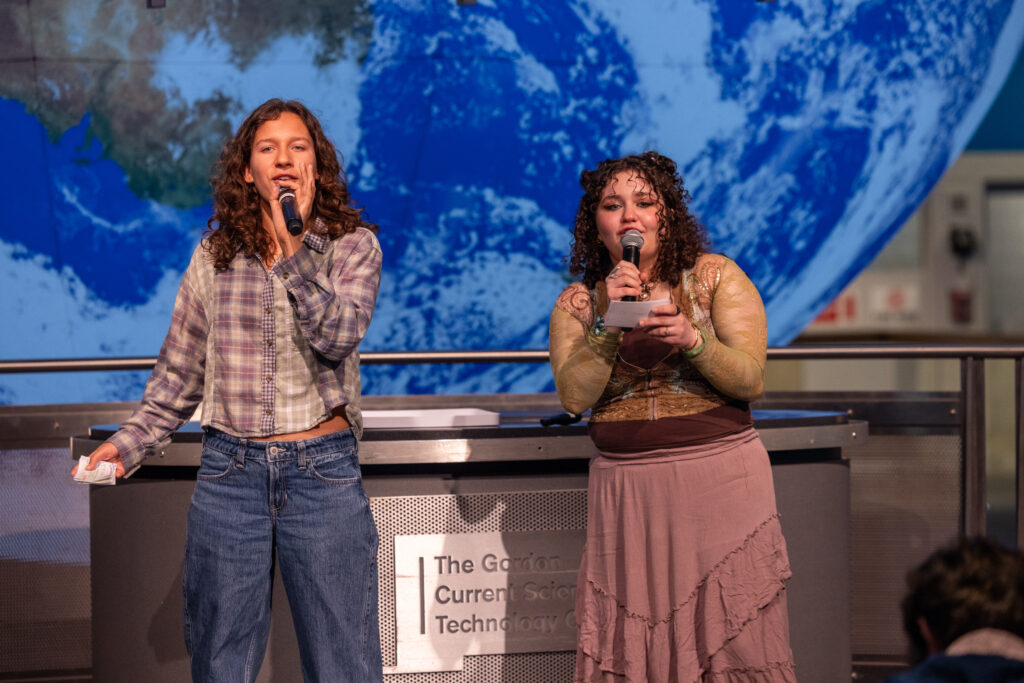
Theater and Performance major Lili Shaw ’28 partnered with Interdisciplinary Studies major Lauren Scott ’28 on a performance centered on sustainability in technology.
Sadie Lallier ’28 spoke about how religion and science are two very influential factors in the modern world, both in individuals’ personal lives and in the government.
“It is more important now than ever to recognize that these two seemingly contradictory areas can and should be able to coexist,” said Lallier. “Simultaneously, however, it is vital that we learn where a line needs to be drawn, and how leaning too far into either side is what causes such widespread disagreements that can lead to violence. Coexistence is possible only when we consider everyone in the scope of our fight for peace.”
Writing, Literature and Publishing major Lilian Flood ’28 explained how anxiety can be a form of self-preservation.
WLP major Elizabeth Liatsos ’28 critically approached the relationship between feminism and relativism, questioning why women are understudied in scientific testing. “What do prescription glasses, seatbelts, and feminine hygiene products have in common?” asked Liatsos. “None of them were tested on women as they were designed.”
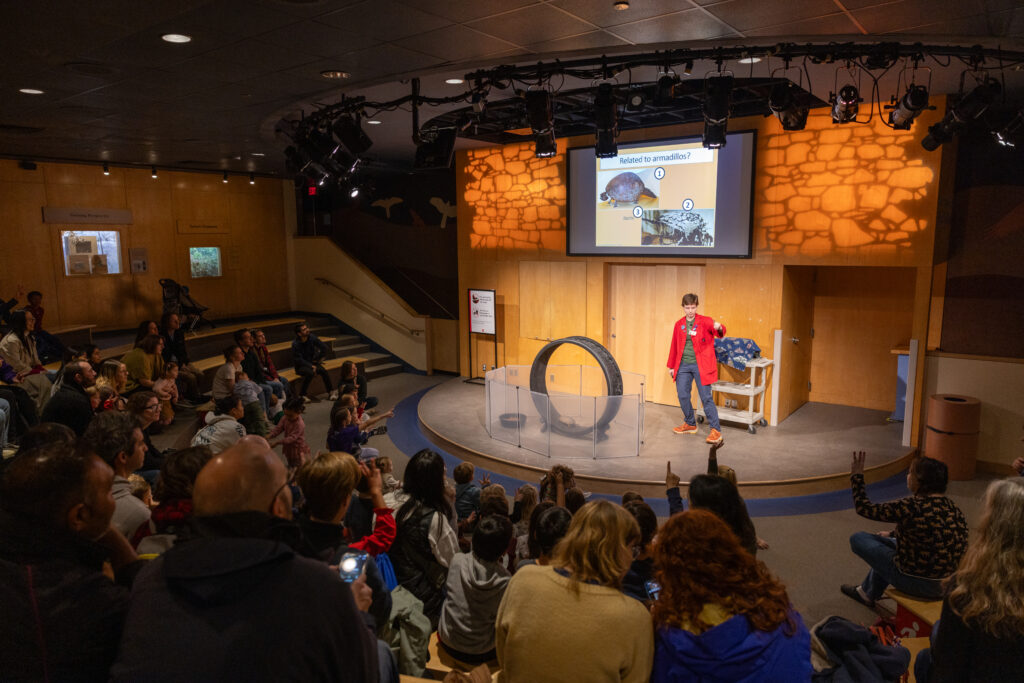
Comedic Arts major Trent Ford ’28, concluded the series of presentations by displaying the difference and interplay between evolution and scientific advancement.
Making AI Work for Humans
Emerson students also tackled how recent technological advances can shape creative spaces with Making AI Work for Humans, an exhibition spearheaded by students in Senior Affiliated Faculty member David Kelleher’s Critical and Creative AI course. Theater Performance major Sunny Wu ’26 entertained museum-goers with an augmented reality sandbox where audiences could interact with digital toys through a tablet.
“As a Theater Performance major it’s so cool to immerse myself into this environment that deals with tools like AI, which I don’t actively study, but know they will be important, powerful tools for the future,” said Wu.
Business of Creative Enterprises major Colin Wanless ’26 displayed how ethically-trained AI programs are used to produce high-quality commercials without the need for a substantial budget. Wanless presented a commercial he produced by using ethical AI tools like Adobe Firefly and Moonvalley, which draw their generative data from the works of consenting and compensated artists.
Wanless also enjoyed presenting at the MOS. “It’s really nice to have this platform to share our Emerson projects with all sorts of families,” said Wanless.
The day concluded with The Year of Being Human Film Festival held in the Mugar Omni Theater screenings of original short-films created by Emersonians.
In Shannon Hargreaves’ film, a particular space in a particular time, she wanted to capture a particular space and then introduce people into it. She chose an antique shop.
“I intertwined objects I found random inspiration from with my childhood home videos,” said Hargreaves ’26. “I was pretty obsessed with how memory lives in items and reminds us of our own nostalgia/past.”
Max Ardrey ’27 thought his film Amy Dynes fit well with the theme of the day.
“I think people are easily captivated by earnest, unfiltered enthusiasm… [and] I thought a fun way to explore the extent of this would be through this young girl who has become enamored with ants,” said Ardrey. “It’s silly, and somewhat exaggerated, but this kind of niche obsession is how people often express themselves. It’s a humorous take on the encouragement we should give people who fall in love with the world around them.”
Categories
