
Emerson Classes Translating Science Through Communication, Arts
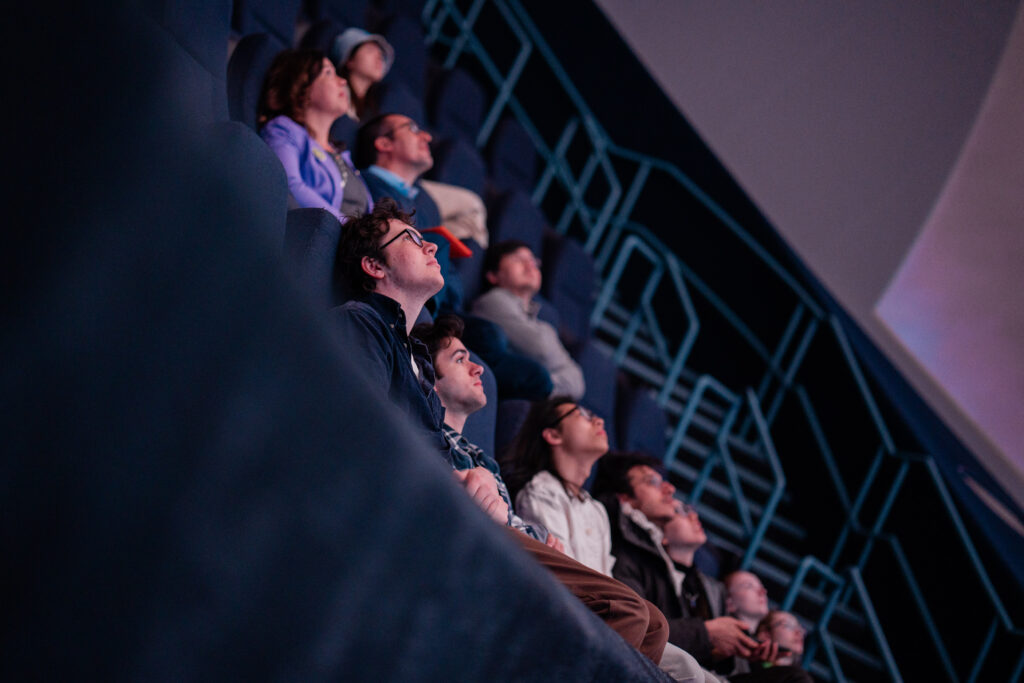
For the second time this year, Emerson students and faculty will descend upon Boston’s Museum of Science to unleash their storytelling savvy on visitors and give them a unique window into what it means to be human today.
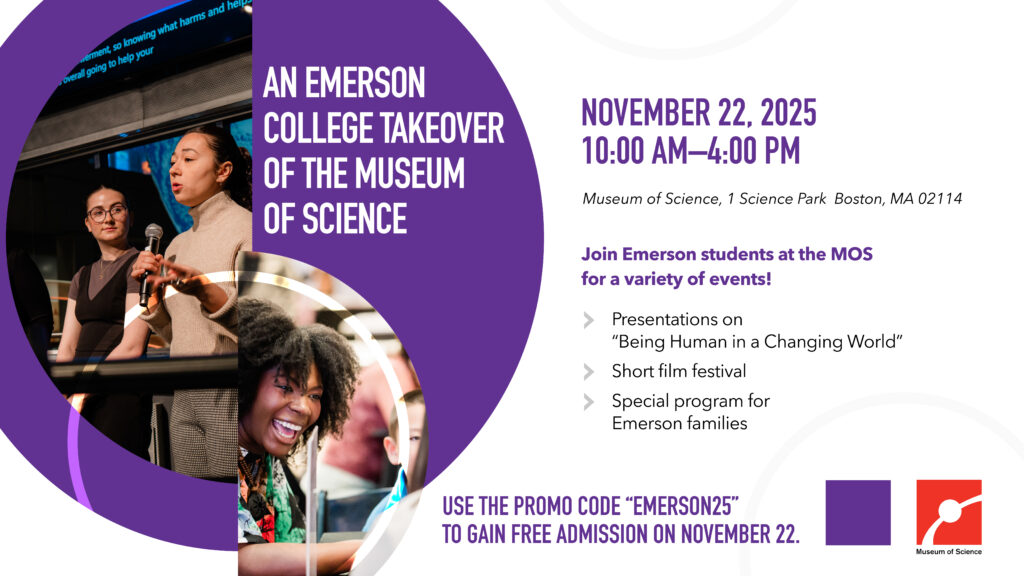
On Saturday, November 22, from 10:00 am to 4:00 pm, seven classes will offer “activations” that will explore the museum’s 2025 theme of the Year of Being Human through different lenses, using art, writing, ecology, film, AI, and audiology, and more. Emerson community members can get free admission to the museum on Emerson Day by entering the code Emerson25.
The yearlong collaboration is about giving visitors another entry point into the scientific knowledge contained in the Museum, and it’s already been successful for everyone involved, said Business of Creative Enterprises affiliated faculty member Sharon Topper, senior advisor to President Jay Bernhardt and originator of the partnership.
“I think that we see huge benefits to our students to have an audience with [the Museum’s] visitors and their members [and] I know that they are getting huge benefit from our students being able to bring their stories and their creativity to their space,” Topper said.
Emerson families also are invited to a special “Bring Your Kid(s) to Work Day” pre-takeover event (Register). And volunteers are needed on the day to help keep things running smoothly (Sign up).
Read: Emerson to Take Over Museum of Science, Explore ‘Being Human’
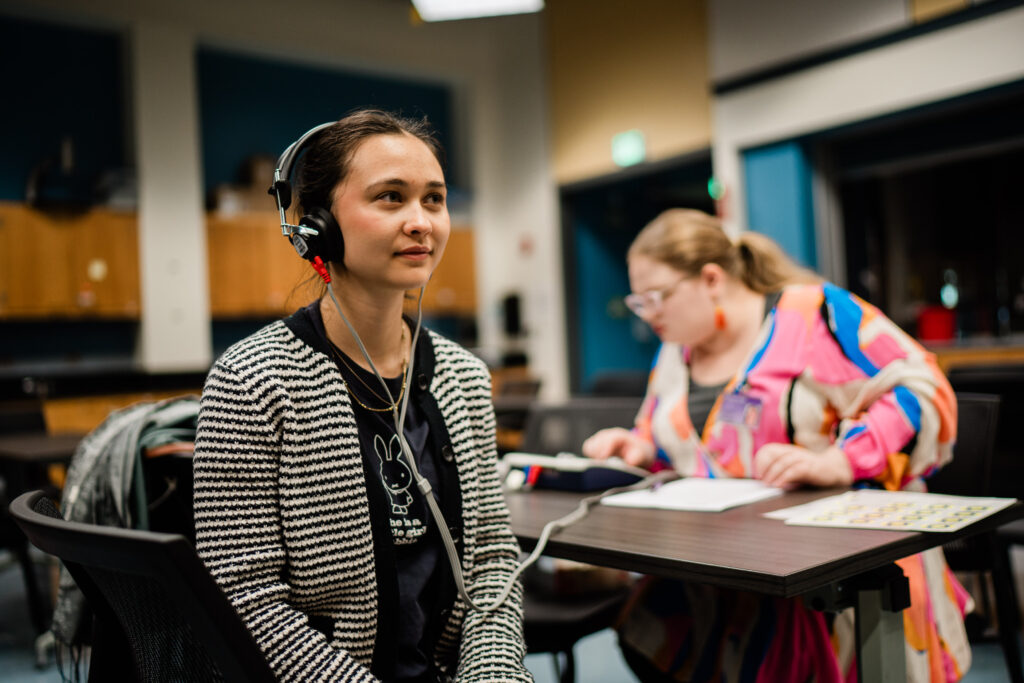
The Nov. 22 takeover features activations from seven Emerson classes, including some back-by-popular demand offerings from April. Students in Writing, Literature and Publishing will present “Reading Human: Exploring What It Means to Be Human Through Zines,” Communication Sciences and Disorders graduate students will provide hearing screenings for visitors, and The Year of Being Human Student Film Festival will once again screen short films that reflect on memory, identity, and the body as sites of human experience.
New this fall will be “Making AI Work for Humans,” with students in the AI: Critical and Creative Explorations class; “Conservation Stories: How Ecology Shapes Human Futures” from Ecology and Conservation students; “Big Ideas for Busy People,” a series of lightning talks from Honors students in the course Being Human in a Changing World; and curatorial tours of the museum led by students in Sophia Day’s class How to Look at Art and Why.
In her class, Day, an affiliated faculty member in the School of Film, Television and Media Arts, takes students on a journey through everything that goes into making a work of art – the materials and processes that build it, the cultural trends that shape and interact with it, the discussions that happen around art, and the contexts in which it is seen.
For the Museum of Science tours, Day asked her students to pair one of the museum’s exhibits with a piece of art that they see connecting to it in some way, and talk about how the science and the artistic piece speak to one another and create a whole new idea.
“I think, especially with science, from [the perspective of] the human experience, there’s something that feels very cold and very clinical sometimes,” Day said. “A lot of artists do engage with science at some level, and in doing so, I think they bring in a level of humanity and consideration that’s already implicit in what we’re seeing in science, but maybe isn’t explicitly stated.’
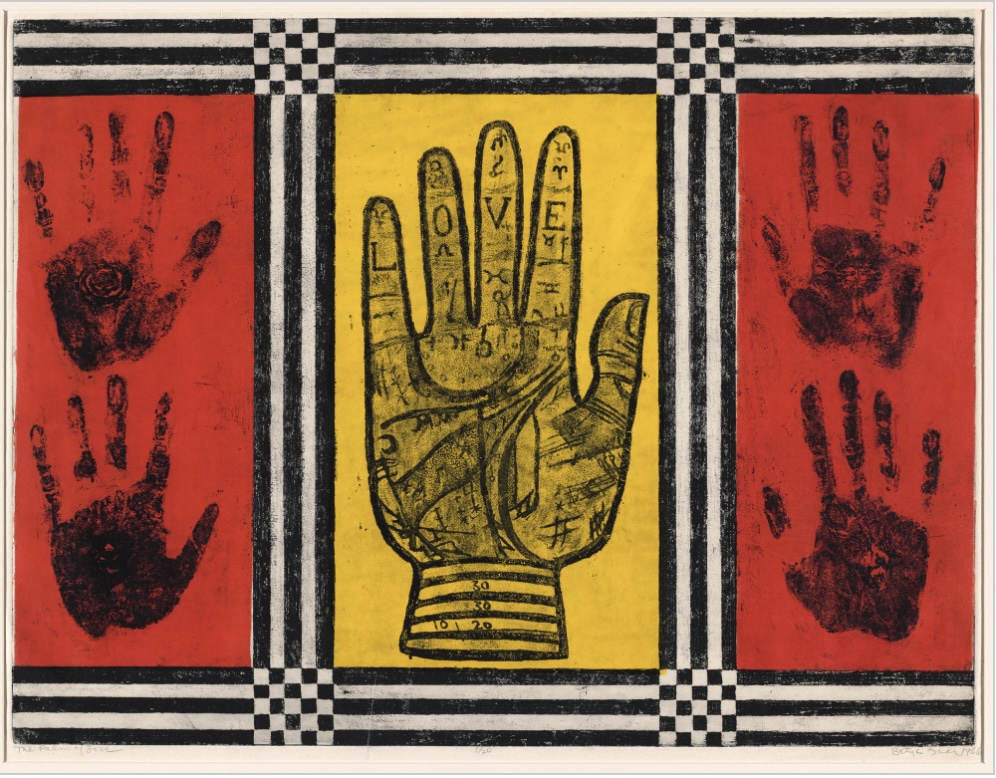
Lily Farr ’26, a student in Day’s class, chose to link Betye Saar’s “Palm of Love” (1966) to an exhibit on melanin in the Museum of Science’s Hall of Human Life.
Farr said the piece, an etching depicting a hand marked with a palmistry chart flanked by four handprints, resonated with her in the context of the exhibit, both because it demonstrates the interconnectedness of humanity, and because it calls back to mysticism and “that kind of higher, more connectedness with oneself and, in turn, the universe.”
Marlboro Institute Associate Professor Amy Vashlishan Murray teaches the Sophomore Honors Science Seminar, Being Human in a Changing World, in which the class thinks and talks about integrating human experiences into science to make it more comprehensive and less elitist.
“I think oftentimes [students] encounter surprise in that they think they’re coming to a certain type of course because they have a perception of what science courses are or have been in their educational history,” Vashlishan Murray said. “But this feels like a very Emerson version of science in that it’s integrated and connected.”
For their activation, students from her class have been selected to present quick, TED-esque talks.
“It’s a little under an hour of a handful of five-minute flash talks with some discussions [on] ideas that students are taking away from our course and wanting to share with a broader audience.
The Nov. 22 takeover is just one part of the collaboration, which so far has also included a spoken-word event in February, another takeover in April, and a performance, presented by ArtsEmerson in the planetarium, in May.
James Monroe, the Museum of Science’s Creative Director for Strategic Programs, said the partnership between the museum and Emerson has been an “anchor” for 2025’s theme of the Year of Being Human, with the College collaborating on more programming and engagement opportunities than any of the museum’s other external partners. Topper and Monroe are already exploring an event in the new year, to help kick off the museum’s 2026 theme.
While on the surface, a museum dedicated to science and technology and a college committed to educating students in communication and the arts may sound like unlikely partners, Monroe said science needs great storytellers to convey how it impacts everyone in their daily lives.
“Emerson is really creating the next generation of great storytellers,” Monroe said, “and so being able to translate current science and technology through art, through performance, through visual media, through communications, and working alongside Emerson students to do so, really fulfills our mission, and I think has expanded our impact into communities that we wouldn’t have been able to reach otherwise.”
Categories
