
WLP’s Abbott Reflects on Bringing Memoir ‘Fairyland’ to Silver Screen
Alysia Abbott’s memoir about growing up with her gay, single father in 1970s San Francisco was published and optioned in 2013. Now, after more than a decade, it has been released in theaters.
An affiliated faculty member in the Writing, Literature & Publishing Department, Abbott has taught literature courses with a focus on nonfiction and American women writers. Most recently, she’s been teaching Literature in the AIDS Crisis for the last two semesters – a class that she pitched and developed.
Abbott spoke with Emerson Today about the long journey of bringing Fairyland: A Memoir of My Father from page to film, how her life experiences have made her a better educator, and what it was like to be an extra in her mother’s funeral scene.
This is an edited version of a conversation with Abbott.
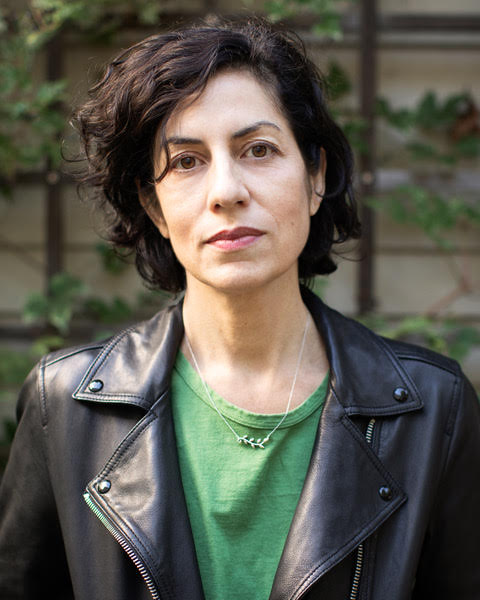
Why did you want to write Fairyland?
Abbott: The idea came from collecting letters between my father and me, and finding his journals after he died. I felt his story — moving to San Francisco in the 1970s and dying in the 1990s — represented an important swath of American culture.
Writing through the lens of his daughter, I wanted to transform my grief into something and spend more time with him. Over the years, as the culture changed, I also saw how our personal story could shine light on a historical period many people don’t fully understand.
How hard was it for you to write?
Abbott: Emotionally, it was very hard. I’d wanted to write the book for many years. Once I sold it to Norton, I focused my energies on it.
Where did the title Fairyland come from?
Abbott: I didn’t know at first what the book would ultimately be about. I moved to Cambridge with my husband in 2009. I took [Chair of the Committee on Degrees and Folklore and Mythology at Harvard University] Maria Tatar’s children’s literature course at Harvard and reread classics like Alice in Wonderland, the Grimm Brothers, and Peter and Wendy.
I noticed in these works that an adventure often began with the death or absence of a mother figure. In my personal story, my mom died when I was 2 ½ years-old — my father and I moved to San Francisco soon afterward. Like Wonderland or Never Never Land, San Francisco was a place that operated on its own time and upside-down world that was magical and playful, but maybe a bit more dangerous. It was also a place that was magical to me and was in a particular time that doesn’t exist anymore. Remembering it was a real place makes it feel real on the page. It’s a story about our relationship, but also about a place in time.
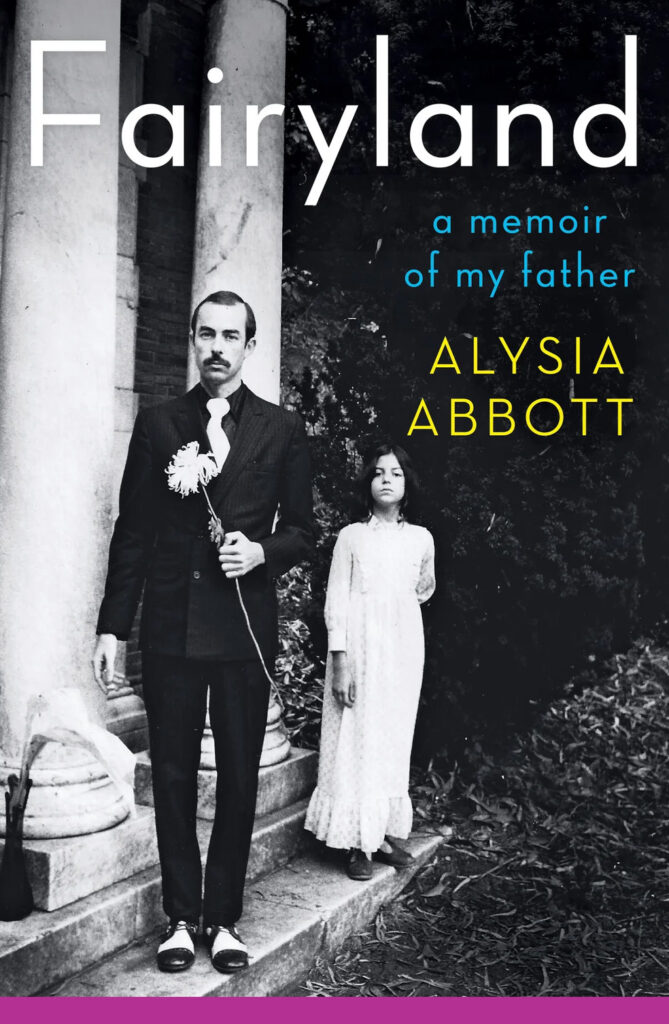
What was it like when the book was optioned for film rights?
Abbott: The book was published in 2013, and I was approached for film rights that year. I was most excited to meet with Sofia Coppola and Andrew Durham. It was a very snowy day that we almost didn’t meet. We met in Cambridge and I just had a really good conversation with them. In my mind, I would’ve really liked that Sofia Coppola direct, but she wanted to produce it. There was an aspect of taking a risk on someone who hadn’t directed a movie. Andrew had the same story of his father dying in San Francisco. He was dedicated to making it true to the spirit of the book.
Were you involved in the screenplay process?
Abbott: Yes. I was a consultant. We had meetings in San Francisco, and they visited the San Francisco Library, where my father’s papers are housed to see my father’s journals and I saw drafts of the script. His writing is in the library because he was a writer and poet. Many of his papers are archived there, along with material I donated.
Did you visit the movie set?
Abbott: Yes — I’m an executive producer. I helped secure the film’s biggest investor. The film went into production in 2022. I flew out there. I had donated a lot of items to the set. My daughter flew out to be an extra. I was an extra in one of the scenes. I experienced what it was like to see the set they created. And then the film debuted at Sundance in February [in 2023].
What scene did you appear in?
Abbott: I was an extra in a scene of my mother’s funeral, which is not something I remember in real life. It seemed like it would be interesting for me to recreate that moment. You don’t see me. I wanted to be an extra in that scene.
Your daughter is also in the film?
Abbott: Yes. She was 17 at the time. She is an extra in a record store scene, and you can actually see her, but you have to know to look for her.
Any advice for students hoping to write memoir?
Abbott: I teach memoir writing at MIT and taught memoir writing for 10 years at GrubStreet.
If they’re a young person, they just should be writing because their memory is sharper than it will ever be, and capturing details make a scene vivid. What you have to say about it, could take many years. I got my MFA in New York [in 2003], and there’s an exercise I did in that MFA program that ended up in book. When I was a freshman in college, I wrote about my personal life with my dad, and some scenes ended up being in the book. In some ways the seeds of what would become the book were planted many years ago. I encourage students to take classes and develop the practice of taking themselves serious as writers and taking notes so they can remember and have material. Sometimes you need distance to know what story is really about.
Did your mother know your father was gay?
Abbott: She died when I was 2 ½ years old. She and my father were anti-war and radicalized, and had a different idea of what relationships could be. My father introduced himself as bisexual when they first met, and she was ok with that. I learned a lot about their relationship in his journals.
What was it like to learn such intimate details about your parents?
Abbott: I didn’t learn these details until my dad died. My dad died four days before my 22nd birthday. It was in the act of cleaning out his apartment that I found the journals. It was like getting access to this puzzle and understanding my family, which was also upsetting to me. I read about my mother and I felt like I lost her again and it was very painful. I have no memory of her. Through my dad’s journals I know I was at her funeral. That’s why I wanted to have the experience of being at her funeral on the set.
How has your personal story influenced your teaching at Emerson?
Abbott: The world I was raised in in San Francisco enabled me to have an affinity for queer life. It’s more familiar to me than homecoming or driving to the mall. My interest in teaching AIDS literature and queer history is informed by my life and things I remember. But I also have the desire to understand that history and make it feel alive for people. It’s an important part of our collective history, and it’s not something that should just be taught in specialty classes. These are stories of people who lived and died of AIDS.
At the end of my book, I write about how at the time after he died no one talked about AIDS anymore. It felt like cultural amnesia. It’s very meaningful for me that I could develop and teach this class.
What else would you like to share about yourself, writing, Fairyland, or anything else?
Abbott: Before teaching, I worked for years at the New York Public Library in development and special events, especially location shoots. I arranged filming for 13 Going on 30 and Spider-Man, as well as fashion shows and photography. It was a fun, demanding job — lots of late nights on set!
Teaching came later, though my father was a teacher. He encouraged young queer writers in his community and taught from our living room. In many ways, my own path — from NYPL to film involvement to writing and teaching — mirrors that mix of creativity and community.
Also, that I’m grateful for the students I teach, the readers of the book, and the chance to help bring the film to life. Teaching keeps me learning. And writing Fairyland allowed me to honor my father, the city that shaped us, and the culture that shaped him.
For more, check out this recent Boston Globe feature about Abbott.
Categories
