
Raynauld Studying Impact of Social Media Influencers on Political Landscape
Social media influencers are changing the way people get their political news. Exactly how, and how much, they are impacting political discourse, is the focus of a grant-funded six-year project that Communication Studies Associate Professor Vincent Raynauld is participating in.
The project will look at the role and and impact of social media influencers in the U.S., United Kingdom, and Canada, and received a $184,000 grant ($252,000 in Canadian dollars) from the Social Sciences and Humanities Research Council of Canada (SSHRC), and is being led by University of Ottawa Associate Professor Elizabeth Dubois.
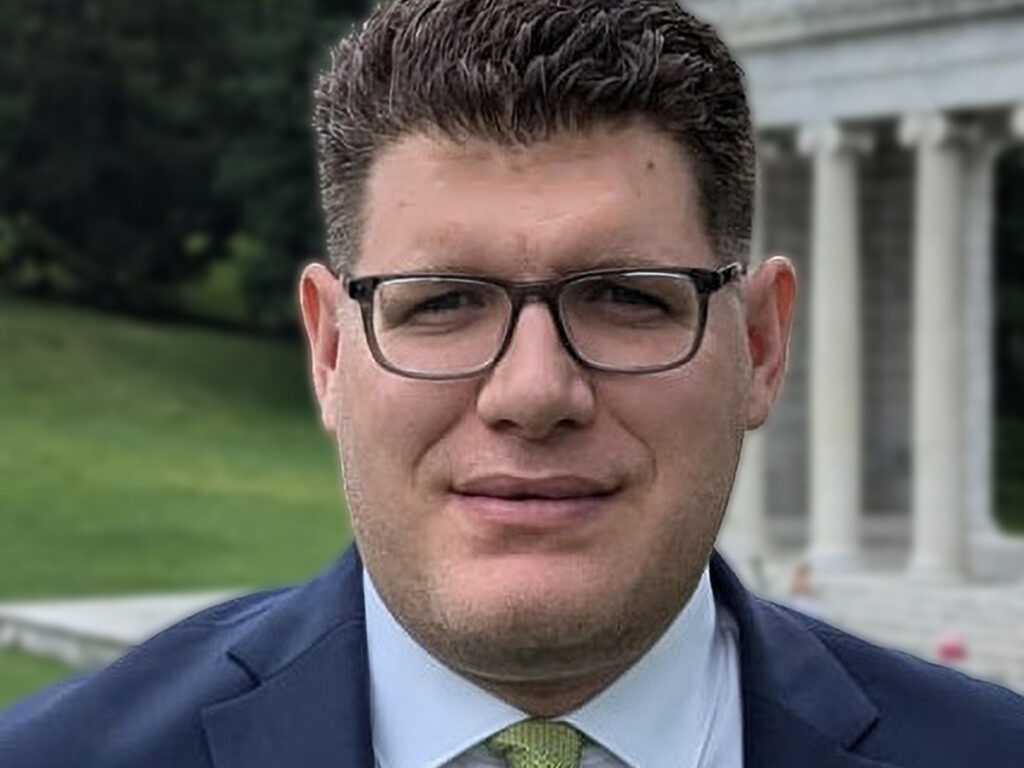
“I am mapping out environments that are likely to gain influence. We’re seeing an increasing amount of micro influencers,” said Raynauld. “People go to CNN and MSNBC, but we’re seeing a diversification of political news environments. Sometimes things are limited to a specific topic, tone, or approach.”
How specific? President Donald Trump has spoken with several golf-related social media influencers. Of course, Trump is also an avid golfer, so that’s in his wheelhouse. Yet at the same time, he’s reaching a segment of people who are interested in golf.
The study will look at TikTok, as well as Instagram, YouTube, and Substack. They all have their own people, said Raynauld.
Raynauld said the grant will focus on four groups: governments and regulatory bodies; campaigns using influencers (i.e. political parties, activist groups); companies selling influencers (i.e. marketing agencies); and influencers themselves.
Researchers will collect and analyze data on a rolling basis and are utilizing Network ethnography, a mixed-methods approached used to study and map media ecosystems and policy environments. That involves document analysis, observation, and interviews. The end result of the research will be published in academic journals and books, as well as political-minded media outlets, podcasts, and the like.
Where Do People Get Their Political News?
Raynauld checks out X and Fox News in order to track right-wing conservatives, but he said many conservatives are looking at nontraditional sources like MyPillow founder Mike Lindell’s Lindell TV, who has his own show on the outlet, as do others like former New York City Mayor Rudy Guiliani. Newsmax has also become a big political influencer on the right.
Former U.S. Navy Seal and CIA contractor Shawn Ryan has his own podcast, with a demographic slanted to men and young adults. His YouTube channel has more than 4.8 million subscribers.
“These people straddle the lines between reporter and opinion,” said Raynauld. “[far-right internet personality] Laura Loomer will talk about breaking news, and is still very slanted.”
Raynauld said that because of the abundance of influencers, it’s easy for people to get stuck in echo chambers of their own point of view. That means moderate and left-leaning politicians hoping to change people’s attitudes need to reach out to audiences on the opposite end of the spectrum.
“California Governor Gavin Newsom went on some rightwing podcasts. Newsome went on [Shawn Ryan’s] show to get the Democratic Party message to pierce that conservative bubble,” said Raynauld. “Newsom went on Charlie Kirk. He hosted Steve Bannon on his on podcast.”
Raynauld said social media influencers are changing political discourse and the way people find out news. He pointed to the Pew Research Center, which reported about 21 percent of adults regularly get news from influencers on social media, and that goes up to 37 percent for people between 18 and 29.
The impact of social media influencers can be seen from Ryan’s interview with Newsom. There are more than 32,000 comments on the video.
“Influencers have become the go-to platform for many people. In 2016, 2017, people were getting their political information from social media, and influencers is an extension of social media,” said Raynauld.
Raynauld said traditional TV desk news reporters are recognizing the importance of social media influencers.
“Former CNN host Don Lemon went on X, then moved to Substack. We’re seeing an increasing amount of journalists launching their own Substack and leaving TV,” said Raynauld. “This is the way news is evolving and also how influencing is evolving.”
Categories
