
Sater ’25 Breaks Film Ground with Cultural Critique ‘Mixed Signals’
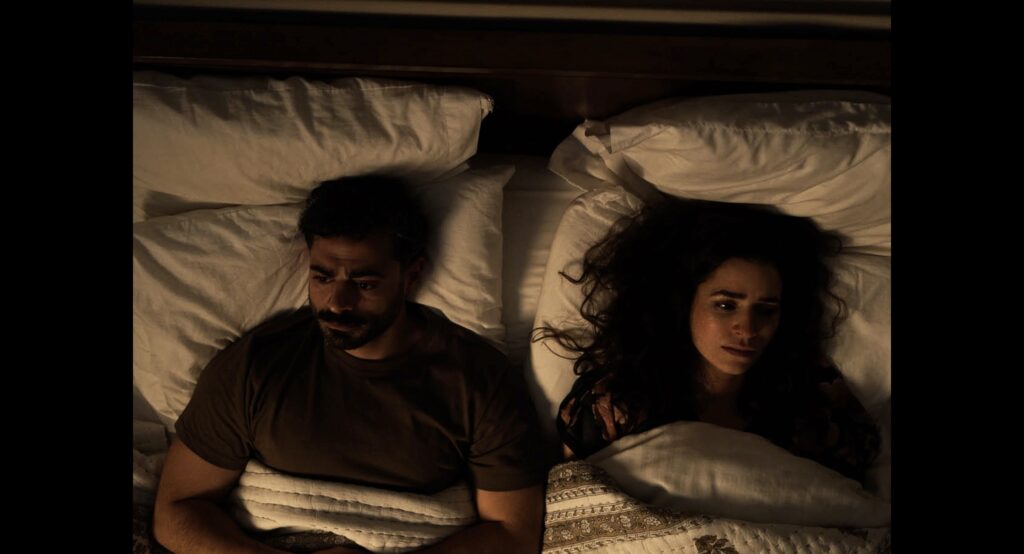
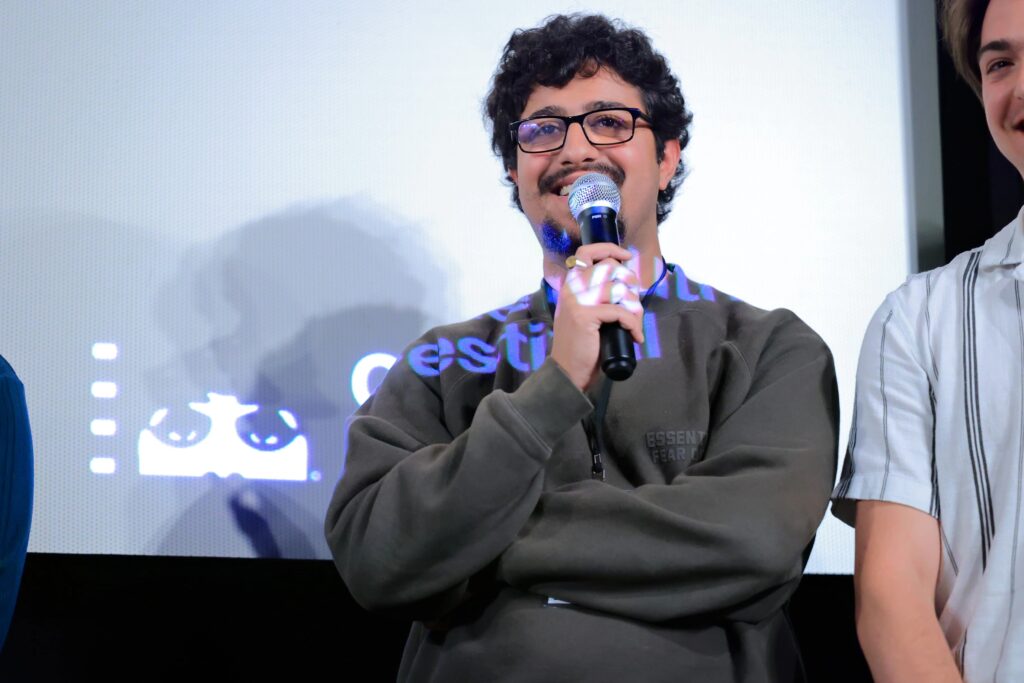
Before graduating last spring, Zaid Sater ’25 made film history when he became the first Bahraini filmmaker to have a project screened at the CineYouth Festival in Chicago.
Co-written with Ibrahim Fitaihi ’27, with whom he co-founded Obscura Films, Mixed Signals delves into how cultural differences affect the institution of marriage.
Now based in Dubai and Los Angeles, Sater spoke to Emerson Today about Mixed Signals, telling stories from the Gulf, and his Emerson College experience.
What inspired you to make Mixed Sigals?
Sater: Marriage is one of the most defining aspects of human relationships, yet the way we approach it is deeply shaped by culture. In the Arab world, marriage often grows out of family ties, social expectations, and, at times, strategic alliances, rather than personal choice. While this can foster stability and community, it can also create distance between partners who marry without a strong personal bond.
In contrast, Western marriage is typically rooted in romantic love and individual choice. People are encouraged to date freely before settling down. Yet even with that freedom, many still experience disillusionment, as the pursuit of love can feel transactional, fleeting, or isolating.
With Mixed Signals, I wanted to explore the tension between these two worlds: the structured, duty-driven framework of Arab marriage and the passion-driven, individualistic approach in the West. The film isn’t about declaring one “better,” but about exploring where they meet—and how a balance between tradition and choice, duty and desire, can lead to deeper, more fulfilling connections.
Is the film based on personal experience?
Sater: The story grew from conversations I’ve had with friends about seeking connection when your culture teaches you to be private about love and desire. Mixed Signals follows an Arab immigrant who turns to dating apps—not out of rebellion, but out of loneliness.
For me, it’s less about romance and more about what happens when tradition and technology collide in deeply personal ways. I hope it leaves audiences thinking about how much of our identity is shaped not just by where we come from, but also by what we choose to hide or reveal in the digital space.
Where did you film Mixed Signals?
Sater: In midtown Manhattan, New York City, at a fantastic restaurant called 5th and Mad.
Was Mixed Signals filmed as part of an Emerson College class?
Sater: Yes—it was my BA Capstone project, under the guidance of [Visual & Media Arts Assistant] Professor Joe Maggio, who was an incredible supporter from start to finish.
What does it mean to be the first Bahraini filmmaker at CineYouth?
Sater: It’s both an honor and a little surreal. On a personal level, it’s incredibly meaningful. But it’s also a sign that stories from the Gulf are beginning to find space on international stages. We’re often underrepresented—or misrepresented—in global cinema, so being part of a festival that champions emerging voices feels like a small but important step.
I also think this is just the start. The Gulf has an incredible wealth of untold stories, and being united by the Arabic language and a shared heritage means there’s a limitless creative landscape to explore. I’m hopeful that more voices from the region will make their mark on the global stage.
Has Mixed Signals been screened at other festivals?
Sater: Yes, it screened at the Greenpoint Film Festival in Brooklyn on August 8, and it has been submitted to several other festivals.
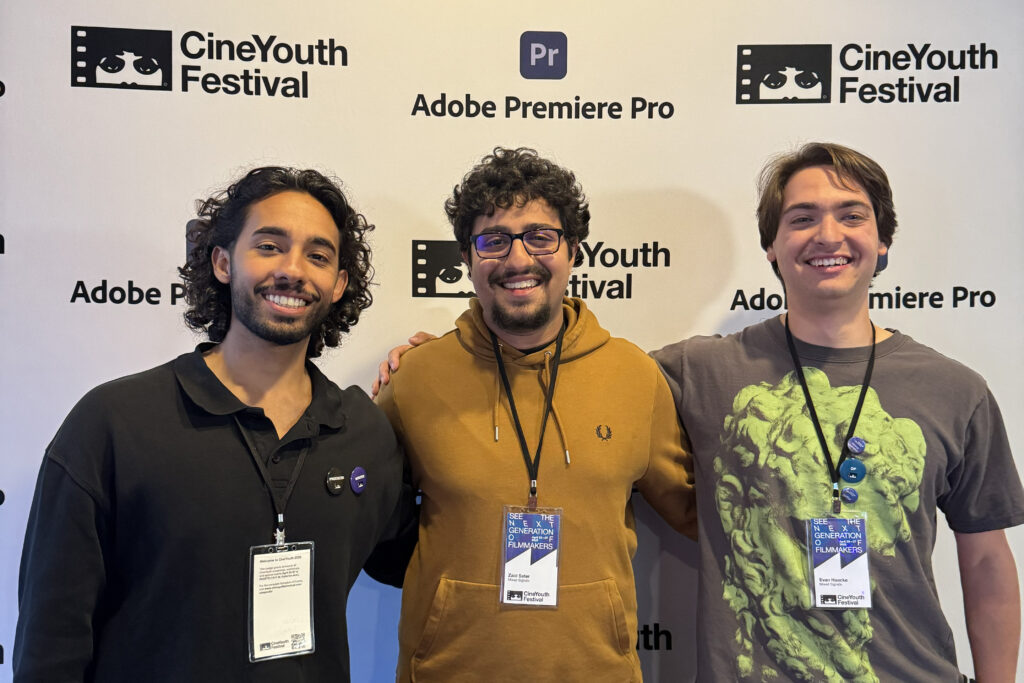
You co-wrote the film with Ibrahim Fitaihi ’27, who co-founded Obscura Films with you. How would you describe its vision?
Sater: Our focus at Obscura Films is to create work that represents Arab and Middle Eastern stories authentically—without exoticism. Much like how Parasite and Squid Game brought Korean [filmmaking] to global audiences on its own terms, we want to build a cultural bridge that connects our stories with the world in a way that feels grounded and human. We have several projects in development that aim to spark those cross-cultural conversations and show that our stories are universal.
Did you and Ibrahim meet at Emerson College?
Sater: Yes, we met during our first week at the library. We instantly connected as Arab filmmakers living in the West who never saw our experiences reflected on screen. That shared frustration quickly turned into a shared vision, and we’ve been collaborating ever since. He’s already one of the most thoughtful and ambitious storytellers I’ve met.
How did your Emerson experience help you?
Sater: Emerson gave me both the creative tools and the support system to make my vision a reality. I’m especially grateful to a few professors who changed the way I see film. Joe Maggio helped me find my voice as a filmmaker and taught me how to communicate effectively with my crew. [VMA senior affiliated faculty member] Gautam Chopra opened my eyes to how symmetry, framing, and focal lengths can fundamentally shape a viewer’s emotional experience. And [VMA senior affiliated faculty member] Marc Weinberg pushed me to refine my screenwriting, giving me the confidence to trust my instincts while avoiding common pitfalls.
What are you working on now?
Sater: We have a few projects in the works—one in adult animation, which is a medium that’s expanding rapidly, and two live-action projects designed to bridge the gap between Middle Eastern and Western audiences.
Categories
