
Vaughan Building Pillars of Environmental Media at Emerson
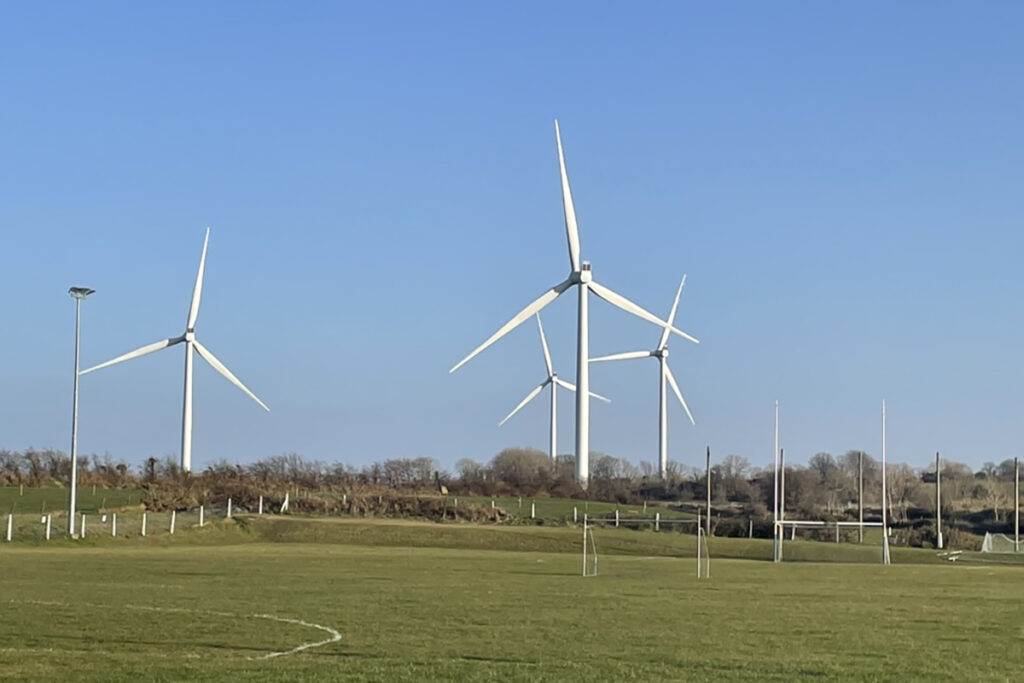
Hunter Vaughan is striving to build a home for people working at the intersection of film, media, and the environment.
“I keep finding people in these silos, where they don’t realize that what they do actually has a home, disciplinarily or interdisciplinary,” said Vaughan, an assistant professor in the School of Film, Television, and Media Arts (SOF). “[I hope] to bring them into conversation to help them feel seen, and to start building more community for people working in and interested in this area, including students that are interested in making environmental films.”
The first step in Emerson’s Environmental Media Initiative will be a series of lightning talks by Emerson faculty working in this space, followed by a keynote by Allison Carruth, a professor of American studies at Princeton University, where she also serves as the director of the Program in Environmental Studies and leader of the Blue Lab, an environmental media and storytelling studio. The event will be held Thursday, April 16, 3:30-6:00 p.m., in the Bright Family Screening Room.
Carruth will be talking about the Blue Lab’s work incubating climate documentaries and other media that highlight the work that communities are doing to preserve and protect their physical homes. She will “argue for collaborative media creation as a bridge among the environmental humanities and sciences that pressure tests the meaningfulness of scholarship beyond academia.”
Representing Emerson will be Assistant Professor of Journalism Lina Maria Giraldo, presenting “Weaving Noise: Democratizing Data and AI through Community Sound”; SOF Professor Kathryn Ramey on “Silver & Earth: Analog Film, Forest Ecology, Pit Mines, Ski Slopes, and the Fight for Clean Water”; and SOF Assistant Dean and Professor of Art History De-nin Lee on “Prequel to Environmental Media Studies: Art History and Deep Time.”
Lee studies Chinese landscape imagery and environmental issues, including how that imagery shapes cultural attitudes toward land, and in turn, land usage. As climate change has led to a “convergence” of historical and geological time, she said, she has become interested in the history of geology.
“Increasingly, students and scholars working in the environmental humanities are coming to appreciate how ecological conditions have shaped human history,” Lee said. “My research provides a bigger picture for seeing the underlying dynamic relationships between artistic expression and ecological responsibility, as expressed in such terms as ‘sustainability.’ One of my goals as a scholar, teacher, and human is to foster better stewardship of our shared planetary home.”
Vaughan, author of Where Film Meets Philosophy (2013) and Hollywood’s Dirtiest Secret: The Hidden Environmental Costs of the Movies (2019) co-founded an Environmental Media Lab prior to joining Emerson. He and his partner intended it as an independent research hub that linked graduate students with leading international scholars, but without institutional support, it foundered.
Read: In Ireland, Vaughan Examines Digital and Renewable Infrastructure Expansion
At Emerson, Vaughan envisions an Environmental Media Initiative that rests on three “pillars.” The first would, like his previous effort, link Emerson students and faculty interested in media and the environment with a network of scholars Vaughan has spent the past decade building — beginning with the April 16 event. He also runs an Undergraduate Fellows program, through which students help with research and event planning.
The second pillar would provide students with “green film” training that teaches them sustainable filmmaking practices, and prepares them for jobs in a media ecosystem that will be, he hopes, more concerned about our planet’s ecosystem than it has previously been.
“[It’s] very important for them, moving forward, if they want to be part of progressive change as the future workers of media industries,” Vaughan said. “But also, they can start developing a toolkit of the entire lifecycle of the creative process regarding more environmental conscientiousness and mitigated carbon footprints — sustainable film practice, basically.”
Pillar #3 would reinvigorate Emerson’s community engagement by partnering with local environmental justice groups on media and storytelling projects, such as documentary shorts. Vaughan is currently developing a course on ecomedia and ecological storytelling that would require students to get out into the community and work on real-world problems.
Vaughan said he feels like individuals who study and care about sustainability are not just siloed, but approach environmental concerns in very different ways, depending on their disciplines.
“Environmental communication and environmental humanities are hugely different. And environmental media studies has tried to set itself apart from both of them, while also acting as a bridge between them” Vaughan said.
“I think it’s great that environmental concerns are permeating so many fields, but it also signals the fact that people engage with environmental studies and environmental values and awareness in very different ways, and towards different ends. But in each case it has shifted traditional disciplines to focus on issues of urgency, and that affect all of us.”
Categories
