
The Reality of Reality TV: Rolov ’96 Teaches Producing the Unscripted
Emerson College students are learning how to produce unscripted television — and they’re learning from one of the industry’s own.
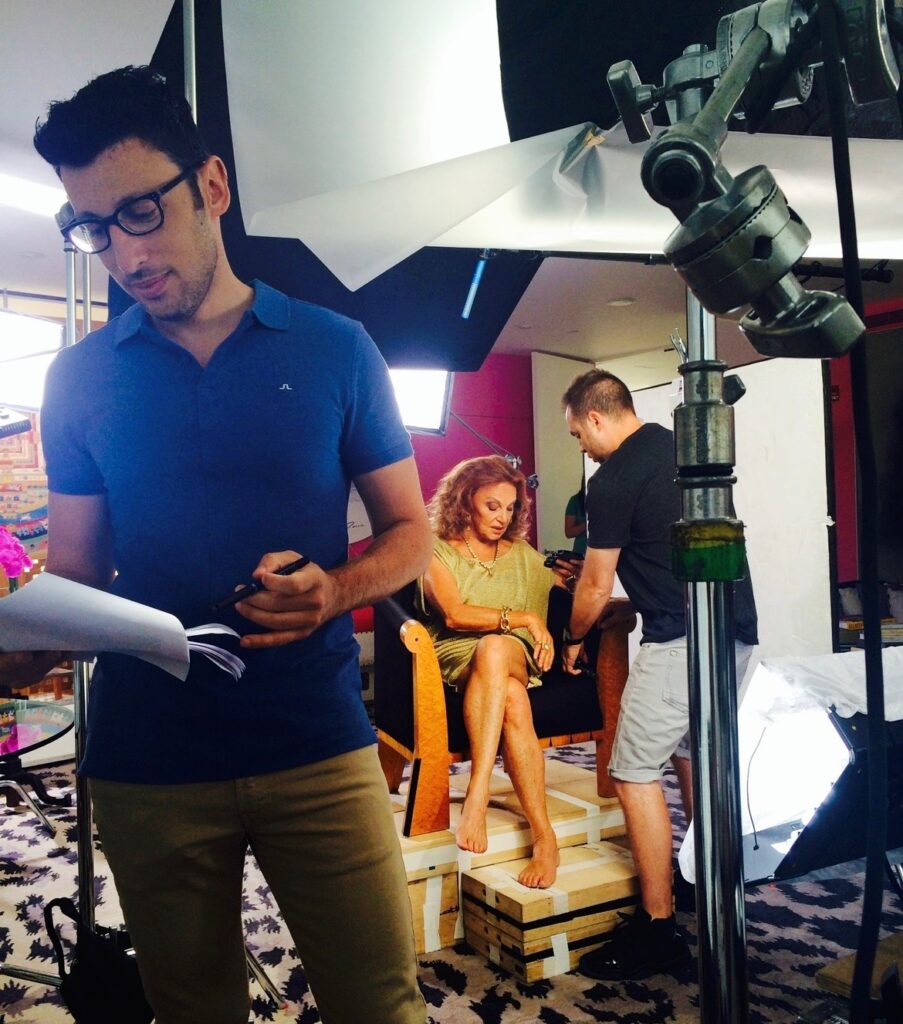
This semester, Lenid Rolov ’96, an affiliated faculty member in the School of Film, Television, and Media Arts, is teaching a new course, Producing for Unscripted, offering students an inside look at the creative and logistical realities of nonfiction television production. Students spend the semester developing an idea, and then pitch their idea to industry executives at the end of the course.
Rolov—an Emmy Award–winning producer whose credits include The Real Housewives franchise, as well as programs centered on Oprah Winfrey, Cyndi Lauper, Paula Abdul, and more—spoke with Emerson Today about his career in unscripted TV and what students are gaining from the course.
This interview has been edited for brevity and clarity.
Why did you pitch and want to teach this class?
Rolov: I have been working in unscripted TV for a few decades now. I’ve always wanted to go back [to Emerson] and teach since I was a student. And this is the thing I know how to do. I know how to take an idea and…develop it into a sellable television show. A documentary, reality series, a formatted documentary. Anything in the unscripted spaces. For 20 years I’ve been taking that idea and making it real. There’s a lot more to it than people realize, and more than I realized until I started doing it.
Like what?
Rolov: First of all, unscripted TV is not about people being real. Often, young producers think they can just pick up a camera and follow someone because they think unscripted TV is just about picking a person and following them. But in reality… it’s not capturing random life on camera. It is about building a story without a script. Your outcomes are unknown, but the structure, which is the bones, has to be intentional.
The intention of this course is for students to become fluent in how to use different formats within unscripted productions to structure their projects.
Do you script unscripted TV?
Rolov: You do not script unscripted TV in the sense of how people think about scripting like for a film or a narrative television show. There is an invisible architecture of unscripted TV. You still need to tell a story. Everything we do is about storytelling. You can’t just show up with a camera and see what happens. You need to know some semblance of a narrative spine that will lead to some payoff that’s interesting to viewers.
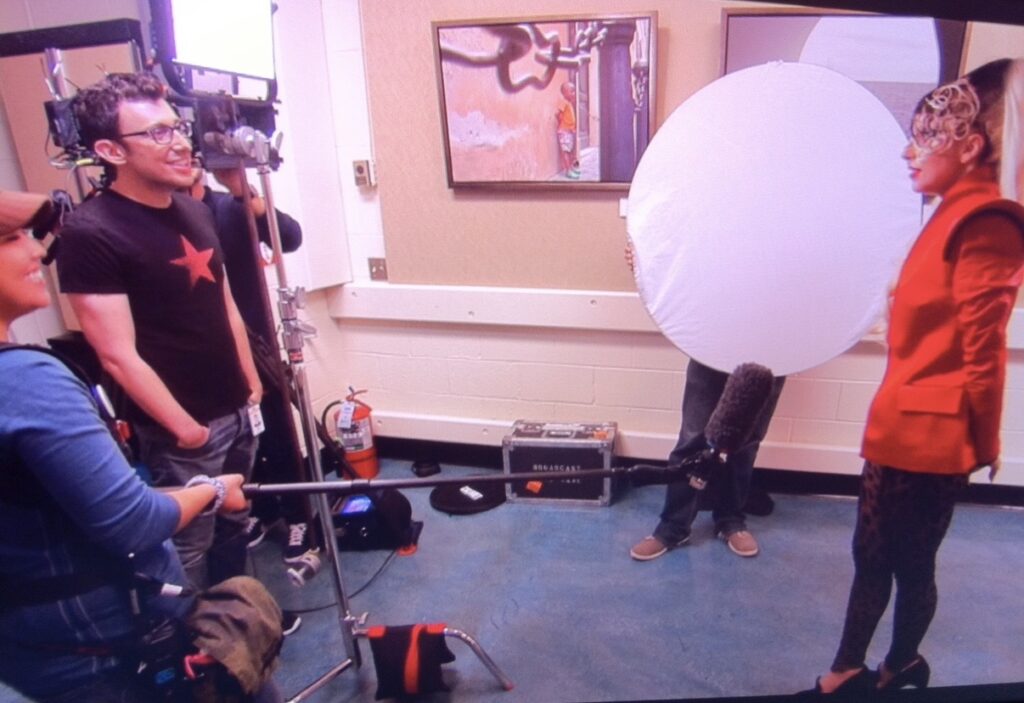
Tell us more about casting talent.
Rolov: These days, you cannot sell an idea without talent. Talent is your idea. Talent drives the format. Talent is why anyone is going to buy your show. Over the course, we discuss what makes talent irresistible to a buyer. I call these watchability drivers. What are they? A few of them that I look for are: desire, obstacles, contradiction, language, and their evolution potential. In the course, we study each of these and define what exactly they are, and how to spot and find them in your talent. After that, we explore the casting process. How does it actually work? Also, how do you use your personal network to find and lock in talent? And finally, how to produce talent to best allow them to be their most authentic selves on camera.
How has talent impacted productions throughout your career?
Rolov: For The Real Housewives of New York City, there were only two cast members. We sat in the Hamptons, and wanted to put a cast around Manhattan moms. While Bethany Frankel was not a mom at the time, she had a cooking side business, and we felt she was someone worthy of a show. I pushed the fact that she wanted exactly what those other cast members wanted. She was younger and didn’t have what she wanted yet.
With each cast member you have to really figure out why and how you’re going to pitch it, and how they fit into the cast. We had Jill Zarin through the casting process in the Hamptons, and found other cast members and put the show together.
After that it repeated itself with talent like Kathy Griffin [where I produced My Life on the D-List]. And then I worked with Cindy Lauper, Oprah Winfrey. With that caliber of talent, you really need to know how to build a show around them. It may feel like to the outside world that you just throw a camera on them because who wouldn’t want to watch and be fascinated by Oprah eating cereal?
You’ve been working on unscripted TV since the early 2000s. How has unscripted TV changed through the years?
Rolov: When I started it was like inventing the wheel. We had documentary film style shows like The Real World, which really allowed for months of shooting and letting stories unfold. These days the wheel has been invented and now the wheel is just in motion, so networks understand how it works, and know how to save money. We cut down the shooting schedule. Shows need to be more intentional in what they shoot in a given day. Sometimes that leads to TV that feels like an assembly line, or sometimes it feels like just checking a box instead of telling a story naturally.
When I started, we wanted to know how to get the most eyeballs on something. The logic was you wanted the broadest appealing content. Today it’s about individuality and what makes it different than the norm. Young people have a better opportunity to make nuanced stories thanks to all the platforms like social media, streaming, cable, and broadcast networks.
You’re an Emerson alum. How did Emerson help you professionally and/or personally?
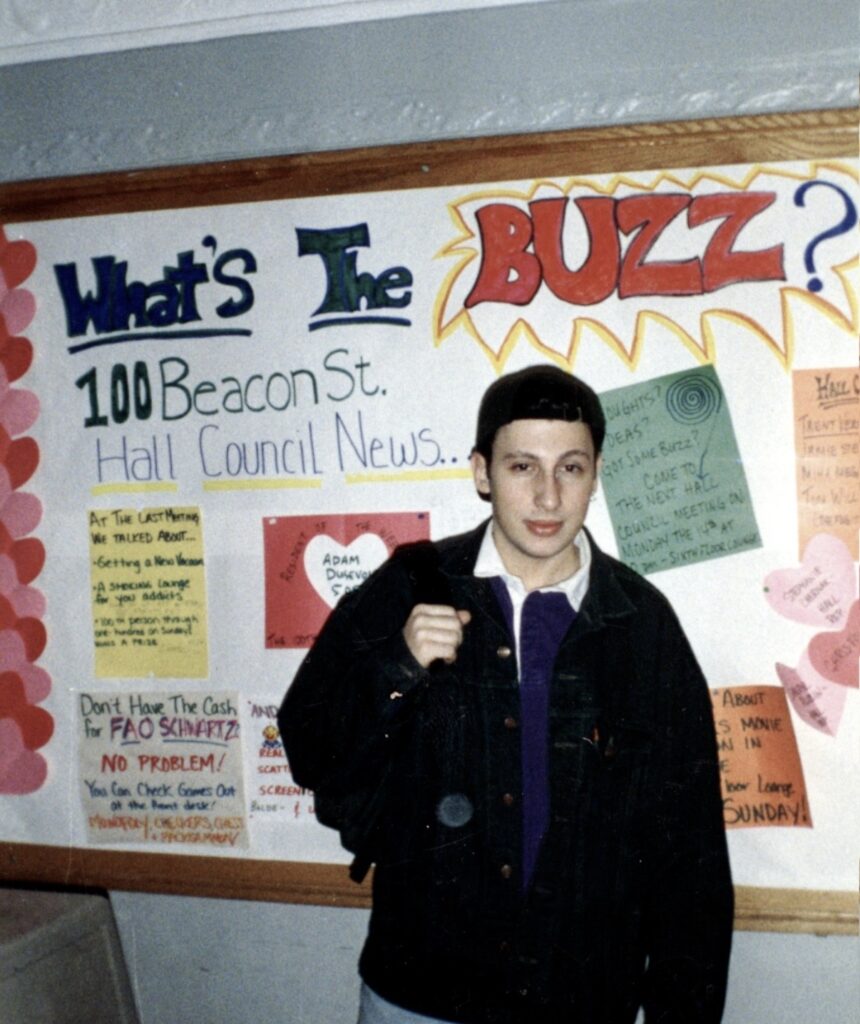
Rolov: I knew I wanted to work in the entertainment industry. I got an Emerson brochure at my parents’ house, I looked at it and said, ‘I want to go to that school.’ As an executive producer for EIV, I learned how to understand the invisible architecture of putting a show together. That served me really, really well when I got into the real world.
How do you teach being a producer for unscripted TV?
Rolov: There are so many elements that come into a development after getting the green light. Pre-production, production, and post-production. They are all different animals. People don’t often understand what producing entails. When you think about a director or a writer, you can picture their job. People don’t understand producers because a producer isn’t a job, it’s a function. Your function as a producer is to make things happen. That is what I do and what I want the students to understand. There are a lot of producers because there are lots of different functions. In the first class we talked about what students want to be. One said studio executive, one said a showrunner, one wants to work with talent, and one wants to be a line producer. They’re all producers, and we discuss and explore each one’s function.
What skills and knowledge does this class provide students?
Rolov: We discuss the aspects of unscripted. How to structure a shoot, and what goes into it. Hypothetically, what if the talent is going to an audition [in their real life]?
How do we break that into a shoot day? Do we start at her home? Is she there with her partner? What is at stake for her if she doesn’t get cast for the part? How would it impact her? Do we film the waiting room?
When students think about that in terms of structure, it opens a lot of real skill, and untapped skill they already have, and opens a new way to think about unscripted TV and what they would do in that shoot.
So, discussing practical realities is part of the class?
Rolov: When you create a shooting schedule for the day, you have to consider all practical realities. The weather is super important. If there’s a huge amount of snow, everything is going to take longer. Unscripted or not, you have to know the locations you’re shooting and really think those through because moving a company of more than 40 people takes a long time, and crazy things happen. Think about the big gear, and that we’re a big presence when we arrive at a location. Where is the area where we set up remote monitors and review what is being shot and provide direction? There are all the talent releases, location agreements, and in a city, you need permits. If some things aren’t checked off, you’re wasting time because you risk being shut-down. Or maybe there’s something you can’t use for artwork in the background. Also, logos on clothes, particularly if there’s a show sponsor in direct competition with [a logo on someone’s shirt]. It should never come to that because someone should look at their outfit before they arrive.
Any final thoughts about what students gain from your class?
Rolov: One thing that is really important is that everything is about storytelling. Knowing how to express yourself and feel and engage in a back-and-forth conversation is integral. We’re doing a class on how to interview to get your first job. I’ve probably interviewed 5,000 people. Most people do not know how to interview, or how to speak about themselves, and speak to the specific job they’re interviewing for. Getting hired is the same communication skill to sell their unscripted idea. We sell the ideas that have been communicated in the most effective way possible.
Categories
