
New Course Lets Students Experiment with AI on Screen
Aadi Sinha ’26 stood out among the other candidates applying for the production company internship for which he ultimately was selected last fall.
What got the hiring manager’s attention? It was Sinha’s knowledge of and experience with artificial intelligence (AI).
“Whether I like AI or not doesn’t completely matter to me. It’s made me a more valuable asset in my internship,” said Sinha, an aspiring sound designer, who took a groundbreaking AI & Media Production class at Emerson Los Angeles (ELA) last semester. “When I need to use it, I can do it in a way that doesn’t take away from the creative elements. It helps me work faster.”
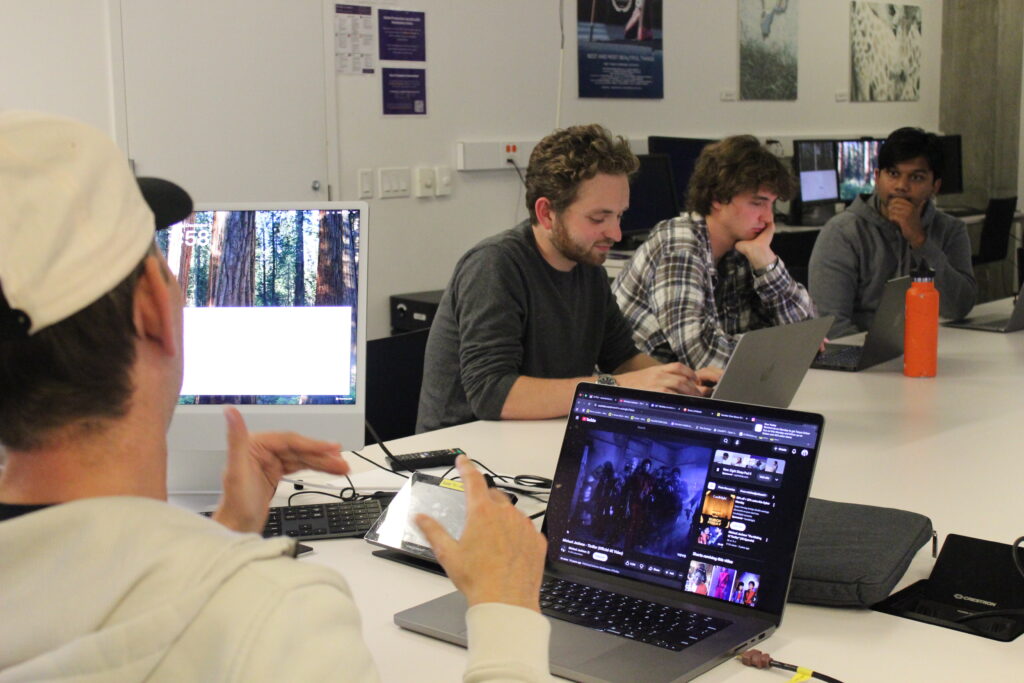
The course, which is being offered at ELA again this semester, guided students from creative theory through technical fluency to full cinematic execution. It began by reframing AI not as a shortcut, but as a creative collaborator—a tool that amplifies human storytelling rather than replacing it. Early on, students focused on theory and image generation: learning the language of prompts, exploring composition, style, and tone, and understanding how visual storytelling emerges from text. Students experimented with still images before progressing to motion: generating sequences, testing camera moves, and exploring consistency across shots and characters.
Emmy-nominated director and writer Stuart Acher, who teaches the course, admits he was skeptical about AI at first.
“My trepidation at first was like everyone else: fear of the unknown. Is it irresponsible? Will AI replace jobs? Will it break an industry that I’ve dedicated my life to?” he said. “It has since become very clear that AI in film is inevitable. It’s only getting better. So adapt or die. That is the name of the film industry. It’s always been that way since the Lumière Brothers invented the cinematograph, Lucas pioneered visual effects, Cameron revolutionized performance capture. Technology has always been in complete conjunction with the art of filmmaking.”
Mikhail Gershovich, ELA’s assistant academic dean, said it was important to give students an opportunity to understand the growing potential of AI alongside its ethical concerns.
“AI is very much here and is already transforming the creative industries,” he said. “The class allows students to experiment with AI and to participate in the conversation around what it can mean to the creative process.”
Over time, the class evolved into the language of cinema itself, teaching students how to sustain continuity, emotion, and rhythm using AI video tools. Students practiced performance transfer and voice synthesis, learning how to shape human-like expression and dialogue with the latest AI. They converted scripts into visual storyboards. Pre-production, production, and post-production merged into a unified creative process. Each week, lessons built upon previous lessons like blocks: image generation becomes motion; motion becomes storytelling; storytelling becomes a finished, emotionally resonant film. The semester culminated in a public screening of each student’s final collaborative short, showcasing their cinematic storytelling using AI.
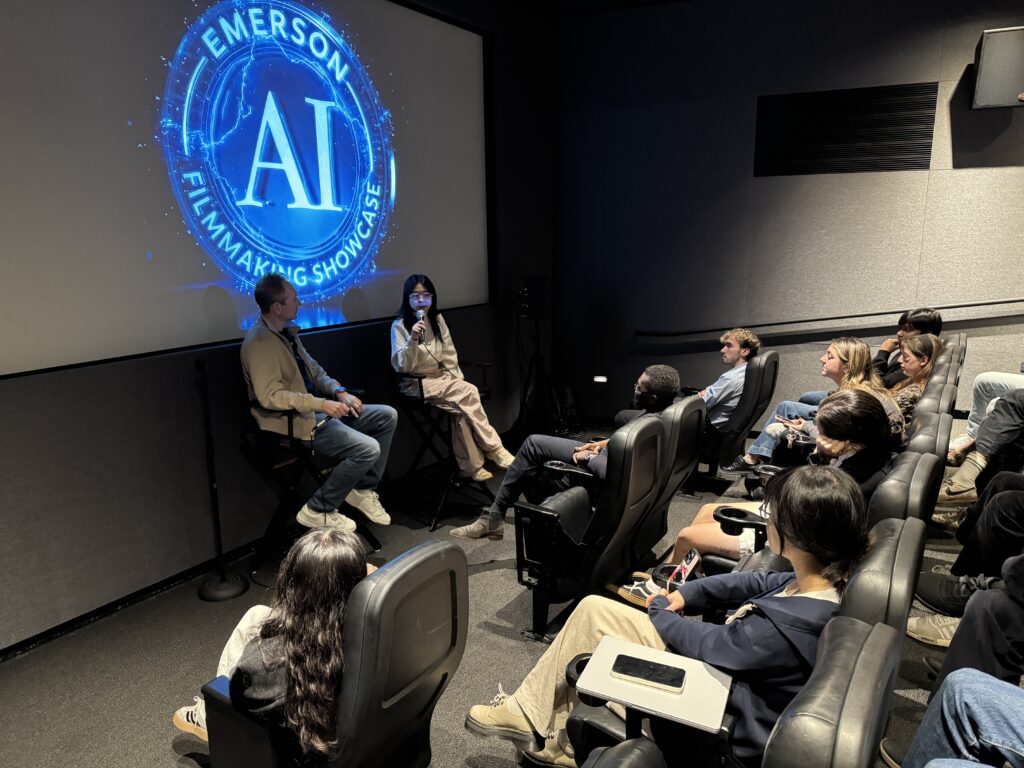
“Before I took this class, I felt like AI films really looked AI generated. But now, I’ve learned how much AI technology has advanced and how the tools have made the visuals look so realistic,” said Yifei Wang ’26, who hopes to pursue design or writing in grad school. “With AI, I am able to visualize my sci-fi and fantasy scenes. I can now use AI to support my creativity, create a pitch deck, or make a trailer.”
Miles Katz ’26, who wants to work in broadcast engineering production, said there was a learning curve to using AI. “Anybody can open up a chat prompt and just type whatever the heck they want and get an answer,” he said. “Learning how to use AI in a way that is overall beneficial and using it to its maximum capacity is the biggest thing [I took from] this course. How to build an entire short out of AI using nothing about ourselves, a bunch of credits, and workflows.”
“AI isn’t changing my creative style,” he added, “I’m gonna write the same way I’m always gonna write, but it’s opened up possibilities.”
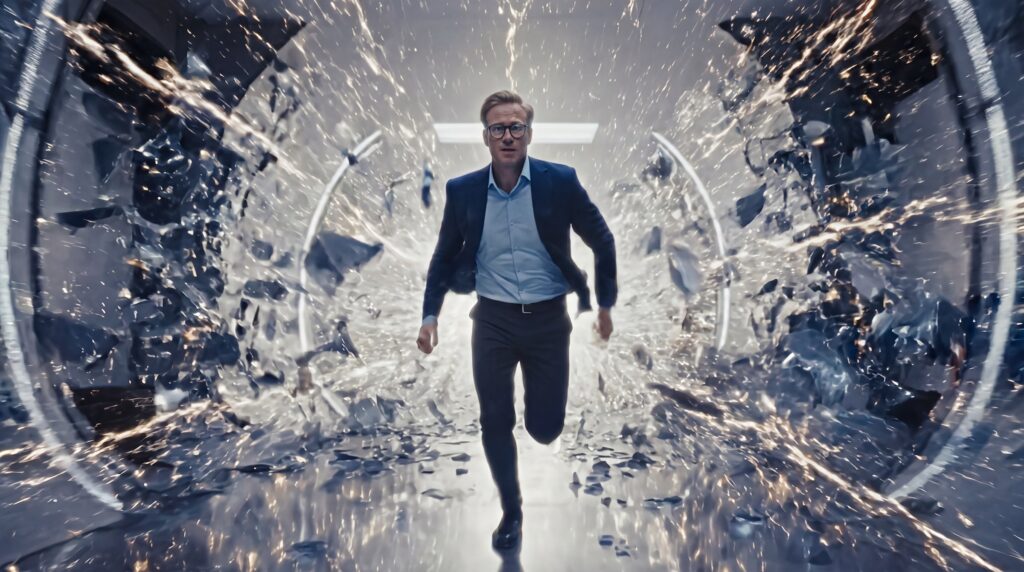
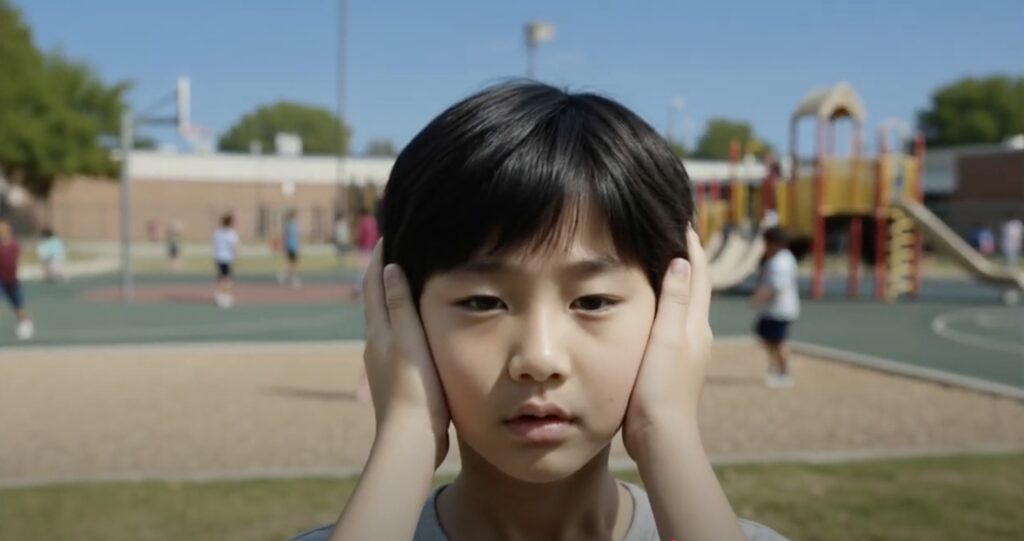
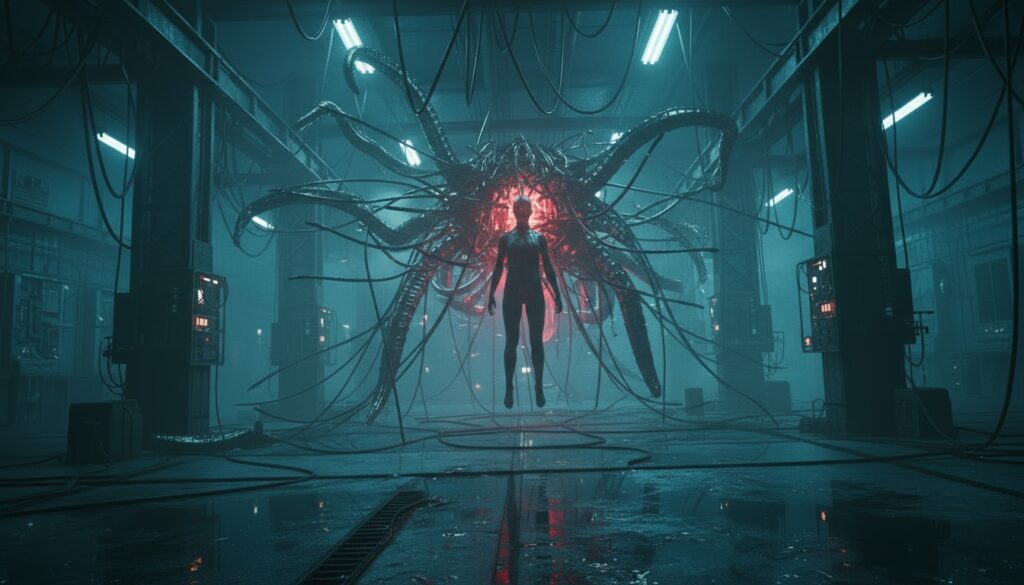

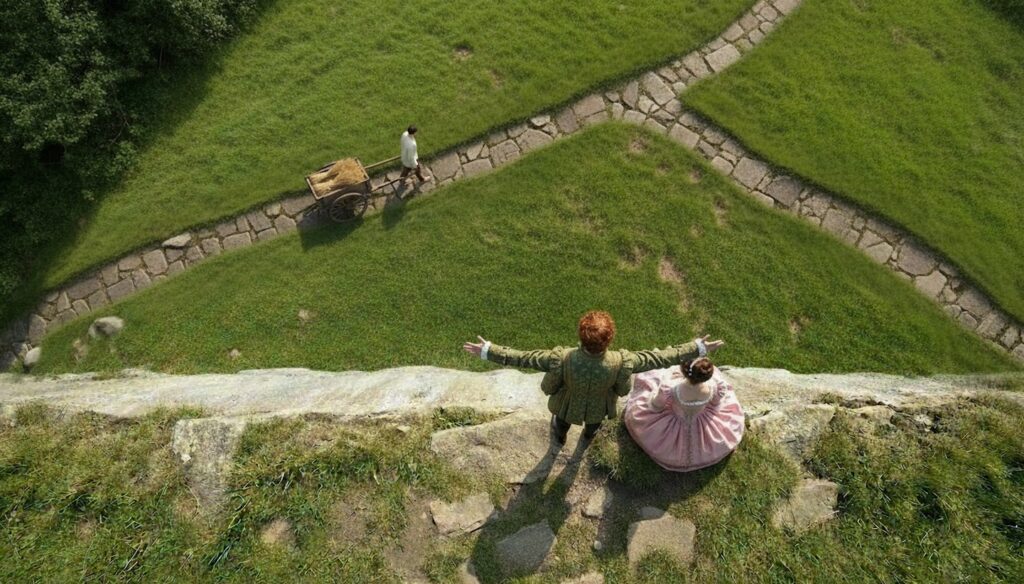
While AI enables enhanced technical capabilities, students expressed concern over its ethical challenges: fears about job displacement, discriminatory or biased systems, security threats and misuse, and the technology’s environmental footprint. Tough decisions will need to be made on how to regulate AI and the implications it might have on film and other sectors.
But ultimately, Acher believes that AI could never replace the human elements of storytelling.
“Every student, no matter what discipline, should learn AI because it is essential for career preparedness,” he said.
“Using AI to realize a vision is only as good as the storyteller behind it, and what is fed into the tools. But this stuff isn’t a simple click of a button. It takes fortitude and vision. It takes a filmmaker,” he continued. “Once students pushed past the learning curve, I was thrilled to witness their newfound ability of artistic expression, with absolutely no creative limitations. That’s the positive power of AI.”
Categories
