
Emerson Contemporary Delves into Boston’s Hidden Histories in Public Art Project
The mission: Find aspects of Boston’s history that are not well known or understood, and create media art that tells those stories.
The team: Four public artists working in a variety of media technologies.
The result: Hidden Histories, a series of four public art activations viewable from Beacon Hill, Boston Common, MBTA trains along the Green and Orange lines; and virtually via the Hoverlay augmented reality app.
Hidden Histories, which runs through October 28, was curated and produced by Emerson Contemporary as part of the City of Boston’s multi-year Un-Monument initiative, which looks to bring temporary monuments and free programming to public spaces within the city that expand inclusive histories. For the project, Emerson Contemporary collaborated with Boston’s foremost historic archives: The Boston Athenaeum, Historic New England, and Massachusetts Historical Society. The artists subsequently were invited as community research fellows.
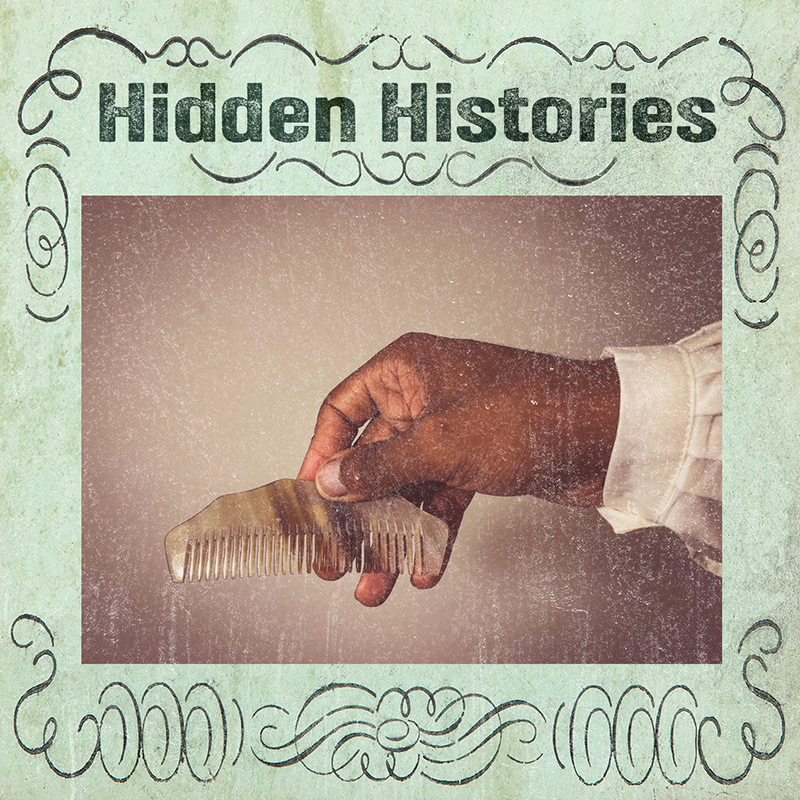
Elisa Hamilton, MA ’19 will present a series of digital vignettes honoring the life and legacy of Louis Glapion. Glapion was a biracial hairdresser who, with his friend George Middleton, built and owned 5 Pinckney Street, believed to be the oldest house still standing in Beacon Hill. Hamilton aims to honor Glapion and his lived experiences in Boston. An AR experience will be available on Hoverlay, accompanied by an educational research document.
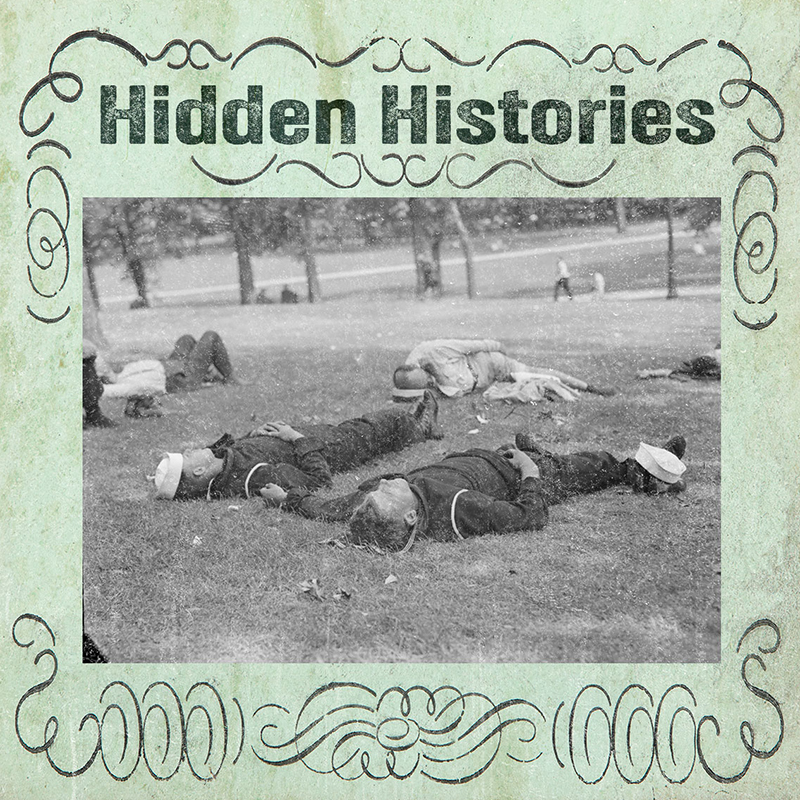
“ASSEMBLE: Performance Instructions for Public Arrangements,” is a participatory performance by Sue Murad that explores how we gather in public spaces — particularly the historic Boston Common — through the objects we bring or find there. It is a guided, interactive experience that bears witness to the many generations of people who have gathered for various reasons protected by the First Amendment.
Clareese Hill’s “The Black Boston Dream Oracle” is a speculative reimagining of The Complete Fortune Teller and Dream Book written by Chloe Russel, a 19th-century Black woman from Massachusetts. The piece blends historical wisdom and futuristic fabulations to provide a space for reflection, healing, and imagining new possibilities for liberation through early Black feminist thought. Hoverlay will present “The Black Boston Dream Oracle” as an extended reality (XR) experience, along with a web-based educational research document.
Kameelah J. Rasheed explores the city’s layered histories as discovered in the archives of the Boston Athenaeum. Using marginalia and typefaces gathered from the Athenaeum’s oldest books, Rasheed samples and weaves the designs to form visual poems, which will be displayed on digital signage around Boston Common and on the Orange and Green lines. The poems are inspired by Toni Morrison, and ask the public to consider the complexities of our current socio-political context.
Hidden Histories is funded by the Mayor’s Office of Arts and Culture’s Un-Monument initiative, supported by a grant from the Mellon Foundation.
Categories
