
Film Exhibits Cap Three Intense, Inspiring Years for Global BFA Students

Both Elijah Stammler ’25 and Sadie Sweitzer ’25 wanted an international college experience combined with a cutting-edge film school. They found the perfect fit with the Global BFA in Film Art program.
The unique joint degree program from Emerson and Paris College of Art (PCA) combines filmmaking, fine art, and the liberal arts, and spans three countries on two continents during three intense years. Students spend two summers in Boston, academic years in Paris, and a summer in The Netherlands at Kasteel Well.
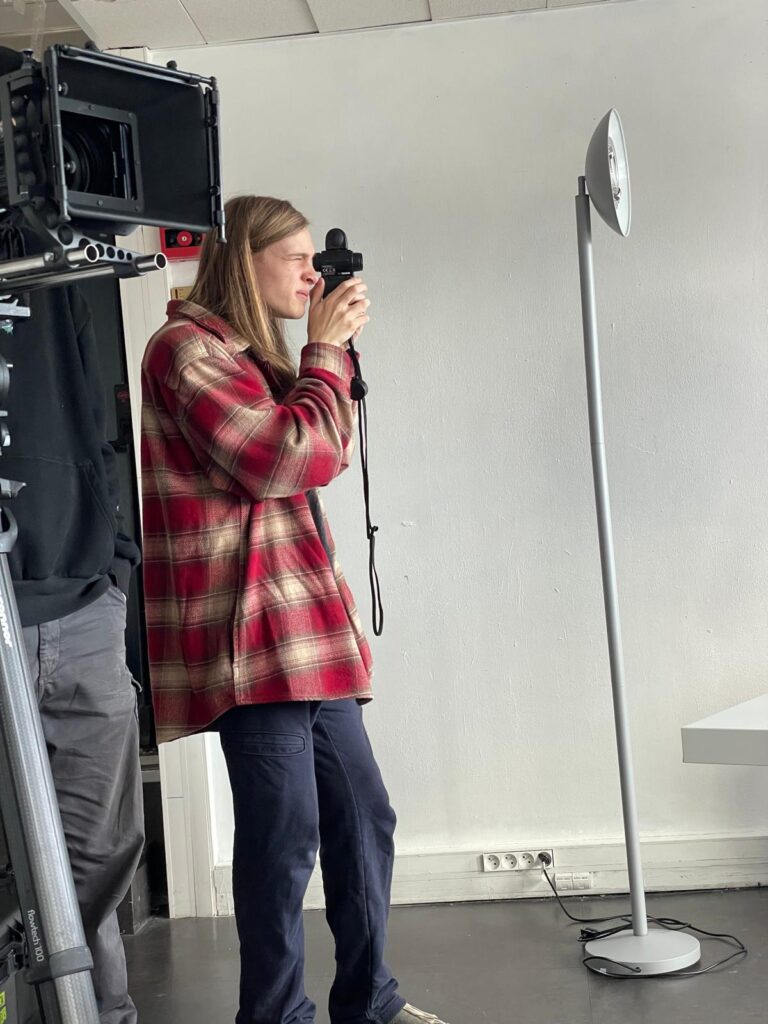
“Getting an education in both Paris and Boston from such a wide variety of film and liberal artists, many of whom are practicing at the same time as they teach, served as a gateway to the expansive possibility of what it can mean to be a filmmaker,” said Stammler.
This year’s graduating cohort celebrated with two group exhibitions of their capstone projects this past weekend on the Boston campus. The festival-style event, Static Blooms, screened student films in the Bright Family Screening Room. Put The Soil Over Every Year was a group exhibition of students’ experimental works at the Tufte’s Huret & Spector Gallery.
Program Director and Visual & Media Arts Professor Daniel Gaucher said the students’ third year of the program is dedicated to capstone projects.
“The purpose is to have them show the world what they can do. To look inward and find their voice, who they are, and help them get that out in their preferred medium,” said Gaucher. “There are museum installation pieces, documentaries, animation, narrative films, experimental films – and all of it is part of the weekend’s celebration.”
Read on Expression: A World of Film
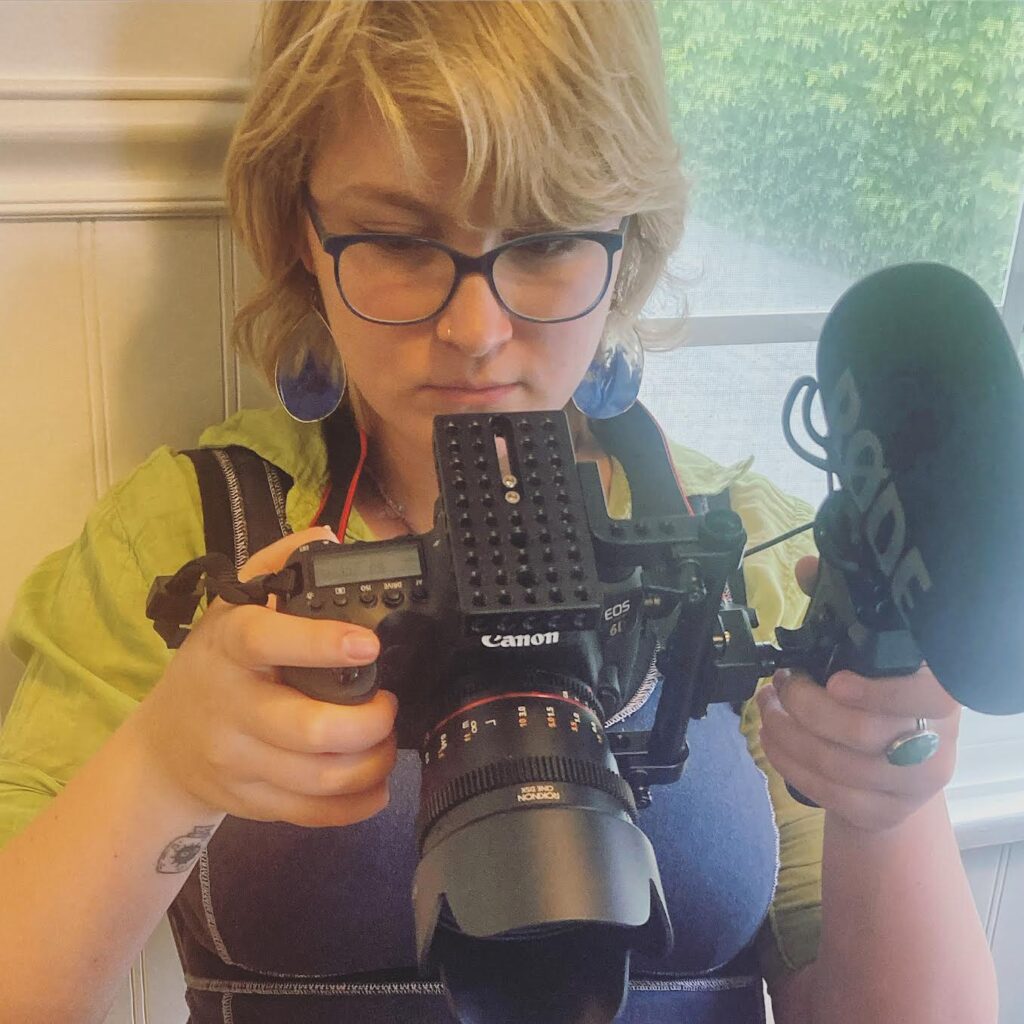
Sweitzer was attracted to the GBFA program by the unique experience of earning a film degree taught in English, while studying in another country.
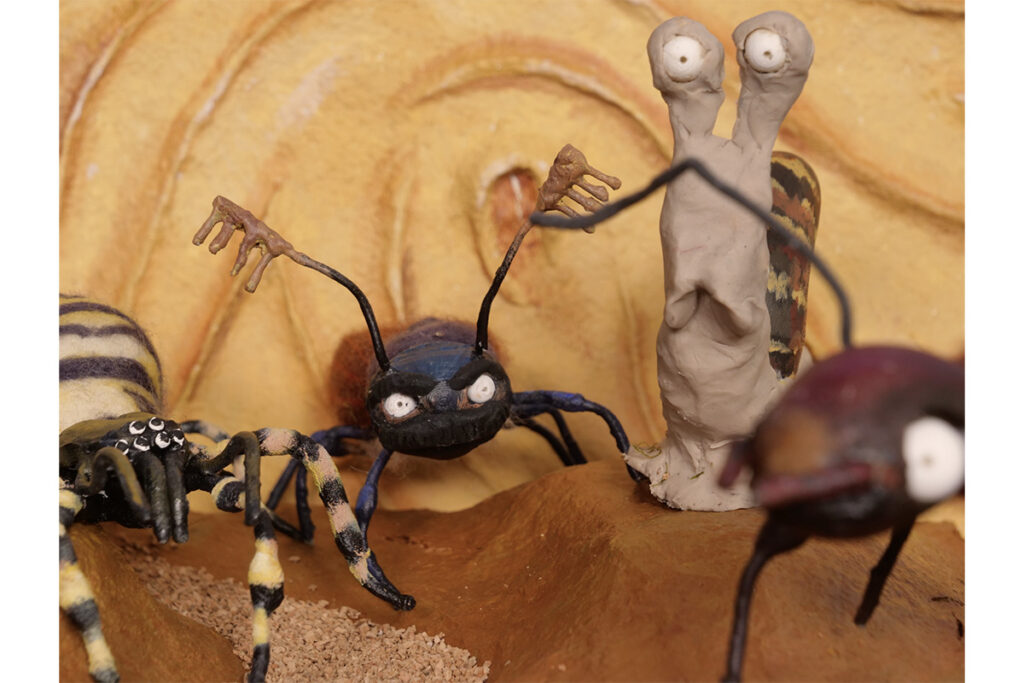
“My capstone project is a stop-motion animation about three bugs and one snail that embark on a journey through the woods to find a new home when their urban habitat is destroyed by climate change,” said Sweitzer.
Sweitzer’s experimental capstone project is emblematic of student work. Gaucher said in his opinion, the era of the giant blockbuster has waned, and that’s opening more opportunities for more avant-garde filmmakers.
“In the last five to seven years, there’s more of a small, creative niche film model,” said Gaucher. “Studios are looking more for the creative auteur – the genius who has a dedicated following.”
Stammler said the program has given him greater understanding of his motivations, goals, and style as an artist. His capstone project is Sunshiners, also a stop-motion animated film.
“It follows several characters who navigate the apocalypse together, as they travel north through interior Alaska,” said Stammler. “It’s also about loss, willpower, nostalgia, and how we behave at the end of the world.”
Bridging the U.S., Europe
One unusual element of the GBFA program is that the pedagogy is more similar to a European model of higher education.

“The program relies heavily on students having a high level of responsibility and fair amount of autonomy,” said Gaucher. “In Paris, there is no food plan associated with the program. Students are taught how to go grocery shopping, are provided cooking lessons, learn about area restaurants and other schools’ cafeterias [they can access]. They need to get their own transportation. It’s a do-it-yourself attitude. They have to learn right away to be responsible.”
Personal responsibility is essential to student success in the program, which packs a lot into the program’s three years. Numerous trips are incorporated into classwork, including visits to Parisian museums, Budapest, Berlin, attending the highly-regarded International Film Festival Rotterdam, and the Clermont-Ferrand International Short Film Festival – the world’s largest festival dedicated to short films.

“It’s an intensive program that puts these students through a lot of education in a short amount of time and demands a lot from them,” said affiliated faculty member Ryan Gibeau ’05, who taught a Project Presentations course this summer in Boston that culminated with the students’ shows. “The GBFA is an immediate immersion into filmmaking. You have to write a lot, produce a lot, and that’s a really challenging thing to do.”
Artem Bakatov ’25 believed that immersion into film would be a great opportunity to meet students as passionate about filmmaking as he is. Bakatov also spent the first 14 years of his life in Ukraine before moving to New Jersey, and liked the idea of going back to school in Europe.
“I knew that I wanted to learn from the American side of film and from the European,” said Bakatov. “I knew that both work differently and that difference made me choose [the program].”
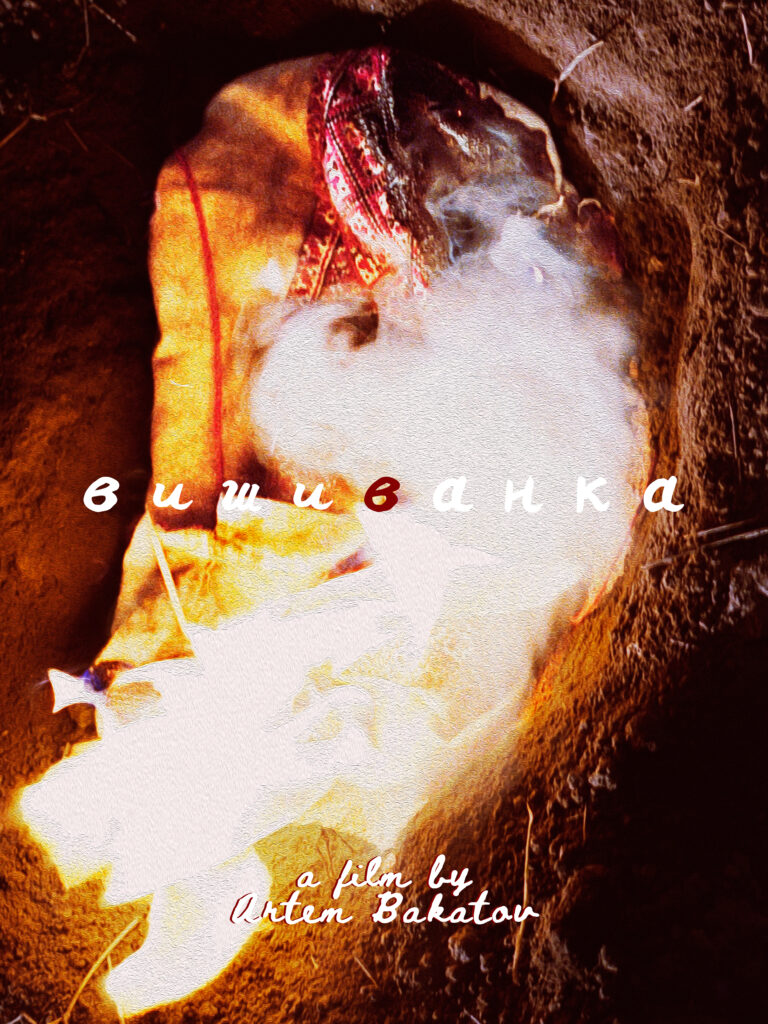
Bakatov’s capstone project is Vyshyvanka, which was shot on a farm in a small town called Osmoy-Saint-Valery in the Normandie region of France in April. Bakatov wrote, directed, produced and edited the film about a Ukrainian man living in the countryside of France struggling to connect with his heritage as visions of his grandma in traditional attire guide him toward rediscovering his roots.
Nolan Anderson ’25 and Samsha Masson ’25 said being based in Europe and the U.S. also provides an opportunity to learn about both continents’ film industries.
The duo met through the program, and co-directed their capstone project. Their working relationship flourished due to the tight knit aspect of the program and because everyone works together on each other’s projects.

“The GBFA program has helped us in many different aspects,” they said in a joint email. “The way we approach film has completely changed throughout these past three years since we have joined the program; part of that is thanks to the union of different outlooks and mindsets due to the global nature of this program.”
Collaboration and Cooperation
This summer was Gibeau’s first time working with GBFA students. He said he was extremely impressed with how the group handled challenges.
“When you used to make a playlist, did you just throw your favorite songs together, or did one song lead well into another?” asked Gibeau, who helped students put together the film exhibits. “How do 18 unique films flow well and thematically? It’s thinking about your audience to build a curated sequence for them that makes the most enjoyable experience.”
A situation like that could easily lead to dueling egos, with filmmakers arguing that their film should go first, or last, or just not in the middle. But Gibeau saw none of it.
That camaraderie led to the film screening event’s name – Static Blooms. Gibeau said the cohort examined themes of all the films, brainstormed using a whiteboard, juxtaposed titles and concluded the films were so different that static and bloom were bit of an oxymoron and worked well.
“There were so many creative minds coming together with a unified solution,” added Gibeau.
Sweitzer said one of the most important things the GBFA program taught the importance of collaboration in filmmaking.
“I can say with confidence that I would not have accomplished all that I have in this program if it weren’t for the dozens of my peers that were right there with me, helping me bring my ideas to life,” Sweitzer said.
Categories
