CSD Researchers Studying Conversation Between Autistic, Non-Autistic Tweens through NIH Grant
What makes a conversation “successful”? What does an enjoyable conversation look and sound like?
Naturally, everyone involved needs to understand the words that are being used, but what if the parties aren’t taking turns speaking? What if someone’s tone doesn’t match expectations given the discussion’s content, or someone is not indicating that they’re listening to the others? Even if everyone speaks the same language and has the same vocabulary, could that conversation be called “satisfying” for all participants?
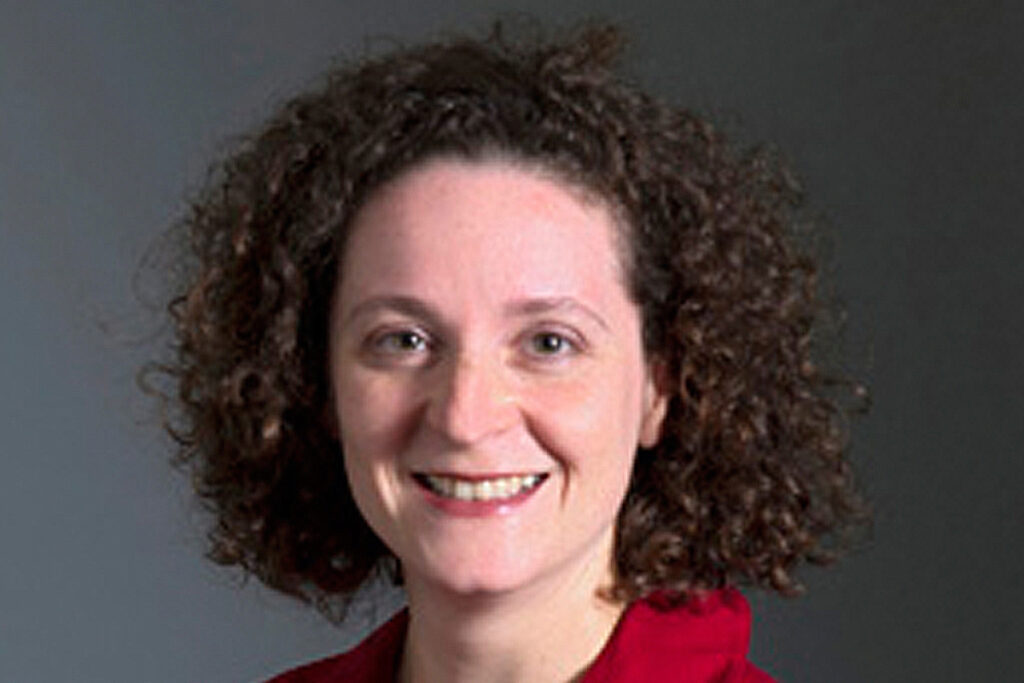
Communication Sciences and Disorders Professor Ruth Grossman and research coordinator Elana Groves are trying to determine what factors best predict conversational success in adolescents, particularly between autistic and non-autistic kids.
“It’s really meant to identify potential barriers [to] social inclusion and social interaction,” Grossman said. “If we understand better who you are as an autistic communicator, we can help you better, and we can be more informative to the people who might be having conversations with you about how not to misinterpret [your ways of communicating].”
The study is being funded through a multi-site National Institutes of Health grant, and is being conducted alongside colleagues at the University of Connecticut (UConn), Children’s Hospital of Philadelphia (CHOP), and the University of Aarhus in Denmark. Groves’s position as research coordinator is fully funded through the $2.5 million grant.
Grossman and Groves, alongside their colleagues at CHOP and UConn, are in the process of recording 500 participants holding dyadic conversations over Zoom. In addition, conversations of 20 participants will be recorded in person across the three different data collection sites. Each conversational grouping consists of four adolescents of roughly the same age and matched on biological sex. Two of the participants in each grouping are autistic, two are non-autistic — crucially, all have scored within the same range on standardized language tests of language and cognitive abilities.
Participants interact 1:1 with a conversation partner who is a neurotype match (autistic-autistic or non-autistic-non-autistic), and with a partner who is a neurotype mismatch. Each session consists of three parts. Participants read a standardized passage to get a baseline measurement of their speech and conversational skills. They then chat with their partner in a “get-to-know-you” activity. Finally, they work together to complete a task, i.e., finding the differences between two pictures. Each conversation partner sees one image that is mostly identical to the image their partner sees, but there are 12 differences between the two images. By describing and talking about the features of the image they each see, the conversation partners have to figure out what the differences are. The research group developed the details of this study with the help of an autism advisory board, who gave the researchers feedback on phrasing of questions, how to direct participants, etc., from an autistic perspective in order to be fully inclusive of autistic participants.
After each conversation, study participants are asked to rate the experience using based on a slider barsing scale, to indicate how much they agreed with responding to prompts such as “I liked talking to this person.” “I feel like I talked enough in the conversation,” and “I got my points across.” No one is told the diagnosis of the person they’re speaking to, but they’re also asked at the end whether or not they think their conversation partner is autistic.
“[The exercises] are all in the grand scheme of analyzing the different communicative kinds of roles that each play in the dyads, and then … after each activity, they give a rating toward the conversational success,” Groves said.
Despite all the participants in the study having strong language skills, Grossman said, there is evidence in the literature that autistic adolescents will use that language differently than non-autistic kids. These differences can present in prosody (the rhythm and melody of speech), unusual word uses (saying a mosquito “nicked” you), neologisms (making up new words), difficulty with pronoun use, backchanneling (verbal or non-verbal feedback that you’re listening to someone), and whether or not kids take turns speaking, as examples.

Grossman said they’re measuring two different, but related outcomes: Whether the conversation was a “success,” meaning did it achieve what the participants set out to do, and whether it was enjoyable — would they want to be matched with their partner again?
“Kids being part of social interactions that are fun and enjoyable and that feel comfortable to both parties is most likely a predictor of [them] wanting to have another one of those, and then they’re more likely to be included,” Grossman said. “And since all of these kids have language and cognitive skills within the normal range, these are all kids who are just in a regular school… so social inclusion is important.”
The researchers expect to see that the neurotype concordant pairs will rate enjoyment of their conversations higher than discordant pairs, based on the double empathy model, which proposes that miscommunication between autistic and non-autistic speakers isn’t just a function of the autistic speaker not knowing how to communicate, but a mutual lack of understanding of communication patterns across neurotypes, Grossman said.
The adolescent age group was selected as the study target because it’s a group that cares very deeply and urgently about social standing and hierarchy, so in many ways, it’s the group with the highest stakes in navigating the drivers and barriers to a positive social interaction, Grossman said.
And autistic adolescents eventually become autistic adults, who statistically face barriers to success in higher education, the workforce, and other arenas of adult life.
“It’s also about how you use language in an interaction, and so that’s the piece that we want to dig into,” said Grossman. “And if we understand that better, that can have an impact on how we educate educators, how we deal with social skills interventions for autistic individuals, and how we raise awareness among non-autistic individuals.”
Categories
